
PeptidePick preferred picks
Use the highest-value vendor routes first.
Pinnacle is first for the 15% discount code. Ascension is the broad-catalog default when you want the cleaner research-only route.
Research-only affiliate links. Verify COAs, labels, and shipping terms before checkout.
What Are Peptides? The Complete Beginner's Guide [2026]
Peptides have become one of the most talked-about categories in health research, biohacking, and clinical medicine. But despite the growing buzz, most people don't have a clear understanding of what peptides actually are, how they work, or why researchers are so interested in them. This guide covers the fundamentals - from basic chemistry to practical applications - so you can understand the science behind the headlines.
Disclaimer: This article is for informational and research purposes only. Always consult a licensed healthcare provider before considering any peptide-related protocol.
Want a non-injectable option? Nootropics Depot carries third-party tested oral supplements for cognitive function, longevity, and recovery - no reconstitution needed.
Table of Contents
What Are Peptides?
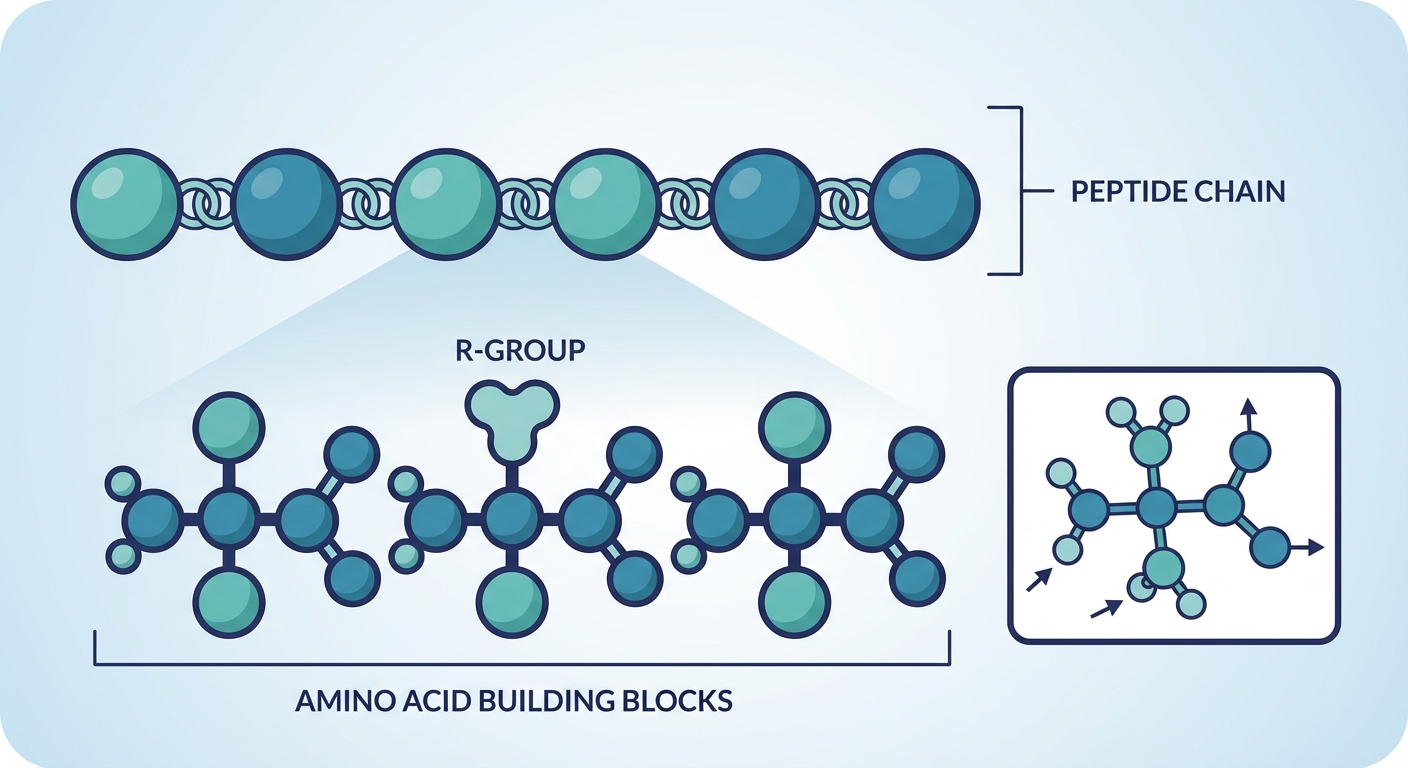
At their core, peptides are short chains of amino acids linked together by peptide bonds. Amino acids are the building blocks of proteins - there are 20 standard amino acids that combine in different sequences to create the vast array of peptides and proteins in the human body.
The key defining feature of peptides is their size. While there's no universally agreed-upon cutoff, the general convention is:
- Amino acids: Single units (1 amino acid)
- Dipeptides: 2 amino acids
- Tripeptides: 3 amino acids
- Oligopeptides: 2-20 amino acids
- Polypeptides: 21-50 amino acids
- Proteins: 50+ amino acids (though some definitions use 100+)
Your body naturally produces thousands of peptides. They act as signaling molecules - tiny messengers that tell cells what to do. Hormones like insulin (51 amino acids) and oxytocin (9 amino acids) are peptides. So are neurotransmitters, growth factors, and antimicrobial compounds your immune system produces.
The reason peptides have gained so much attention in research is that scientists can now synthesize specific peptide sequences in the lab. This allows them to study - and potentially harness - the signaling functions of these molecules with a precision that wasn't possible a few decades ago.
Peptides vs Proteins: What's the Difference?
The line between peptides and proteins is somewhat arbitrary, but there are meaningful practical differences:
| Feature | Peptides | Proteins |
|---|---|---|
| Size | 2-50 amino acids | 50+ amino acids |
| Structure | Usually linear or simple folds | Complex 3D folding (secondary, tertiary, quaternary) |
| Function | Primarily signaling and regulation | Structural, enzymatic, transport, immune |
| Stability | Generally less stable, shorter half-life | More stable due to complex folding |
| Synthesis | Can be made chemically (solid-phase synthesis) | Usually require biological systems (recombinant) |
| Oral bioavailability | Low (most degrade in the gut) | Very low (almost always injected) |
Think of it this way: peptides are like short text messages that deliver specific instructions. Proteins are like full instruction manuals - they're larger, more complex, and serve structural and functional roles beyond simple signaling.
One important note: some molecules sit right on the boundary. Insulin, at 51 amino acids, is sometimes called a peptide hormone and sometimes classified as a small protein. The distinction matters less than understanding how the molecule actually functions.
Ready to Explore Specific Peptides?
Dive deeper into individual peptide guides with research summaries, dosing info, and sourcing tips.
How Peptides Work in the Body
Peptides function primarily as signaling molecules. They work through several mechanisms:
Receptor Binding
Most peptides work by binding to specific receptors on cell surfaces. When a peptide locks into its target receptor - like a key in a lock - it triggers a cascade of intracellular events. For example, when GLP-1 (a naturally occurring peptide) binds to GLP-1 receptors in the pancreas, it triggers insulin release. This receptor specificity is what makes peptides attractive to researchers - they can be designed to target very specific biological pathways.
Enzyme Interaction
Some peptides work by inhibiting or activating enzymes. ACE inhibitors, one of the most commonly prescribed drug classes for blood pressure, were originally derived from peptides found in snake venom. These peptides block the angiotensin-converting enzyme, preventing the formation of a hormone that raises blood pressure.
Gene Expression
Certain peptides can influence which genes are turned on or off in a cell. For example, GHK-Cu (a copper peptide) has been shown to modulate the expression of over 4,000 genes, many of which are involved in tissue repair, antioxidant defense, and anti-inflammatory responses (PMID: 24508067).
Direct Antimicrobial Activity
Some peptides, called antimicrobial peptides (AMPs), directly kill bacteria, viruses, or fungi. Your body produces these naturally as part of the innate immune system. Defensins and cathelicidins are examples of natural AMPs that punch holes in bacterial cell membranes.
Bioavailability Challenges
One significant challenge with peptides is that most cannot be taken orally. The digestive system breaks them down before they reach the bloodstream. This is why most research peptides are administered via subcutaneous injection, though researchers are actively working on oral delivery systems, nasal sprays, and transdermal patches. Semaglutide (brand name Rybelsus) is a notable exception - it's been formulated with an absorption enhancer that allows oral dosing.

Types of Peptides
Peptides can be categorized in several ways. Here are the most common classifications relevant to current research:
Research Peptides
These are synthetic peptides produced for laboratory and clinical research. They are sold labeled "for research purposes only" and are not approved for human consumption outside of clinical trials. Examples include BPC-157, TB-500, and AOD-9604. These peptides are typically produced through solid-phase peptide synthesis (SPPS) and verified via HPLC purity testing and mass spectrometry.
Therapeutic Peptides
These are peptides that have gone through the full regulatory approval process and are prescribed by doctors. Over 80 peptide-based drugs have been approved by the FDA as of 2026. Examples include:
- Semaglutide (Ozempic/Wegovy) - for diabetes and weight management
- Tirzepatide (Mounjaro/Zepbound) - for diabetes and weight management
- Tesamorelin (Egrifta) - for HIV-associated lipodystrophy
- Octreotide (Sandostatin) - for acromegaly and certain tumors
- Vasopressin - for diabetes insipidus and vasodilatory shock
Cosmetic Peptides
Peptides used in skincare and cosmetic formulations. These are typically applied topically and are designed to signal skin cells to produce more collagen, reduce inflammation, or improve skin barrier function. Common examples include:
- Matrixyl (Palmitoyl Pentapeptide-4): Stimulates collagen and fibronectin production
- Argireline (Acetyl Hexapeptide-3): Reduces appearance of expression lines by inhibiting neurotransmitter release
- GHK-Cu (Copper Peptide): Promotes wound healing, collagen synthesis, and has antioxidant properties
Bioactive Peptides
These are peptides found naturally in foods that have biological activity beyond basic nutrition. They're released during digestion or food processing (like fermentation). Sources include:
- Dairy: Casein and whey-derived peptides with ACE-inhibitory, antimicrobial, and immunomodulatory effects
- Fish: Collagen peptides from fish skin and bones, studied for skin health and joint support
- Plant sources: Soy, wheat, and rice-derived peptides with antioxidant and anti-hypertensive properties
Collagen peptides (hydrolyzed collagen) are the most commercially successful bioactive peptides, with a global market worth billions. Research supports their use for skin elasticity and joint health, though the evidence quality varies (PMID: 30681787).
Where to Buy Research Peptides
Quality and purity matter. See our reviewed and verified peptide vendors.
Popular Peptide Categories in Research
Research peptides span a wide range of applications. Here are the most actively studied categories:
Weight Loss Peptides
GLP-1 receptor agonists (semaglutide, tirzepatide) and growth hormone-related peptides (AOD-9604, CJC-1295/ipamorelin, tesamorelin) are the most studied compounds for metabolic research. The weight loss peptide category has seen explosive growth, driven by the clinical success of GLP-1 drugs. Read our full guide to peptides for weight loss.
Healing and Recovery Peptides
BPC-157 and TB-500 (Thymosin Beta-4) are the most popular peptides in tissue repair research. BPC-157 has shown effects on tendon, muscle, and gut healing in animal models. TB-500 promotes cell migration and blood vessel formation. Read our BPC-157 guide or TB-500 guide for detailed research breakdowns.
Anti-Aging and Longevity Peptides
GHK-Cu, Epitalon, and MOTS-c are studied for their potential effects on aging processes. GHK-Cu modulates thousands of genes related to tissue repair and inflammation. Epitalon is researched for its effects on telomerase activity. These compounds represent a growing area of geroscience research. See our anti-aging peptides guide.
Muscle and Performance Peptides
Growth hormone secretagogues (MK-677, ipamorelin, CJC-1295) and follistatin-related peptides are studied for their effects on lean mass and recovery. These work primarily by increasing growth hormone and IGF-1 output. Read our muscle and recovery peptides guide.
Cognitive and Neuroprotective Peptides
Semax, Selank, and Dihexa are researched for cognitive enhancement and neuroprotection. Semax (a synthetic ACTH fragment) has been approved in Russia for stroke recovery and cognitive enhancement. These peptides interact with neurotrophic factors like BDNF and NGF.
Sexual Health Peptides
PT-141 (Bremelanotide), derived from the melanocortin peptide Melanotan II, is the only peptide FDA-approved specifically for sexual dysfunction (hypoactive sexual desire disorder in premenopausal women). It works through melanocortin receptors in the brain rather than vascular mechanisms like PDE5 inhibitors.

Peptides vs Steroids vs SARMs
Peptides are often lumped together with steroids and SARMs in online discussions, but they are fundamentally different classes of compounds. Understanding these differences is important for researchers and anyone trying to make sense of the information available online.
| Feature | Peptides | Anabolic Steroids | SARMs |
|---|---|---|---|
| Chemical nature | Amino acid chains | Synthetic testosterone derivatives | Non-steroidal androgen receptor ligands |
| How they work | Signal specific receptors; promote natural hormone release | Directly activate androgen receptors throughout the body | Selectively activate androgen receptors in muscle/bone |
| Hormonal suppression | Minimal (most peptides don't suppress natural hormone production) | Severe (shuts down natural testosterone production) | Moderate (dose-dependent suppression) |
| Liver toxicity | Generally low | High (especially oral steroids) | Moderate (some hepatotoxicity reported) |
| Side effect profile | Generally mild and compound-specific | Extensive (acne, hair loss, cardiovascular, liver, hormonal) | Moderate (suppression, potential liver effects) |
| Legal status (US) | Legal for research; some FDA-approved as drugs | Schedule III controlled substances | Legal to buy for research; not approved for human use |
| PCT required? | Generally no | Yes (post-cycle therapy is standard) | Often recommended |
| FDA-approved examples | 80+ approved peptide drugs | Some (testosterone, nandrolone for specific conditions) | None approved |
The fundamental difference: Peptides generally work by stimulating your body's own systems - telling the pituitary to release more growth hormone, for example, rather than flooding the body with an external hormone. Steroids directly replace or supplement hormones. SARMs fall somewhere in between, selectively activating androgen receptors without the full systemic effects of steroids.
This doesn't mean peptides are without risks. Every compound has a safety profile, and the research-only status of many peptides means long-term human safety data is limited. But the mechanism of action - working with the body's natural signaling rather than overriding it - is why many researchers view peptides as having a more favorable risk profile than anabolic steroids.
Learn How to Handle Peptides
Proper reconstitution and storage are critical. Follow our research protocols.
Regulatory Status of Peptides
The regulatory status of peptides is complex and varies by country and specific compound:
United States
- FDA-approved peptide drugs: Prescribed by doctors, available through pharmacies (semaglutide, tirzepatide, tesamorelin, etc.)
- Research peptides: Legal to buy and sell for "research purposes" but not approved for human consumption
- Compounding pharmacies: Can prepare certain peptides under a doctor's prescription, though the FDA has been tightening regulations. In 2023-2024, several peptides including BPC-157 were removed from compounding lists
- Cosmetic peptides: Regulated as cosmetic ingredients, not drugs, when used in topical formulations
Key Regulatory Developments
The peptide regulatory environment has been shifting. The FDA has increased scrutiny of research peptide companies and compounding pharmacies. Several peptides previously available through compounding have been restricted. Researchers should stay current with regulations and ensure compliance with all applicable laws in their jurisdiction.
Quality Considerations
Because research peptides are not regulated as drugs, quality varies dramatically between suppliers. Third-party testing, Certificates of Analysis (COAs), and vendor reputation are essential factors when sourcing. For guidance on evaluating peptide suppliers, see our best peptide companies guide.
Getting Started with Peptide Research
If you're new to peptides and want to understand the space better, here's a suggested reading path through our guides:
- You're here - Understanding the basics of what peptides are
- Peptide Side Effects - Understanding the risk profiles
- How to Inject Peptides - Practical administration guide for researchers
- How to Reconstitute Peptides - Preparation and handling
- Individual peptide guides - Deep dives on specific compounds (BPC-157, TB-500, GHK-Cu, and more)
- Best Peptide Companies - Finding quality sources
Frequently Asked Questions
What are peptides in simple terms?
Peptides are short chains of amino acids - typically between 2 and 50 amino acids long. They act as signaling molecules in the body, telling cells what to do. Your body naturally produces thousands of peptides that regulate everything from appetite to immune function to tissue repair.
Are peptides the same as steroids?
No. Peptides and steroids are completely different classes of compounds. Peptides are amino acid chains that signal your body's natural systems. Steroids are synthetic hormones that directly activate androgen receptors. Peptides generally work with your body's existing pathways, while steroids override them.
Are peptides safe?
Safety depends on the specific peptide, dose, and individual factors. FDA-approved peptide drugs like semaglutide have extensive safety data from clinical trials. Research peptides have less human safety data. All peptide use should be discussed with a healthcare provider. Side effects vary by compound but are generally considered milder than steroids.
Are peptides legal?
In the United States, FDA-approved peptide drugs are legal with a prescription. Research peptides are legal to buy and sell for research purposes but are not approved for human consumption. Regulations vary by country and are evolving - check local laws before purchasing.
How do you take peptides?
Most research peptides are administered via subcutaneous injection using insulin syringes. Some peptides are available as nasal sprays, topical creams, or oral formulations. Cosmetic peptides are applied topically in serums and creams. The route of administration depends on the specific peptide and its bioavailability.
What are the most popular peptides?
The most researched peptides include BPC-157 (tissue healing), TB-500 (recovery), semaglutide and tirzepatide (weight loss), GHK-Cu (anti-aging and skin), CJC-1295/ipamorelin (growth hormone release), and PT-141 (sexual health). Popularity varies based on the research application.
Do peptides require a prescription?
FDA-approved peptide drugs require a prescription. Research peptides sold for laboratory use do not require a prescription but are not approved for human use. The distinction between these categories is important - research peptides are sold under the understanding they will be used for legitimate research purposes only.
What is the difference between peptides and collagen?
Collagen is a protein - one of the most abundant proteins in the human body, forming connective tissue, skin, and bones. Collagen peptides (hydrolyzed collagen) are smaller fragments of the collagen protein, broken down for better absorption. While collagen peptides are technically peptides, they work differently from research peptides like BPC-157 or semaglutide.
Looking for quality peptide sources? Check out our Best Peptide Companies [2026] guide for detailed reviews and comparisons of the top vendors.
Last updated: February 2026. This article is for educational and research purposes only. PeptidePick does not encourage or condone the use of peptides outside of legitimate research or clinical supervision. Consult your healthcare provider before starting any peptide protocol.
Useful PeptidePick Resources for What Are Peptides? A Detailed Guide
Before comparing vendors or research notes, these core PeptidePick resources help keep the basics straight:
Approved PeptidePick Vendor Options
PeptidePick only uses approved affiliate links that are listed in our internal registry. For What Are Peptides? A Detailed Guide, compare current research-only vendors by testing transparency, catalog fit, shipping policy, and support responsiveness before making any decision.
Compare Ascension Peptides
60+ third-party tested research peptides and peptide stacks.
Compare Apollo Peptide Sciences
Specializing in GLP-1 research peptides and growth-factor research compounds.
Compare Limitless Biotech
118+ research products in injectable, spray, and capsule formats. Create a free account to unlock the catalog.
Unlock Limitless VIP Catalog →
Use code PeptidePick as a secondary checkout incentive after creating the free VIP account.