
PeptidePick preferred picks
Use the highest-value vendor routes first.
Pinnacle is first for the 15% discount code. Ascension is the broad-catalog default when you want the cleaner research-only route.
Research-only affiliate links. Verify COAs, labels, and shipping terms before checkout.
GHK-Cu for Hair Growth: What the Research Actually Shows
GHK-Cu (glycyl-L-histidyl-L-lysine copper) is a naturally occurring copper-binding tripeptide studied for its effects on hair follicle stimulation, scalp angiogenesis, and dermal papilla cell proliferation. Peer-reviewed trials show statistically significant increases in hair count versus placebo. Research suggests it may inhibit 5-alpha reductase activity and activate Wnt/beta-catenin pathways - the same signaling cascade targeted by FDA-approved hair loss drugs. It is not approved for human therapeutic use.
What Is GHK-Cu?
GHK-Cu is a tripeptide - a chain of three amino acids (glycine, histidine, lysine) - that naturally chelates copper ions. First identified in human plasma in 1973 by Loren Pickart, it has since become one of the most studied signaling peptides in wound healing and tissue repair research.
The peptide is endogenous, meaning your body produces it. Plasma levels are highest in youth: around 200 ng/mL at age 20. By age 60, those levels drop to roughly 80 ng/mL. That age-related decline has led researchers to examine whether exogenous GHK-Cu can restore some of the regenerative activity lost with aging (Pickart et al., Biomed Res Int, 2014; PMID 25302294).
In 2018, Pickart, Vasquez-Soltero, and Margolina published a thorough review in the International Journal of Molecular Sciences (PMC6073405), documenting that GHK-Cu modulates expression of more than 31% of human genes by at least 50%. Among the confirmed biological effects: increased hair growth, increased hair follicle size, and thicker individual hair shafts.
You may see it listed as GHK-Cu, copper tripeptide-1, or tripeptide-copper complex in product literature. These all refer to the same compound. For a full profile of GHK-Cu beyond hair, see the complete GHK-Cu guide on PeptidePick.
Third-Party Tested GHK-Cu for Hair Research
60+ peptides including GHK-Cu injectable and topical forms - all backed by independent CoA testing
Start With Ascension Peptides →
60+ third-party tested research peptides and stacks
How GHK-Cu Affects Hair Follicles
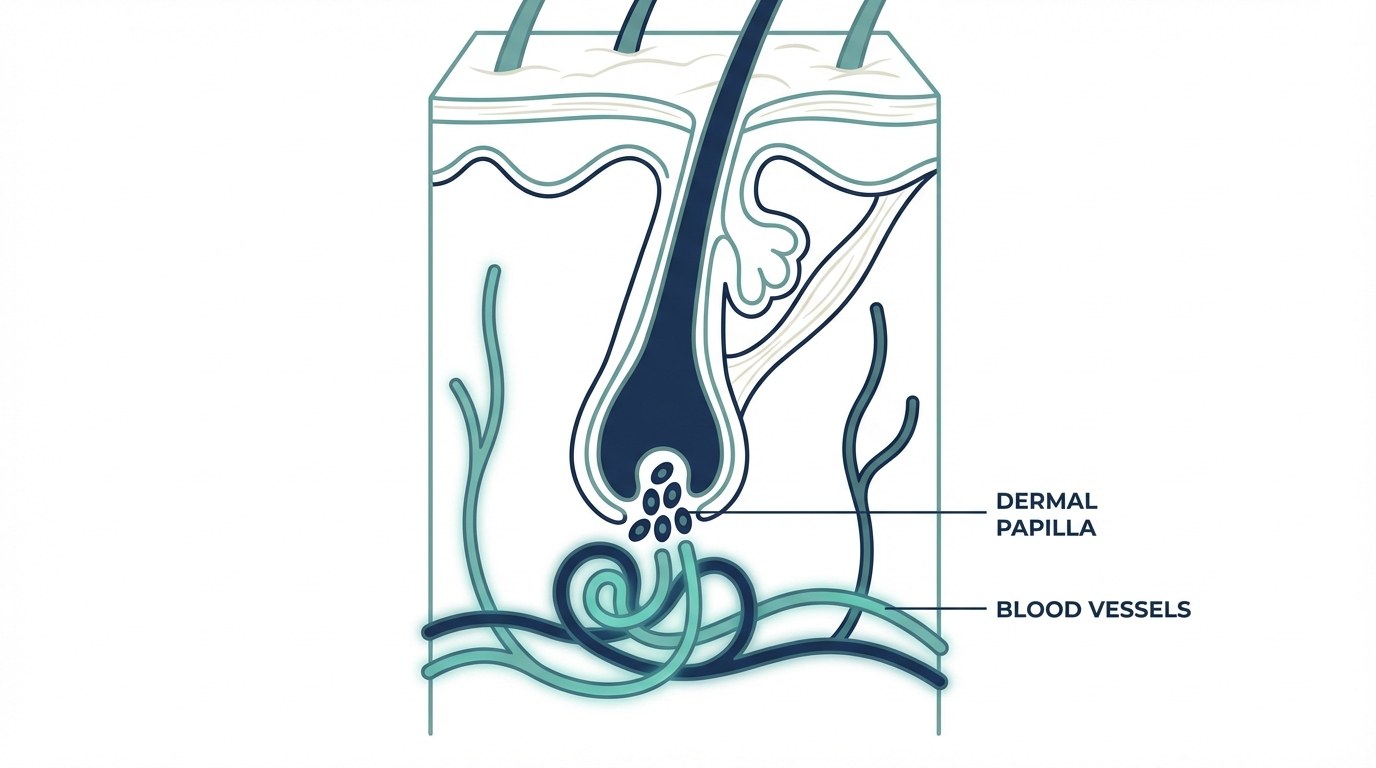
Hair follicles are among the most biologically active structures in the body. Growth and regression cycles depend on precise signaling from dermal papilla cells, stem cell niches, and the surrounding vasculature. GHK-Cu appears to influence all three.
Wnt/Beta-Catenin Pathway Activation
The Wnt/beta-catenin signaling pathway is essential for initiating the anagen (growth) phase of the hair cycle. Many researchers consider it the most important switch for follicle regeneration. GHK-Cu research has identified upstream modulation of this pathway as one of the likely drivers of observed hair growth effects - a mechanism that overlaps with the target profile of several pharmaceutical compounds currently in late-stage hair loss trials.
Dermal Papilla Cell Proliferation
Dermal papilla cells sit at the base of each follicle and essentially coordinate the hair growth cycle. In vitro studies using the tripeptide-copper complex showed concentration-dependent increases in dermal papilla cell activity (Pyo HK et al., Arch Pharm Res, 2007; PMID 17703734). Increases in dry weight, total protein, and collagen content were observed in GHK-Cu treated tissue models.
Pro-Angiogenic Effects
Hair follicles in the anagen phase require strong blood supply. GHK-Cu is well-documented as a promoter of angiogenesis - blood vessel formation. The Pickart 2008 review (PMID 18644225) identified this as a consistent feature across multiple wound healing models. Applied to the scalp, improved local vascularity may directly support follicle survival and cycling.
5-Alpha Reductase and DHT Pathways
Dihydrotestosterone (DHT) is the primary driver of androgenetic alopecia in genetically susceptible individuals. 5-alpha reductase converts testosterone into DHT. Research published in 2025 explored GHK-Cu's relationship with 5-alpha reductase signaling pathways in experimental tissue models, suggesting the peptide may modulate this pathway - though this work is preliminary and the mechanism is not yet fully characterized.
Anti-Inflammatory Action at the Follicle
Chronic low-grade scalp inflammation is increasingly recognized as a co-factor in hair loss, even in classic androgenetic patterns. GHK-Cu suppresses NFkB activity - a master regulator of inflammatory signaling - which may reduce follicle-damaging inflammatory load over time.
What the Research Shows
The published evidence on GHK-Cu for hair growth is more substantive than most topical ingredient literature. For a broader compound-by-compound ranking, see the best peptides for hair growth guide. Here are the key studies.
The Lee 2016 Clinical Trial (Ann Dermatol)
Lee WJ and colleagues published a randomized controlled trial in Annals of Dermatology (2016; PMID 27489425) examining the efficacy of a 5-ALA and GHK peptide complex in 45 male patients with pattern hair loss. The six-month trial found:
- Group A (100 mg/mL): hair count increase of 52.6 - statistically significant (p<0.05)
- Group B (50 mg/mL): hair count increase of 71.5 - statistically significant (p<0.05)
- Placebo group C: hair count increase of 9.6 (not significant)
- No adverse events were recorded in any group
The ratio of change in hair count at 6 months between group B and placebo (2.38 vs 1.21) reached statistical significance. The researchers concluded that the GHK complex "may be considered as one of the complementary agents for the treatment of male pattern hair loss."
The Pyo 2007 In Vitro Study (Arch Pharm Res)
Pyo HK et al. examined the tripeptide-copper complex directly on human hair growth in vitro. The team found concentration-dependent increases in markers of follicle activity, including dry weight, DNA content, total protein, collagen, and glycosaminoglycan content in GHK-Cu treated tissue. This study established the basic cellular framework for understanding why GHK-Cu appears to work in subsequent clinical research.
The 2023 Delivery System Study (Bioact Mater)
Liu T and colleagues (PMID 38026438, Bioactive Materials, 2023) characterized GHK-Cu as "a powerful hair growth promoter with minimal side effects when compared with minoxidil and finasteride." Their work focused on developing ionic liquid microemulsions to overcome the transdermal delivery challenge of copper peptides - a real limitation acknowledged across the research literature.
The Choi 2012 Stem Cell Study (J Pept Sci)
Choi HR and colleagues (PMID 23019153) examined stem cell recovery effects of copper-free GHK in skin tissue. GHK's role in supporting dermal stem cell function was documented, providing a mechanistic basis for the follicle regeneration effects seen in later work. This is notable because hair follicle stem cells are central to cycle reinitiation after telogen.
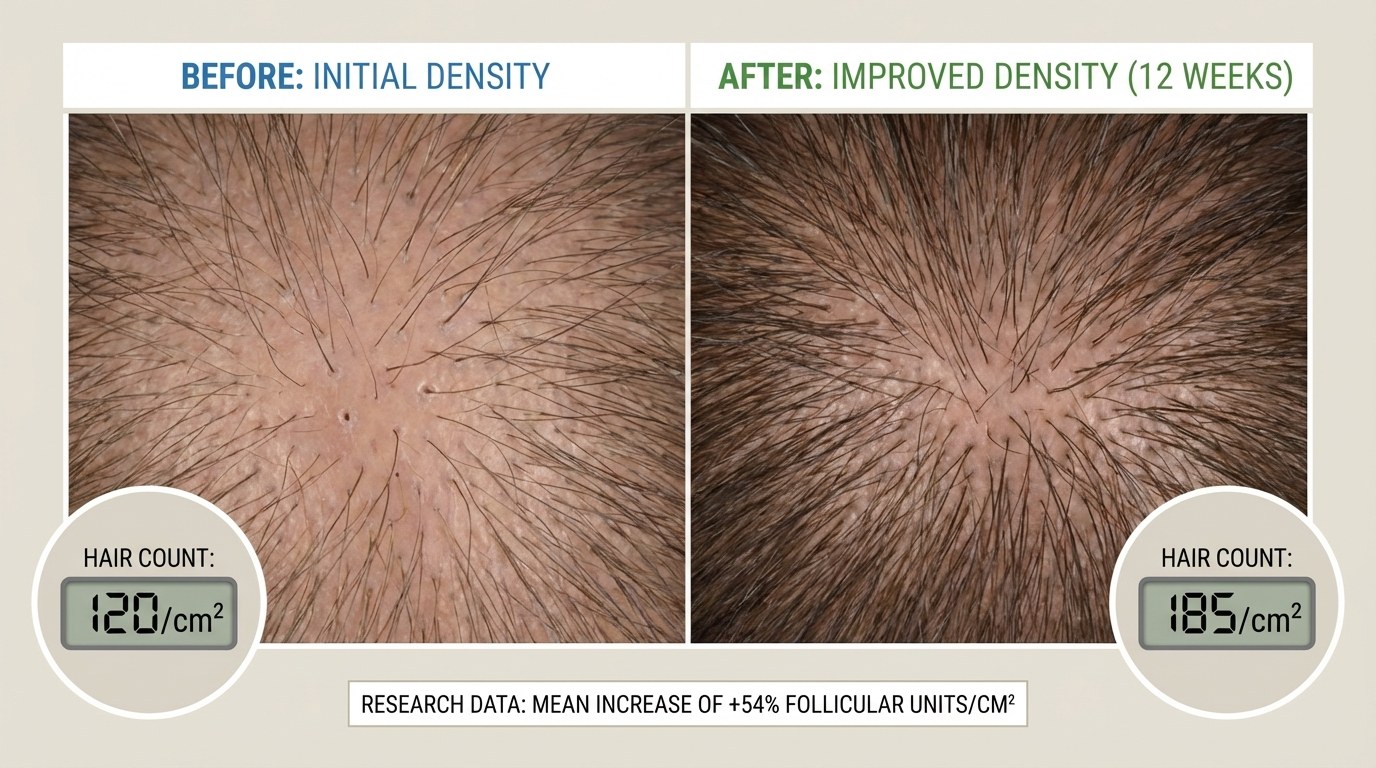
Want to see how these results compare visually? The GHK-Cu before and after page compiles documented outcomes from research subjects.
GHK-Cu Available in Injectable, Spray, and Capsule Forms
Create a free account to access 118+ research peptides including multiple GHK-Cu delivery formats
Unlock Limitless VIP Catalog →
118+ research peptides in injectable, spray, and capsule forms - create a free account to access full catalog
Use code PeptidePick for a discount at checkout
Topical vs Injectable GHK-Cu for Hair Research
Researchers studying GHK-Cu for hair growth face a fundamental challenge: the copper peptide does not penetrate the skin barrier well in standard formulations. This has driven significant work on delivery optimization.
Topical Application
Most commercially available GHK-Cu products are topical serums. The issue is bioavailability - the stratum corneum (outer skin layer) actively limits peptide penetration. Studies using standard aqueous formulations show inconsistent scalp delivery.
The 2023 Liu et al. study (Bioact Mater, PMID 38026438) addressed this directly by developing ionic liquid microemulsions (CaT-ME) as a carrier system. The results suggested substantially improved transdermal delivery compared to conventional topical application. This technology is not yet widely available in research-grade products.
Liposomal and nanoparticle encapsulation approaches have also been explored. Until these delivery improvements become standard, topical GHK-Cu effectiveness for scalp application remains a variable in interpreting research outcomes.
Injectable / Subcutaneous Research Protocols
Injectable GHK-Cu bypasses the transdermal barrier entirely. Research protocols exploring localized subcutaneous administration near the scalp are a more direct delivery method than topical application. The original Pyo 2007 work used injectable preparations in tissue models.
For reconstitution of injectable GHK-Cu, the peptide reconstitution guide covers standard bacteriostatic water protocols, and the free reconstitution calculator can help with dosing math for research purposes.
GHK-Cu vs Minoxidil and Finasteride
This comparison comes up constantly in hair loss research communities. Here is what the data actually supports - and where it falls short.
| Factor | GHK-Cu | Minoxidil | Finasteride |
|---|---|---|---|
| FDA Approval (hair) | No | Yes (OTC) | Yes (Rx) |
| Primary Mechanism | Multi-pathway (Wnt, angiogenesis, anti-inflammatory) | Vasodilator / potassium channel opener | 5-alpha reductase inhibitor (DHT reduction) |
| Side Effect Profile | Low in published trials | Scalp irritation, initial shedding | Sexual side effects (post-finasteride syndrome reported) |
| Long-Term Data | Limited (mostly 6-month trials) | Extensive (40+ years) | Extensive (30+ years) |
| Research Status | Active, pre-clinical and small RCTs | FDA-approved therapeutic | FDA-approved therapeutic |
The Liu 2023 paper's characterization of GHK-Cu as a "powerful hair growth promoter with minimal side effects compared with minoxidil and finasteride" is notable, but it reflects the early-stage comparison. GHK-Cu research does not yet include the large, multi-year randomized trials that established minoxidil and finasteride as standards of care. That said, the side effect profile documented in human trials so far is notably clean.
For comparison of peptides in general versus pharmaceutical compounds, see our peptides vs SARMs overview which covers the regulatory environment in detail.
Dosing Protocols Used in Research
This section covers what research protocols have used - not recommendations for human use. GHK-Cu is not FDA-approved for any therapeutic application.
Topical Research Concentrations
Studies examining topical application have used concentrations ranging from 0.1% to 2% GHK-Cu in serum bases. The Lee 2016 trial used the peptide as part of a 50-100 mg/mL complex with 5-ALA, applied once daily for 6 months. Commercial research serums typically supply GHK-Cu at concentrations of 1-5%.
Injectable Research Concentrations
In tissue model research, the Pyo 2007 work used injectable preparations and found concentration-dependent responses. Most injectable research peptide supply uses vials of 5 mg or 10 mg, reconstituted in bacteriostatic water. The reconstitution calculator can help establish target concentrations.
Timeline for Observable Effects
The Lee 2016 trial used 6-month measurement points. Hair growth cycles operate on roughly 90-day cycles, so minimum meaningful observation windows for hair count studies are typically 3-6 months. The statistically significant differences in that trial emerged between months 3 and 6.
For context on how GHK-Cu timelines compare to other peptides, see the how long do peptides take to work guide.
Safety Profile and Side Effects
GHK-Cu has a notably clean safety profile in published research. The Lee 2016 RCT reported zero adverse events across all three groups over six months. This is consistent with the broader GHK-Cu literature, which spans decades of use in cosmetic formulations at the topical level.
A few points worth noting:
- Copper toxicity: Theoretical at very high doses, but the amounts used in research protocols are far below systemic copper toxicity thresholds. The peptide chelates copper, which actually limits free ion availability.
- No hormonal disruption documented: Unlike finasteride, GHK-Cu has not shown evidence of endocrine disruption in published research.
- No documented shedding phase: Minoxidil commonly causes an initial shedding period as follicles transition; GHK-Cu trials have not documented this pattern.
- Unknown long-term data: The longest published human trials run to 6 months. Multi-year data does not yet exist for hair-specific applications.
For a thorough look at what side effects are documented across peptides broadly, the peptide side effects guide covers the current evidence base. And for context on GHK-Cu's skin and systemic actions beyond hair, the best peptides for anti-aging article covers how GHK-Cu fits into broader longevity protocols.
Researchers using oral supplements to complement peptide protocols sometimes combine GHK-Cu research with adaptogen and antioxidant stacks. For that use case, Nootropics Depot supplies third-party tested oral supplements - including NMN, ashwagandha, and lion's mane - as non-injectable complements. These are not peptides and do not directly replicate GHK-Cu's mechanism, but researchers interested in a multi-angle protocol sometimes include them.
Where Researchers Source GHK-Cu
Research-grade GHK-Cu is available from several US vendors who publish third-party certificates of analysis. Purity standards matter significantly for research validity - see the peptide quality verification guide for what to check before purchasing.
For a full comparison of vendors selling GHK-Cu, including purity testing standards and product forms available, see the best peptide companies breakdown.
Research-Grade GHK-Cu - 99% Purity, Third-Party Tested
Pinnacle Peptide Labs carries GHK-Cu alongside recovery and anti-aging stacks for researchers
99% pure research peptides - use code Peptidepick15 for 15% off
Use code Peptidepick15 for 15% off your order
Related Articles
- Complete GHK-Cu Peptide Guide
- GHK-Cu Before and After: Documented Research Outcomes
- Copper Peptides for Skin: What the Research Shows
- Best Peptides for Anti-Aging
- Epithalon Peptide: Longevity Research Overview
- How to Reconstitute Peptides: Step-by-Step Guide
Frequently Asked Questions
Does GHK-Cu actually work for hair growth?
Published research suggests yes, within the limits of research-scale evidence. A 2016 randomized controlled trial in Annals of Dermatology (PMID 27489425) found statistically significant increases in hair count versus placebo in male pattern hair loss patients over 6 months. In vitro studies also show concentration-dependent follicle stimulation. Larger, longer trials are needed to confirm the effect size.
How does GHK-Cu stimulate hair growth?
Research points to several mechanisms: Wnt/beta-catenin pathway activation (which drives anagen phase initiation), dermal papilla cell proliferation, pro-angiogenic effects that improve follicle blood supply, anti-inflammatory action via NFkB suppression, and possible modulation of 5-alpha reductase activity. The relative contribution of each pathway is still being characterized.
Is topical or injectable GHK-Cu better for hair?
Injectable preparations bypass the transdermal barrier, which is a documented limitation of standard topical GHK-Cu. Research on advanced delivery systems (liposomal, ionic liquid microemulsions) aims to close this gap for topical use, but injectable forms currently offer more predictable scalp delivery in research contexts.
How long does GHK-Cu take to show effects on hair?
The Lee 2016 trial measured outcomes at 1, 3, and 6 months. Statistically significant differences emerged by month 3 and were maintained through month 6. Given that hair growth cycles run roughly 90 days, a minimum 3-month observation window is standard in hair research. Most published protocols run 6 months for meaningful outcome data.
Is GHK-Cu safe to use?
In published human trials, GHK-Cu has shown a clean safety profile. The Lee 2016 RCT reported no adverse events in any group across 6 months. GHK-Cu is not FDA-approved for human use and is sold strictly for research purposes. Anyone considering peptide research should consult a licensed physician first.
Can GHK-Cu be combined with minoxidil or finasteride?
There are no published RCTs examining combination protocols of GHK-Cu with minoxidil or finasteride. Given the different mechanisms, the theoretical case for synergy is reasonable - but this is speculative without direct combination study data. Researchers approaching this question should work within clinical supervision.
Where can I buy research-grade GHK-Cu?
Several US vendors supply third-party tested GHK-Cu including Ascension Peptides, Limitless Life Nootropics, and Pinnacle Peptide Labs. Before purchasing, verify certificates of analysis for purity and check vendor testing standards. The best peptide companies guide covers how to evaluate vendors.