

FDA DISCLAIMER: PeptidePick covers research peptides and experimental compounds. The information on this page is for educational purposes only and is not intended to diagnose, treat, cure, or prevent any disease. These compounds have not been approved by the FDA for human use. Always consult a qualified healthcare provider before starting any peptide protocol.
PeptidePick preferred picks
Use the highest-value vendor routes first.
Pinnacle is first for the 15% discount code. Ascension is the broad-catalog default when you want the cleaner research-only route.
Research-only affiliate links. Verify COAs, labels, and shipping terms before checkout.
Best Peptides for Hair Growth: Top Compounds Ranked by Research Strength
TLDR
GHK-Cu leads the field - it increased dermal papilla cell proliferation by up to 70% in lab studies and activates the Wnt/beta-catenin signaling pathway linked to follicle cycling. TB-500 (thymosin beta-4) activated hair follicle stem cells in animal models. BPC-157, PTD-DBM, and Epithalon round out the list with early but promising data. None of these have FDA approval for hair loss, and most evidence is still preclinical.
Hair loss affects roughly 50 million men and 30 million women in the United States. Most go through the same rotation: minoxidil, finasteride, PRP, maybe hair transplant consults. Results are inconsistent, and the side effect profiles - especially finasteride's hormonal effects - push a lot of people to look for other options.
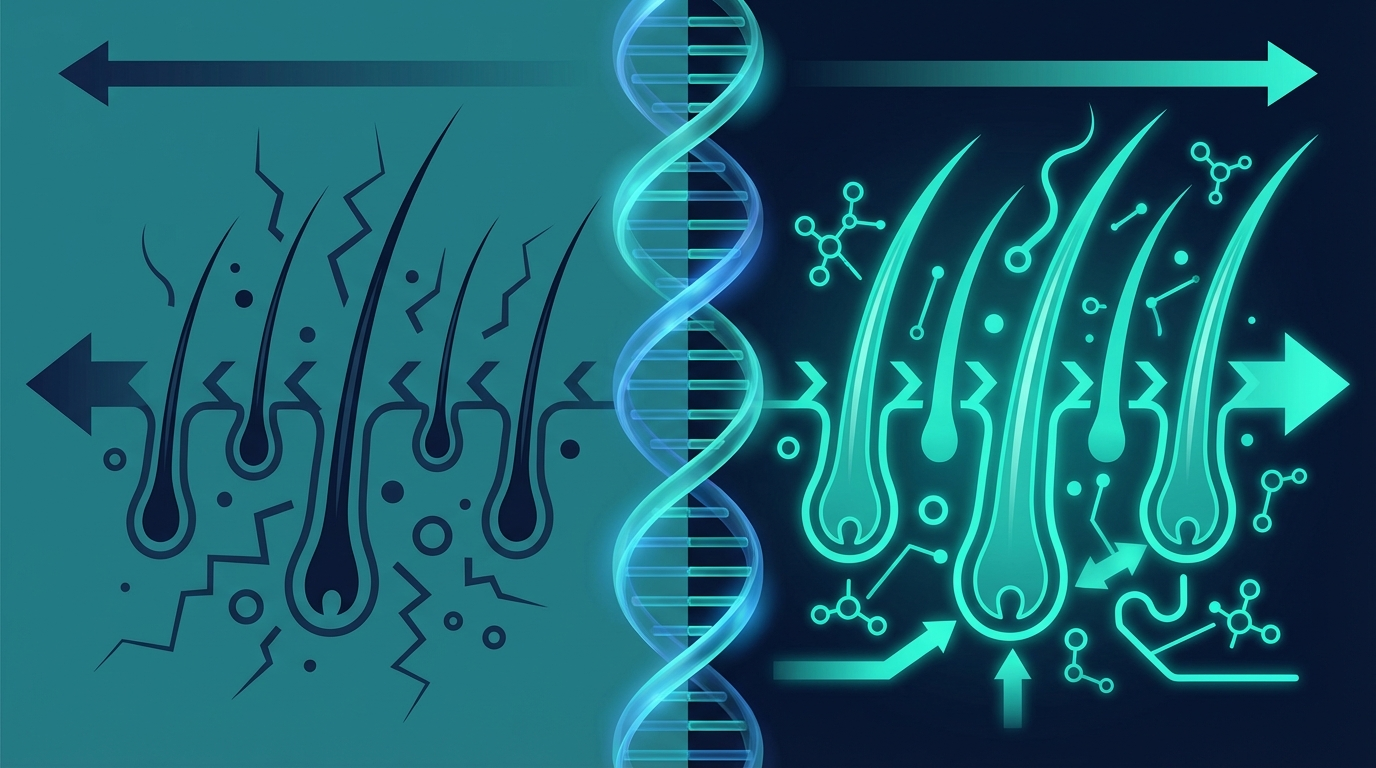
Peptides represent a different mechanism entirely. Rather than blocking DHT or forcing blood to the scalp, specific peptides work at the cellular level: stimulating the dermal papilla cells that control follicle activity, activating stem cells in the follicle bulge, and promoting the angiogenesis that keeps follicles nourished. The research base is growing fast.
This guide ranks the best peptides for hair growth by the actual quality and depth of the research behind them - not hype, not anecdote. You'll find real study data, the proposed mechanisms, what's still unknown, and where each compound sits in the current evidence picture. For context on the broader peptide world, see our guide to the top peptide research companies.
How Hair Follicles Work - and Where They Break Down
Each hair follicle runs a continuous cycle: anagen (active growth, lasting 2-7 years), catagen (transition, roughly 2-3 weeks), and telogen (resting phase, about 3 months). In a healthy scalp, most follicles stay in anagen. In androgenetic alopecia - pattern hair loss - this balance shifts.
Miniaturization is the core problem. DHT (dihydrotestosterone) binds to receptors in susceptible follicles and shortens each growth cycle. Over years, each cycle produces thinner, shorter, lighter hair. Eventually the follicle stops producing visible hair altogether.
The dermal papilla cells at the base of each follicle are the control center. They signal whether the follicle enters or exits anagen. They also communicate with the follicle stem cells sitting in the "bulge" region midway down the follicle shaft - those stem cells regenerate the follicle between cycles.
Peptides that target either dermal papilla cell function or stem cell activation can, in theory, reverse or slow miniaturization. That's the hypothesis. Here's what the research actually shows.
GHK-Cu, TB-500, and Hair-Focused Peptides - Third-Party Tested
Ascension Peptides carries all major research compounds studied for hair follicle biology, with independent lab verification on every batch.
Start With Ascension Peptides →
60+ third-party tested research peptides and stacks
GHK-Cu: The Strongest Research Case for Hair Growth
GHK-Cu (glycyl-L-histidyl-L-lysine copper complex) is a tripeptide naturally present in human plasma. Levels are around 200 ng/mL at age 20 and fall to roughly 80 ng/mL by age 60. That 60% age-related decline tracks with the timeline of most hair thinning - which is what initially drew researchers to investigate it.
The mechanism GHK-Cu operates through is multi-channel, which may explain why the evidence looks more consistent than single-mechanism approaches.
What the Studies Show
Pickart and Margolina (2018) demonstrated that GHK-Cu increased dermal papilla cell proliferation by up to 70% compared to untreated controls. Since dermal papilla cells drive follicle cycling, stimulating their growth directly supports hair production and potentially reverses miniaturization.
Pyo et al. (2007) studied AHK-Cu - a related copper peptide - and found it stimulated human hair follicle elongation while reducing markers of cell death in dermal papilla cells. Caspase-3 activity dropped 42.7% and PARP cleavage dropped 77.5%.
These are standard markers of cellular apoptosis. In practical terms, the peptide kept follicle cells alive longer.
A 2023 study published in a peer-reviewed formulation journal (PMC10643103) developed a GHK-Cu microemulsion for topical delivery and tested it in mice. The system improved local peptide delivery approximately 3-fold compared to standard topical application. More importantly, the study identified that GHK-Cu activated the Wnt/beta-catenin signaling pathway - a key regulator of the anagen phase.
It also increased VEGF production, improving scalp blood supply, and stimulated dermal papilla cell differentiation and proliferation. All three mechanisms operating through a single compound is notable.
GHK-Cu also increases follicle size. Animal studies show it can reverse miniaturization by enlarging shrunken follicles - not just maintaining existing ones. The telogen-to-anagen transition (the shift from resting back to active growth) was accelerated in multiple rodent models.
Limitations Worth Knowing
Most GHK-Cu hair data comes from cell culture and animal studies. Large-scale randomized controlled human trials are still missing from the literature. Topical delivery is genuinely complicated - skin is an effective barrier, which is why the 2023 microemulsion study matters. Standard GHK-Cu serums may have inconsistent follicular penetration without adjuncts like microneedling.
Existing coverage of GHK-Cu's hair applications is available in our GHK-Cu for hair growth deep-dive and the full GHK-Cu compound guide.
TB-500 (Thymosin Beta-4): Stem Cell Activation and Scalp Repair
Thymosin beta-4 is a 43-amino acid peptide found throughout the body, best known in research circles for its role in wound healing and tissue repair. Its connection to hair regrowth was, by most accounts, discovered by accident.
Researchers studying wound healing in mice noticed significant hair regrowth around thymosin beta-4 injection sites. That observation triggered a dedicated line of investigation.
The Evidence
Philp et al. (2004) published in the FASEB Journal showing that thymosin beta-4 stimulated hair growth in rats and mice. The mechanism: activation of follicle stem cells in the bulge region, increased expression of hair-cycle-related genes, and facilitated stem cell migration to the follicle base where they regenerate follicular tissue.
Mice with overexpressed thymosin beta-4 genes showed more hair shafts per unit area and faster growth cycles than controls. That's a meaningful finding because overexpression models give you a sustained signal - you can track long-term effects rather than just acute responses.
TB-500 is the synthetic research analog - specifically the active fragment of thymosin beta-4 (amino acids 17-23 of the sequence). It retains the stem cell activation and anti-inflammatory properties of the full molecule. Research suggests additional hair-relevant mechanisms including anti-inflammatory action (scalp inflammation accelerates follicle miniaturization) and angiogenesis at the follicle level.
For the full TB-500 profile, see our TB-500 guide covering mechanisms and research protocols.
What's Still Unknown
Human trial data for TB-500 specifically targeting hair growth does not yet exist in the published literature. The animal models are consistent and the mechanisms are plausible, but this compound has not been through the same level of hair-focused clinical investigation as, say, minoxidil. That gap matters when evaluating claims.
BPC-157: Scalp Vascularity and Inflammation Control
BPC-157 (Body Protective Compound 157) is a pentadecapeptide originally derived from a gastric juice protein sequence, primarily studied in Zagreb labs. Its main documented effects are accelerated tissue repair, angiogenesis, and anti-inflammatory activity. None of those are hair-specific, but all three are relevant to scalp health.
Important context: The FDA has characterized BPC-157 as presenting "significant safety risks" and moved to restrict its use in compounding. The compound remains under active regulatory scrutiny. Any research use should be framed accordingly.
Hair-Relevant Mechanisms
BPC-157's best-documented effect in hair contexts is vascular. It promotes VEGF expression and accelerates capillary formation - the same mechanism that makes minoxidil work, though through a different pathway. Better scalp vascularity means follicles receive more oxygen and nutrients.
Its anti-inflammatory effects are also relevant. Chronic scalp inflammation is increasingly recognized as a co-factor in androgenetic alopecia, not just a consequence of it. Fibrosis around the follicle base is one pathway through which inflammation permanently damages follicles. BPC-157's documented anti-fibrotic activity in other tissue types is worth noting here, though direct scalp data is thin.
There are no dedicated hair growth studies for BPC-157. The case for it rests on mechanistic plausibility rather than direct evidence. See our full BPC-157 guide for the full research picture.
Browse GHK-Cu in Injectable, Spray, and Capsule Forms
Limitless Life Nootropics carries 118+ research peptides with the widest delivery form selection of any vendor - including nasal spray and capsule formats you won't find elsewhere.
Unlock Limitless VIP Catalog →
118+ research peptides in injectable, spray, and capsule forms - create a free account to access the full catalog
Use code PeptidePick for a discount at checkout
PTD-DBM: The Wnt Pathway Activator
PTD-DBM (also called PTD-DBAIT in some literature) is a synthetic peptide designed to activate the Wnt/beta-catenin signaling pathway - one of the most important regulators of the anagen phase in hair follicles. If you've been following peptide hair research over the past few years, this compound has generated genuine interest in the dermatology research community.
The Research
A 2017 study by Kwack et al. demonstrated that PTD-DBM stimulated human dermal papilla cells in vitro by blocking CXXC-type zinc finger protein 5 (CXXC5), which is a negative regulator of the Wnt pathway. By inhibiting the brake on Wnt signaling, the compound effectively extended the anagen phase and promoted follicle entry into growth mode.
The same research group showed that PTD-DBM, combined with valproic acid (a HDAC inhibitor), produced significant hair regrowth in mouse models. The combination triggered follicle neogenesis - actually generating new follicles, not just maintaining existing ones. That finding attracted attention because standard treatments don't produce new follicles.
Delivery is the primary research challenge. PTD stands for "protein transduction domain" - the peptide was specifically designed to penetrate cell membranes, which gives it a topical delivery advantage over many other compounds. But human scalp data is limited to early-phase work.
Current Status
PTD-DBM is newer than GHK-Cu and TB-500 with a smaller body of published research. The mechanistic rationale is sound, and the mouse data is compelling. But it requires more human evidence before drawing firm conclusions. That said, among newer entries in this space, it's one of the more scientifically grounded options.
Epithalon: Telomere Biology and Follicle Longevity
Epithalon (Epitalon) is a tetrapeptide - Ala-Glu-Asp-Gly - developed from pineal gland research in Russia in the 1970s and 1980s. Its primary studied mechanism is telomerase activation: the enzyme that maintains telomere length and extends cellular lifespan.
Hair follicle cells divide rapidly and are among the most telomere-sensitive cells in the body. As follicle cells accumulate telomere damage over time, their ability to regenerate between cycles declines. This is a contributing factor to age-related hair thinning that differs from androgenetic alopecia - it's not about DHT, it's about cellular aging.
Epithalon's documented effects on telomere length and cell division capacity are relevant here, though direct hair follicle studies are sparse. The compound shows up more frequently in anti-aging and longevity research, with the hair application being an extension of its general cellular rejuvenation effects.
For a full breakdown of Epithalon's evidence base, see our Epithalon peptide benefits guide. It also features in our best anti-aging peptides roundup.
Comparison Table: Peptides for Hair Growth Ranked by Research Strength
| Peptide | Primary Mechanism | Evidence Level | Human Data | Best For |
|---|---|---|---|---|
| GHK-Cu | Dermal papilla stimulation, VEGF, Wnt activation | Strong (in vitro + animal + some clinical) | Limited clinical observations | All hair loss types, general thinning |
| TB-500 | Stem cell activation, angiogenesis, anti-inflammatory | Moderate (strong animal) | None published | Inflammation-driven loss, scalp repair |
| PTD-DBM | Wnt/beta-catenin activation (CXXC5 inhibition) | Moderate (early stage) | Very limited | Anagen phase extension, potential neogenesis |
| BPC-157 | Angiogenesis, anti-fibrotic, anti-inflammatory | Moderate (indirect) | None published for hair | Scalp health, vascular support |
| Epithalon | Telomerase activation, cellular longevity | Weak (hair-specific) | None published for hair | Age-related thinning, longevity protocols |
Peptides vs Minoxidil and Finasteride: Honest Comparison
Minoxidil has decades of human clinical data. Finasteride has decades of human clinical data. No peptide in this article comes close to that evidence base for hair loss specifically. That's the honest starting point.
But the comparison isn't as one-sided as it might seem when you look at the mechanisms.
Minoxidil works primarily by dilating blood vessels in the scalp and prolonging the anagen phase. It does not address DHT-driven miniaturization directly. When you stop using it, most gained hair sheds within months. It also causes cardiovascular side effects at higher doses and tachycardia is documented even with topical use in sensitive individuals.
Finasteride blocks 5-alpha reductase, reducing DHT by roughly 70%. It's effective - studies show around 90% of men halt further loss and about 65% see measurable regrowth over two years. But the side effect profile includes sexual dysfunction in 2-8% of users (some persistent post-discontinuation), depression, and gynecomastia. It's also not approved for women of childbearing age.
Peptides - particularly GHK-Cu - operate differently. GHK-Cu doesn't suppress hormones. It targets the cellular machinery of the follicle directly. The theoretical advantage is that you're building up follicle health rather than just maintaining the status quo through hormonal suppression.
And the side effect profile, based on decades of cosmetic use data, looks considerably cleaner than what finasteride carries.
The practical takeaway: peptides are not a replacement for proven treatments with strong human data. But for people who can't tolerate finasteride's side effects, or who want to layer approaches, the mechanistic rationale for peptides - especially GHK-Cu - is grounded in real biology.
For broader context on the legal and regulatory status of research peptides, and how they compare to approved treatments, that guide is worth reviewing. Also see how timelines compare in our realistic peptide timeline guide.
Delivery Methods: Topical vs Injectable for Hair Peptides
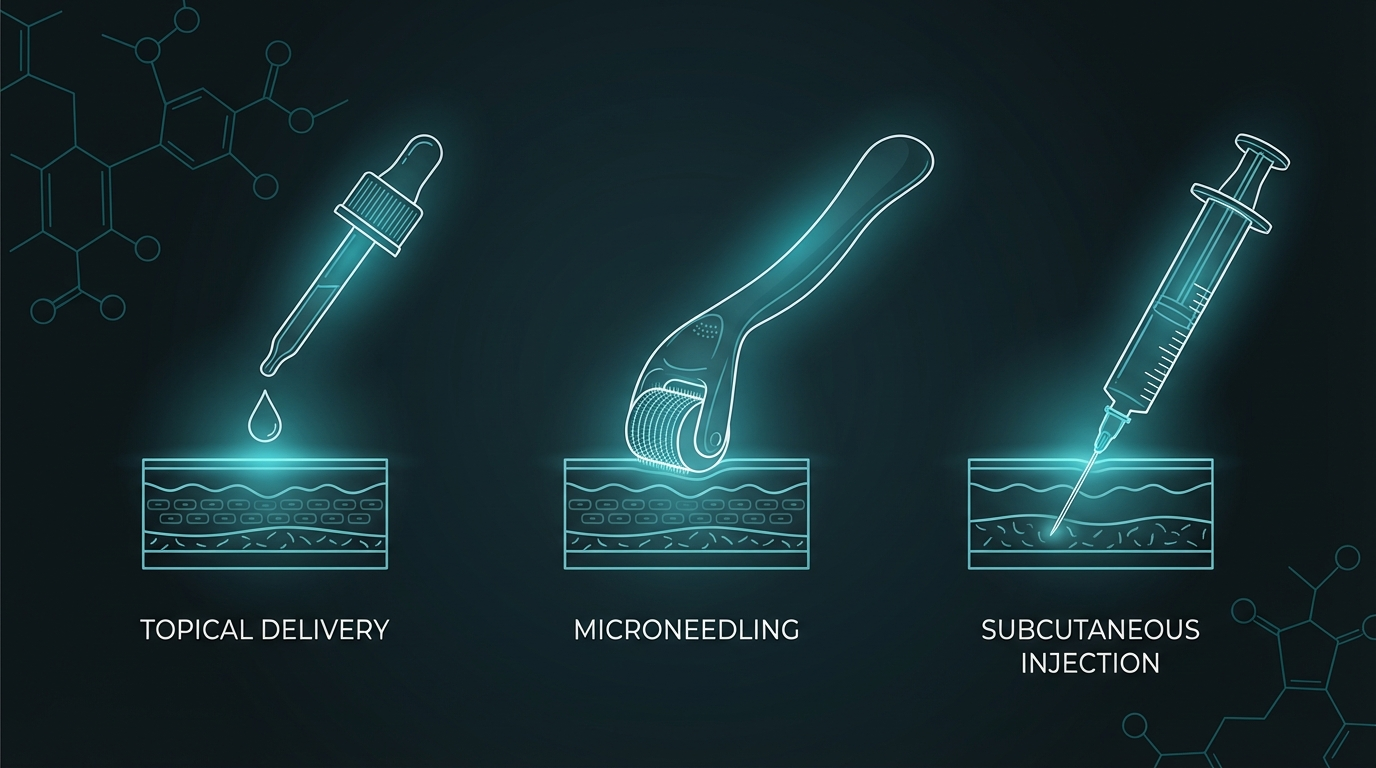
How you administer the peptide matters as much as which peptide you use. This is particularly true for GHK-Cu, where the 2023 PMC study's core finding was that standard topical delivery gets less than a third of the peptide to follicle level compared to their optimized microemulsion system.
Topical application is the most accessible route and has the longest cosmetic use history for GHK-Cu. Standard 1-2% serums applied directly to the scalp are the baseline protocol. The limitation is skin penetration - the stratum corneum is an effective barrier, and follicles sit below the surface.
Microneedling combined with topical is the approach showing the strongest results in early combination research. Microneedling (0.5-1.5mm roller or stamp) creates microchannels that improve peptide penetration significantly. The mechanical stimulation from needling also independently triggers growth factor production. The combination effect is greater than either alone.
Subcutaneous injection into the scalp delivers the peptide directly to the follicle environment. This is the approach used in clinical settings for GHK-Cu and TB-500 hair protocols. Typical GHK-Cu injection protocols run 1-2 mg several times per week, cycled over 4-8 weeks. It requires proper technique - see our guide on how to inject peptides safely and our free peptide reconstitution calculator for mixing guidance.
For anyone new to peptide preparation, our peptide reconstitution guide covers the full mixing process step by step.
Capsule and nasal spray options exist but are less studied for hair-specific applications. The oral bioavailability of most peptides is poor - they are broken down in the GI tract before reaching systemic circulation.
GHK-Cu, TB-500, Epithalon - 99% Purity Research Grade
Pinnacle Peptide Labs carries every compound covered in this article, with third-party CoA verification and same-day domestic shipping.
99% pure research peptides
Use code Peptidepick15 for 15% off your order
Related Articles
- GHK-Cu for Hair Growth: What the Research Actually Shows
- GHK-Cu Guide: Benefits, Dosage and Research
- Copper Peptides for Skin: Benefits, Research, and How to Use Them
- Best Anti-Aging Peptides
- Epithalon Peptide Benefits: What the Research Actually Shows
- BPC-157 Guide: Benefits, Dosage and Research
Frequently Asked Questions
What is the best peptide for hair growth?
GHK-Cu has the strongest research base among peptides studied for hair growth. It increased dermal papilla cell proliferation by up to 70% in published studies, activates the Wnt/beta-catenin signaling pathway, increases VEGF production, and has decades of cosmetic safety data. TB-500 is a close second for its stem cell activation effects, particularly for inflammatory hair loss.
Do peptides actually regrow hair?
In cell culture and animal models, several peptides - particularly GHK-Cu and thymosin beta-4 - have demonstrated measurable effects on follicle cycling, stem cell activation, and hair shaft production. Large-scale randomized human clinical trials are still lacking. The mechanisms are biologically sound, but "proven to regrow hair in humans" is not an accurate characterization of where the evidence currently stands.
How long does it take for peptides to show hair growth results?
Hair growth is a slow process regardless of the treatment. The hair follicle cycle itself takes 3-6 months for a full cycle. Most practitioners using GHK-Cu or TB-500 for hair note that a minimum of 3-4 months is required before meaningful assessment.
Early markers like reduced shedding or improved hair texture may appear sooner. See our guide on realistic peptide timelines for more detail.
Can peptides be used alongside minoxidil or finasteride?
There is no published data on combination protocols mixing peptides with minoxidil or finasteride. Most practitioners who use peptide-based hair protocols use them either as a standalone approach or alongside complementary interventions like microneedling and low-level laser therapy. Anyone considering combining treatments should consult a knowledgeable healthcare provider.
Are peptides for hair growth legal?
In most jurisdictions, research peptides like GHK-Cu, TB-500, and Epithalon can be legally purchased for research purposes. Regulatory rules vary - the FDA has specifically flagged BPC-157 as presenting significant safety risks and restricted its compounding. Laws differ by country. Our complete guide on peptide legality covers the current regulatory status in detail.
Is topical or injectable GHK-Cu better for hair?
Research suggests injectable (subcutaneous) GHK-Cu delivers more peptide to the follicle environment than standard topical application. A 2023 study found that even an optimized topical microemulsion system still only matched about a third the follicular delivery of direct injection. Topical with microneedling is a practical middle ground - the microchannels created by needling significantly improve penetration compared to topical alone.
Does GHK-Cu work for female hair loss?
GHK-Cu's mechanisms - dermal papilla stimulation, VEGF production, Wnt pathway activation - are not sex-specific. Androgenetic alopecia in women operates differently from the male pattern (diffuse thinning vs. frontal recession), but the follicle biology being targeted is the same. There's no published sex-stratified hair growth data for GHK-Cu specifically, but its cosmetic use record in women is extensive.
Affiliate Disclosure: PeptidePick participates in affiliate programs. Some links on this page are sponsored and we may earn a commission if you make a purchase. This does not affect our editorial content or rankings. We only link to vendors we have vetted and believe provide quality research compounds.