

FDA Disclaimer: N-Acetyl Semax Amidate is a research peptide not approved by the FDA for human use. All information on this page is for educational and research purposes only. This content does not constitute medical advice and is not intended to diagnose, treat, cure, or prevent any disease. Consult a qualified healthcare professional before using any peptide compound.
PeptidePick preferred picks
Use the highest-value vendor routes first.
Pinnacle is first for the 15% discount code. Ascension is the broad-catalog default when you want the cleaner research-only route.
Research-only affiliate links. Verify COAs, labels, and shipping terms before checkout.
N-Acetyl Semax Amidate: NA-Semax Amidate Research Guide
TLDR Summary
N-Acetyl Semax Amidate - also called NA-Semax Amidate - is the most chemically stable and bioavailable form of Semax. It combines an N-terminal acetyl group with a C-terminal amide modification, making it roughly 3-4x more potent per microgram than standard Semax. Research on the parent compound shows BDNF upregulation, dopaminergic activation, neuroprotection, and improved cognitive performance - effects researchers expect to carry over at lower doses with this enhanced variant.
Most people researching nootropic peptides encounter Semax first. But the variant getting the most attention from researchers today is NA-Semax Amidate - the most stable and bioavailable form in the Semax family. It has a real track record - approved in Russia as a prescription drug since the 1990s, used clinically for stroke recovery, cognitive disorders, and optic nerve damage. NA Semax Amidate is what happens when researchers push that compound further.
Two chemical modifications - an acetyl group on the N-terminus and an amide on the C-terminus - dramatically slow enzymatic degradation and increase receptor binding affinity. The result is a peptide that researchers consider the most potent Semax variant available. This guide breaks down the science, the evidence base it draws from, and what distinguishes it from the standard forms.
What Is N-Acetyl Semax Amidate?
Semax itself is a heptapeptide - a synthetic analogue of the ACTH (4-10) fragment, with the amino acid sequence Met-Glu-His-Phe-Pro-Gly-Pro. It was first described in scientific literature in 1991 and developed at the Institute of Molecular Genetics of the Russian Academy of Sciences. Unlike full ACTH (which primarily affects cortisol and adrenal function), this fragment and its analogues were engineered specifically for central nervous system activity.
N-Acetyl Semax Amidate adds two protective modifications to that base structure:
- N-terminal acetylation - an acetyl group attached to the beginning of the peptide chain, shielding it from aminopeptidase enzymes that would otherwise cleave it quickly
- C-terminal amidation - the carboxyl end is converted to an amide, protecting against carboxypeptidase degradation and often improving receptor interaction
Together these modifications significantly extend the peptide's half-life in biological systems and improve its ability to cross the blood-brain barrier. For researchers, that means lower doses may produce equivalent - or stronger - effects compared to unmodified Semax. The molar mass shifts accordingly from Semax's 813.93 g/mol, but the functional amino acid sequence remains the same ACTH-derived core.
Research NA Semax Amidate from a Tested Source
Third-party purity testing on every batch - critical for accurate cognitive peptide research
Start With Ascension Peptides →
60+ third-party tested research peptides and stacks
Semax Variants Compared: Regular vs. Amidate vs. NA Semax Amidate
The Semax family now includes several distinct compounds. Understanding the differences matters for any serious research protocol.
| Variant | N-Terminal | C-Terminal | Stability | Relative Potency |
|---|---|---|---|---|
| Semax | Free amine | Free acid | Baseline | 1x |
| Semax Amidate | Free amine | Amide (-NH2) | Moderate increase | ~2x |
| NA Semax Amidate | Acetyl (N-Ac) | Amide (-NH2) | Highest | ~3-4x |
| N-Acetyl Semax | Acetyl (N-Ac) | Free acid | High | ~2-3x |
The potency estimates come from researcher community comparisons and are not established in head-to-head clinical trials. NA Semax Amidate is generally considered the "double-protected" version - both ends are capped against enzymatic attack. For nasal spray delivery (the standard administration route), this extended stability is particularly valuable since the nasal mucosa is rich in degradation enzymes.
Mechanism of Action
The exact mechanism is not fully established for any Semax variant, including NA Semax Amidate. That said, research on the parent compound points to several converging pathways.
BDNF and TrkB Upregulation
Animal studies show Semax rapidly raises brain-derived neurotrophic factor (BDNF) and its signaling receptor TrkB in the hippocampus. One frequently cited finding reports BDNF levels increasing 1.4 times with corresponding doubling of TrkB receptor expression. BDNF is central to neuroplasticity - the brain's ability to form new synaptic connections and adapt to learning demands.
NA Semax Amidate also appears to modulate NGF (nerve growth factor) and GAP-43 expression, both of which play roles in axon growth and synaptic remodeling.
Melanocortin Receptor Activity
Evidence suggests Semax may competitively antagonize alpha-melanocyte-stimulating hormone (alpha-MSH) at MC4 and MC5 receptors. These melanocortin receptors are expressed in the brain and influence dopaminergic tone, energy balance, and stress responses. This interaction may partly explain the compound's reported mood-stabilizing effects.
Monoamine System Activation
Research shows Semax rapidly activates both serotonergic and dopaminergic systems. This dual monoamine effect is consistent with the anxiolytic-like and antidepressant-like effects observed in animal models. Studies also found potentiation of D-amphetamine's locomotor effects, indicating genuine dopamine system engagement.
Enkephalinase Inhibition
There is also evidence that Semax may inhibit enkephalinase - an enzyme responsible for degrading certain endogenous neuropeptides. This could extend the activity of naturally occurring brain peptides involved in mood and pain modulation. It is worth noting that no single mechanism fully explains the compound's observed effects, and it likely acts through several of these pathways simultaneously.

What the Research Actually Shows
A key point upfront: direct clinical trials on NA Semax Amidate specifically are essentially absent. The available human research covers Semax (the parent compound), and researchers typically extrapolate from those findings. Given how the structural modifications work, this extrapolation is scientifically defensible - but it should be stated clearly.
Here is what the Semax research actually shows:
Cognitive Performance Under Fatigue
A study published on ResearchGate examined Semax's effect on healthy volunteers after an 8-hour work shift - a fatigue model relevant to real-world cognitive demands. Subjects received a single intranasal dose of 16 mcg/kg. On memory testing, the Semax group achieved 71% accuracy versus 41% in controls. That gap is substantial for a single-dose intervention in otherwise healthy individuals.
Default Mode Network Changes
A 2018 study published in PubMed (PMID 30225715) used fMRI to track real-time brain changes in 24 middle-aged subjects after intranasal Semax. Scans at 5 and 20 minutes post-administration showed increased volume in the rostral subcomponent of the default mode network, particularly in the medial frontal cortex - a region associated with episodic memory and self-referential thought. This represents one of the more rigorous mechanistic demonstrations in human subjects.
Stroke Recovery and BDNF
In a trial of 110 stroke patients (PMID 29798983), intranasal Semax at 6,000 mcg/day across two 10-day treatment courses raised plasma BDNF levels and produced measurable improvements in motor function and functional independence. Semax is officially approved in Russia for stroke therapy, and this trial reflects the clinical basis for that approval.
Anti-Inflammatory Effects
Acute stroke research (PMID 10358912) found that Semax increased anti-inflammatory mediators including interleukin-10 while decreasing pro-inflammatory markers like interleukin-8 and C-reactive protein. Neuroinflammation is increasingly recognized as a factor in cognitive decline, so this mechanism may have broader relevance beyond acute injury contexts.
Anxiety and Stress Response
Rat studies (PMID 20387390) showed Semax had no notable effects under normal baseline conditions but countered behavioral disturbances triggered by cholecystokinin-tetrapeptide - a substance used to model anxiety and panic states. This suggests potential anxiolytic activity under conditions of heightened stress rather than a simple sedative effect. That distinction matters for researchers interested in stress-resilience applications.
Access 118+ Research Peptides Including NA Semax Amidate in Multiple Forms
Injectable, nasal spray, and capsule options - more delivery forms than any other vendor
Unlock Limitless VIP Catalog →
118+ research peptides in injectable, spray, and capsule forms - create a free account to access the full catalog
Use code PeptidePick for a discount at checkout
Dosing and Administration
No established clinical dosing protocol exists for NA Semax Amidate specifically. The following information reflects common researcher-reported approaches derived from extrapolating Semax human data and adjusting for the variant's estimated higher potency.
Standard Semax reference range: Human studies used 0.1 mg/kg to 0.3 mg/kg intranasal doses, with some clinical protocols going up to 600-6,000 mcg/day.
Typical NA Semax Amidate research range: 100 to 300 mcg per dose, intranasal. Because the "amidate" modification significantly slows degradation, researchers generally start at the lower end and assess individual response before adjusting.
Administration Notes
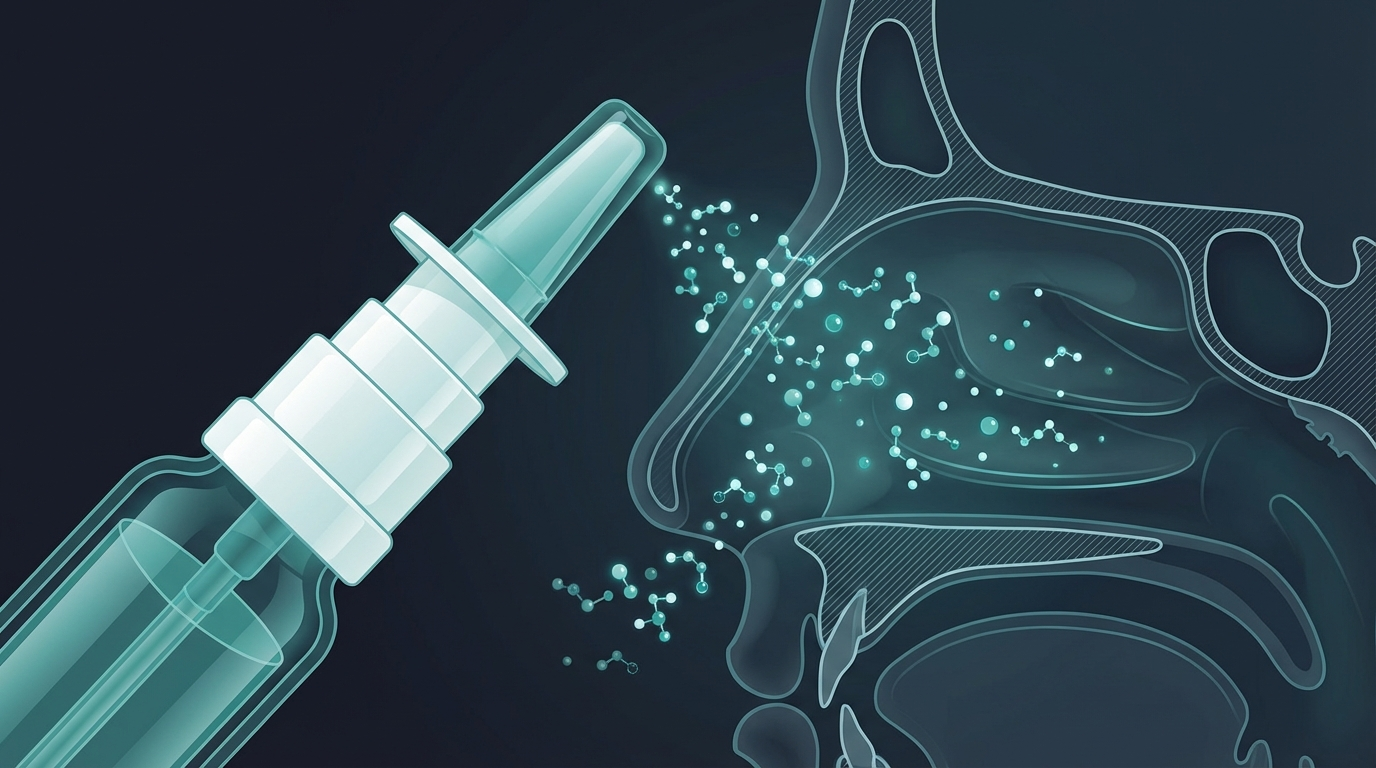
- Nasal spray is the standard delivery method and aligns with all available human research on Semax
- For preparation from lyophilized powder, see PeptidePick's reconstitution guide - bacteriostatic water is the standard diluent
- Use the free peptide reconstitution calculator to calculate volumes accurately
- Most research protocols span 2-4 weeks of daily dosing, sometimes followed by a break period
- Some researcher logs suggest dividing the daily dose across morning and midday to align with peak cognitive demand windows
An important caveat: the high potency estimated for NA Semax Amidate also means dosing errors carry greater weight. Using an accurate reconstitution calculator is not optional for this compound - it is basic research due diligence.
Side Effects and Safety Profile
Semax has a relatively good safety record in Russian clinical practice over decades. NA Semax Amidate has no independent long-term safety data in humans.
Commonly reported side effects in Semax research and researcher self-reports for NA Semax Amidate include:
- Mild nasal irritation or congestion from intranasal delivery
- Temporary fatigue or lethargy reported by some researchers, possibly related to the dopaminergic modulation
- Headache at higher doses - a common signal to reduce dose
- Rare reports of increased anxiety, which may indicate overstimulation of the serotonergic pathways at excessive doses
The compound does not appear to interact with cortisol or adrenal function the way full ACTH does - that is by design. The ACTH (4-10) fragment retains nootropic activity but lacks the steroidogenic activity of full ACTH. This separation is one of Semax's original design rationales.
Given the higher potency of NA Semax Amidate, side effects observed at standard Semax doses could theoretically occur at lower microgram quantities. Starting conservatively and not exceeding research-range doses is standard protocol.
NA Semax Amidate vs. Semax and Selank
These three peptides are often compared because they all fall into the cognitive/nootropic category. But they have meaningfully different profiles. The existing Semax vs. Selank comparison on PeptidePick covers the parent compound differences in depth - here is a concise breakdown specifically for NA Semax Amidate:
| Compound | Primary Profile | Key Strength | Limitation |
|---|---|---|---|
| NA Semax Amidate | Cognitive enhancement, BDNF upregulation, neuroprotection | Highest potency per mcg, most stable form | No direct clinical trials |
| Semax | Cognitive enhancement, neuroprotection, stroke recovery | Most research evidence, approved in Russia | Faster degradation, higher doses needed |
| Selank | Anxiolytic, mood stabilization, stress reduction | More pronounced anxiety reduction vs. Semax | Less stimulating, different cognitive profile |
A key practical difference: Semax and its variants tend to be more cognitively activating - researchers describe it as "sharper" or more focused. Selank is structurally derived from tuftsin and works more strongly on anxiety reduction. They are not interchangeable tools.
NA Semax Amidate represents the best choice when the primary research objective is cognitive enhancement, BDNF-related neuroplasticity, or neuroprotection - and when minimizing required dose volume matters. For stress and anxiety-focused research, Selank or the Semax/Selank stack combination may be more relevant.
Legal Status
In the United States, NA Semax Amidate is unscheduled and not FDA-approved for any use. It is not a controlled substance. It is sold by research chemical vendors under a research-use framework.
The compound is not a SARM, not covered by the SARMs Control Act of 2018, and not subject to anabolic steroid scheduling. It occupies a different legal category entirely - closer to other research peptides like BPC-157 or TB-500.
In Russia, standard Semax is a prescription drug classified as a nootropic. The NA Semax Amidate modification is a research-vendor innovation not separately classified by Russian regulators. Status in other countries varies - see PeptidePick's guide on peptide legality for a broader overview.
The FDA has not evaluated NA Semax Amidate for safety or efficacy. Purchasing and possessing it in the US for research purposes exists in a legal gray area that researchers should understand before proceeding.
99% Purity Research Peptides - Including Semax Variants
Pinnacle offers Semax, Selank, and the full cognitive peptide lineup with documented purity standards
99% pure research peptides
Use code Peptidepick15 for 15% off your order
Where to Buy NA Semax Amidate
Vendor quality matters more for nasal peptides than most categories. Contaminants that would simply pass through the gut can reach the bloodstream and brain much more directly through nasal mucosa. Third-party certificates of analysis (COAs) are non-negotiable for this compound.
Key things to verify before buying:
- HPLC and mass spectrometry testing from an independent (not vendor-run) lab
- Confirmed purity >98%, ideally >99%
- Sterility testing if purchasing pre-made nasal spray
- Lyophilized powder is standard - avoid pre-dissolved peptides unless the prep date and diluent are clearly specified
PeptidePick's vendor review hub covers the top peptide companies in detail if you want a broader comparison across the market.
For researchers who prefer oral alternatives - Nootropics Depot carries a strong selection of third-party tested cognitive supplements including Alpha GPC, Lion's Mane, and Bacopa that some researchers use as complements to peptide protocols or when injectable formats are not preferred. Nootropics Depot does not sell injectable peptides - it is an oral supplement option positioned as a complementary tool.
Before use, consult the reconstitution guide and review how to verify peptide quality to ensure what you ordered matches what arrived.
Related Articles
- Semax vs. Selank: Which Nootropic Peptide Is Right for Your Research?
- Selank Peptide Benefits: What the Research Actually Shows
- Dihexa Peptide: The Most Potent Nootropic Peptide Studied So Far
- How to Reconstitute Peptides: Step-by-Step Guide
- Free Peptide Reconstitution Calculator
- Best Peptide Companies: 2025 Vendor Rankings
Frequently Asked Questions
What is the difference between Semax and NA Semax Amidate?
Standard Semax is the unmodified heptapeptide with a free N-terminus and free C-terminus. NA Semax Amidate adds an acetyl group to the N-terminus and an amide group to the C-terminus. These modifications significantly slow enzymatic degradation and improve BBB penetration, making the compound substantially more potent per microgram and longer-acting. Both share the same core ACTH (4-10) amino acid sequence.
Is NA Semax Amidate legal in the United States?
NA Semax Amidate is currently unscheduled and not a controlled substance in the US. It is not FDA-approved for human use. It is sold for research purposes only. The legal status is effectively a gray area - possession is not illegal, but human use is not sanctioned by any regulatory authority.
How does NA Semax Amidate compare to Selank for anxiety?
Selank is generally considered more potent for anxiety reduction and mood stabilization. NA Semax Amidate has some anxiolytic-like activity in animal research but its primary profile skews more toward cognitive stimulation and BDNF upregulation. Some researchers combine low doses of both for a balanced cognitive and anxiolytic effect.
What dose is typically used in NA Semax Amidate research?
There are no established clinical doses for NA Semax Amidate directly. Researcher-reported ranges are typically 100-300 mcg per dose administered intranasally, significantly lower than the milligram-range doses used in standard Semax research. This reflects the estimated 3-4x greater potency of the double-modified variant.
Does NA Semax Amidate affect cortisol levels?
Unlike full ACTH, the (4-10) fragment used as the basis for Semax and its variants does not stimulate cortisol or adrenal activity in research models. This is a deliberate design feature - the nootropic activity was separated from the adrenocortical activity of ACTH when these analogues were developed. No clinically significant cortisol effects have been reported in Semax research.
How should NA Semax Amidate be stored?
Lyophilized (freeze-dried) NA Semax Amidate powder should be stored at -20 degrees C (freezer) for long-term storage, or at 4 degrees C (refrigerator) for active research periods. Once reconstituted in bacteriostatic water, solutions should be refrigerated and used within 4 weeks. See the full peptide storage guide for best practices.
Affiliate Disclosure: PeptidePick participates in affiliate programs with the vendors mentioned on this page. If you click a link and make a purchase, we may earn a commission at no additional cost to you. Our editorial content is independent of affiliate relationships - we only recommend vendors we have evaluated for quality and testing standards.