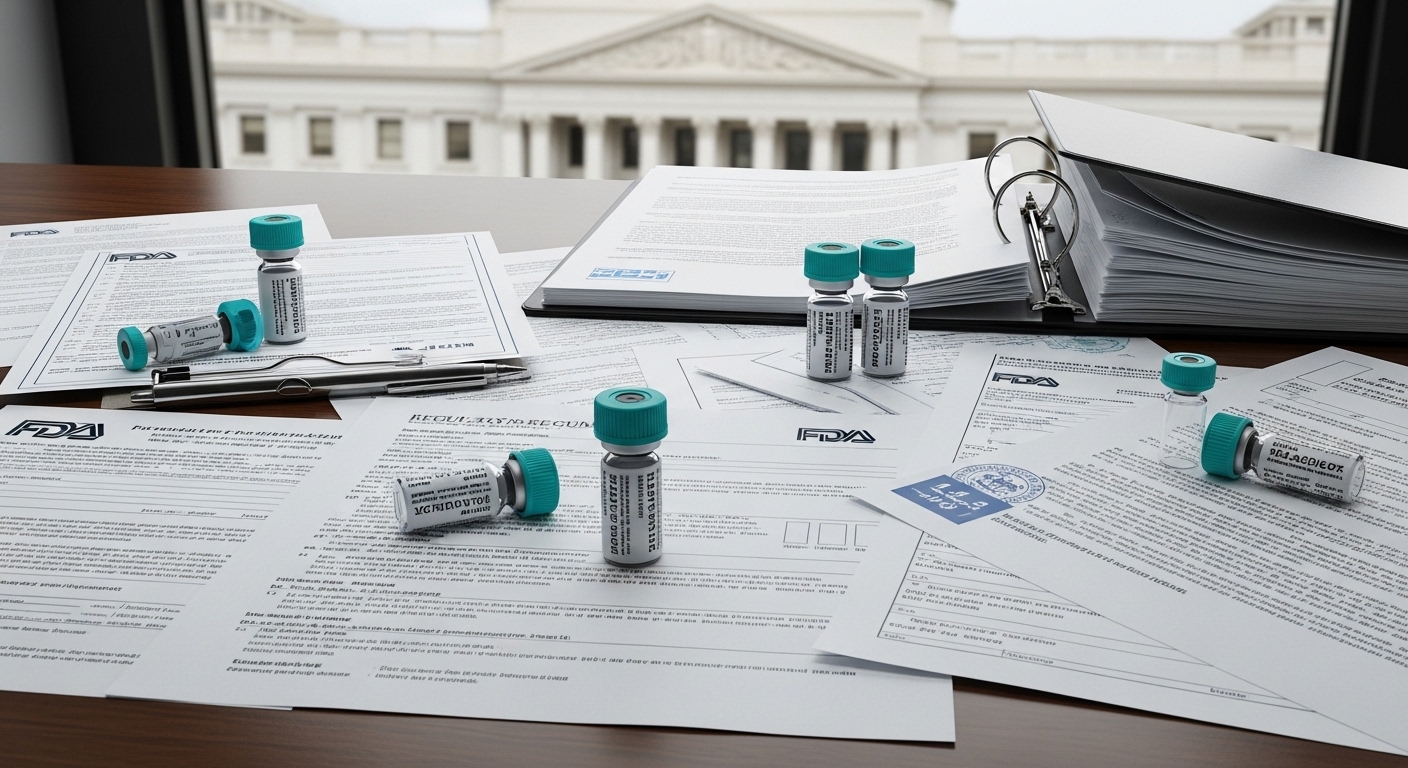
Are Peptides Legal to Buy? Complete Legal Guide (2026)

The question "are peptides legal to buy?" ranks among the most common searches from people exploring research peptides for the first time. The short answer is yes, with important caveats. The longer answer involves understanding FDA classifications, the distinction between research chemicals and consumer products, and how recent regulatory actions have reshaped the market.
This guide breaks down everything you need to know about peptide legality in 2026, covering US federal law, international regulations, and what separates a legal purchase from a risky one.
Federal Legal Status of Peptides in the US
Peptides are not controlled substances under the US Controlled Substances Act (CSA). Unlike anabolic steroids, which were scheduled under the Anabolic Steroids Control Act of 1990, peptides occupy a different regulatory space entirely. No federal law prohibits the purchase, possession, or sale of research peptides.
The key distinction: peptides are regulated as research chemicals, not as drugs or supplements. The Federal Analogue Act, which targets substances "substantially similar" to Schedule I or II drugs, does not apply to peptides because they bear no structural or pharmacological similarity to scheduled compounds.
This means buying peptides online from a US-based research supplier is legal at the federal level. The transaction becomes legally problematic only when peptides are marketed, sold, or purchased explicitly for human consumption without FDA approval.
FDA Classification and Regulatory Framework
The FDA classifies peptides differently depending on their intended use:
- Research chemicals: Not regulated as drugs when sold for in vitro research, laboratory use, or scientific investigation. No FDA approval required.
- Investigational new drugs (INDs): Peptides undergoing clinical trials require an IND application. Researchers must follow 21 CFR Part 312.
- Approved pharmaceuticals: Some peptides have achieved FDA approval as prescription drugs. Semaglutide (Ozempic/Wegovy), tirzepatide (Mounjaro), and certain growth hormone-releasing peptides fall in this category.
- Compounded medications: Pharmacies operating under Section 503A or 503B of the Federal Food, Drug, and Cosmetic Act can compound peptide preparations with a valid prescription.
Research peptide suppliers operate in the first category. They sell peptides as chemical reagents for scientific study, which falls outside the FDA's drug approval framework. This is the same regulatory pathway that allows universities, biotech companies, and independent researchers to purchase thousands of chemical compounds without prescriptions.
The Critical Distinction: Research Use vs. Human Consumption
Peptide legality hinges on intended use, not the molecule itself. The same peptide compound can be a legal research chemical or an illegal unapproved drug depending entirely on how it is marketed and what the buyer intends to do with it. Research suppliers must label products "for research use only" or "not for human consumption" to remain compliant.
This distinction matters more than any other factor in peptide legality. A research supplier selling BPC-157 labeled "for laboratory research" operates within the law. A company selling the same compound with dosing instructions for oral or injectable use in humans crosses into marketing an unapproved drug, which violates the Federal Food, Drug, and Cosmetic Act.
For buyers, this means purchasing peptides for genuine research purposes is straightforward and legal. The legal gray area emerges when the stated purpose diverges from the actual use. Federal enforcement typically targets sellers making therapeutic claims rather than individual purchasers, but understanding this boundary protects you on both sides of the transaction.
The FDA's 2023 Crackdown: What Changed
In 2023, the FDA took significant action that reshaped the peptide market. The agency added several peptides, most notably BPC-157, to its list of substances that cannot be used in compounding. This decision came under the category of "bulk drug substances for which there is insufficient information to support a clinical safety determination."
What this means in practice:
- Compounding pharmacies can no longer legally prepare BPC-157 formulations, even with a valid prescription
- The FDA issued warning letters to multiple compounding pharmacies selling peptide preparations
- Several popular peptides faced similar scrutiny, including AOD-9604 and certain growth hormone secretagogues
What this does not mean: the FDA's compounding restrictions did not make research peptides illegal to purchase. The crackdown targeted the compounding pharmacy pathway specifically. Research chemical suppliers operating under the "not for human consumption" framework were not directly affected by these enforcement actions.
The practical impact has been a shift in where people source peptides. With compounding pharmacy access restricted for certain compounds, more buyers have turned to research peptide suppliers. This makes verifying supplier quality more important than ever.
State-by-State Considerations
No US state has enacted legislation specifically banning the purchase of research peptides as of early 2026. Peptides remain unscheduled at both the federal and state level across all 50 states.
That said, a few state-level factors are worth tracking:
- State pharmacy boards in some states have issued their own guidance on compounded peptides, sometimes with stricter rules than federal standards
- States with analog laws (like Virginia and several others) theoretically could apply broad analog statutes, though no state has used these against peptide purchasers
- Military and government employees face separate restrictions. Department of Defense policy prohibits service members from using substances marketed as research chemicals, regardless of their legal status
For the average researcher or buyer, state law does not add meaningful restrictions beyond federal regulation. This could change if states follow the model of SARMs-specific legislation, but no such proposals are currently active.
International Legality Overview
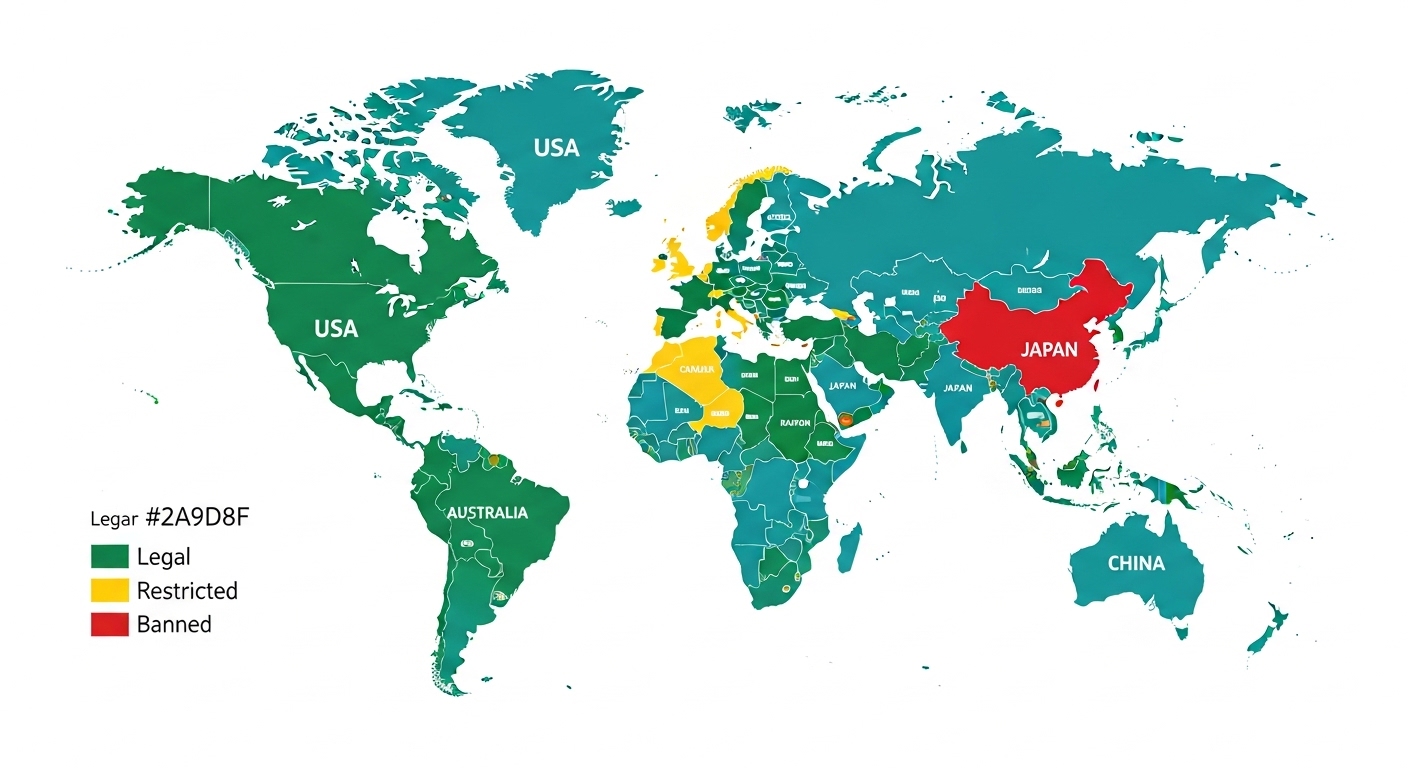
United Kingdom
Peptides are legal to buy for research in the UK. They are not classified under the Misuse of Drugs Act 1971 or the Psychoactive Substances Act 2016. UK customs generally does not seize research peptide shipments, though imports must comply with standard chemical shipping regulations.
Canada
Health Canada regulates peptides as drugs when intended for human use. Research peptides sold without therapeutic claims can be purchased legally. Canadian customs occasionally inspects peptide shipments, particularly larger orders. Domestic Canadian suppliers exist but the selection is more limited than US-based options.
Australia
Australia has the strictest peptide regulations among English-speaking countries. The Therapeutic Goods Administration (TGA) classifies several peptides as Schedule 4 prescription-only medicines, with enforcement tightening in recent years. Importing peptides without a valid prescription or research exemption carries real risk of customs seizure. Buyers in Australia should exercise particular caution and verify current TGA scheduling before ordering.
European Union
EU regulations vary by member state, but most countries permit research peptide purchases. Germany, the Netherlands, and Poland are notable hubs for European peptide suppliers. The EU's General Pharmaceutical Legislation framework governs peptides intended as medicines, while research chemicals face lighter oversight. Cross-border shipping within the EU is generally straightforward.
How to Buy Peptides Legally
Staying on the right side of the law when purchasing peptides comes down to a few principles:
- Buy from suppliers who label products correctly. Products should state "for research use only" or "not for human consumption." Suppliers who provide dosing protocols for human use are operating outside the law.
- Choose suppliers who publish third-party testing. Certificates of analysis from accredited independent laboratories and HPLC purity reports signal a legitimate operation. Our best peptide companies guide ranks suppliers by testing transparency.
- Avoid suppliers making medical claims. Any company claiming their peptides treat, cure, or prevent disease is violating FDA regulations, and buying from them increases your legal exposure.
- Keep transaction records. Maintain documentation of your purchases and their intended research application.
- Understand what you are buying. Know the potential effects and risks of any compound before purchasing.
Reputable suppliers like Swiss Chems (visit site), Core Peptides, and Paradigm Peptides all operate within this legal framework, providing properly labeled research peptides with published purity testing.
Import and Customs Considerations
Ordering peptides from international suppliers introduces customs as a variable. US Customs and Border Protection (CBP) can inspect any inbound package. Research chemicals are not prohibited imports, but packages that appear to contain unapproved drugs may be detained.
Practical tips for smooth customs clearance:
- Domestic orders avoid customs entirely and are the simplest option for US buyers
- International orders should include proper documentation: material safety data sheets (MSDS), certificates of analysis, and clear "research use only" labeling
- Small personal-quantity orders rarely attract scrutiny. Bulk orders are more likely to be inspected
- If a package is seized, CBP typically sends a notice. You can respond but are not required to. There is no criminal penalty for a customs hold on research chemicals
Most US-based research suppliers ship domestically from US warehouses, making customs a non-issue for the majority of buyers.
SARMs Control Act and How It Relates to Peptides
The SARMs Control Act, first introduced in 2018 (S.2742) and reintroduced in subsequent congressional sessions, seeks to classify Selective Androgen Receptor Modulators as controlled substances under the CSA. This legislation has raised concerns among peptide buyers about whether similar restrictions could target peptides.
The current status: the SARMs Control Act has not been enacted into law as of early 2026, though versions continue to circulate in Congress. More importantly for peptide buyers, the proposed legislation specifically targets SARMs by their mechanism of action (androgen receptor binding). Peptides work through entirely different biological pathways, and the bill's language does not encompass them.
For a detailed comparison of these two compound classes, see our guide on peptides vs. SARMs. The regulatory trajectories of these categories are diverging, not converging. SARMs face increasing legislative pressure while peptides remain unscheduled.
Research Suppliers vs. Compounding Pharmacies vs. Gray Market
Understanding the three main channels for obtaining peptides clarifies the legal picture:
Research Peptide Suppliers
These companies sell peptides as research chemicals with "not for human consumption" labeling. This is the most accessible and legally straightforward channel. Products come as lyophilized powder requiring reconstitution. Quality varies significantly between suppliers, making third-party verification essential. Legal status: fully legal for research purposes.
Compounding Pharmacies
Operating under FDA Sections 503A (patient-specific) or 503B (outsourcing facilities), these pharmacies prepare peptide formulations with a doctor's prescription. The 2023 FDA actions restricted which peptides can be compounded. Legal status: legal with a valid prescription for non-restricted peptides.
Gray Market Sources
Underground labs, unverified overseas manufacturers, and social media sellers fall into this category. Products may be mislabeled, contaminated, or counterfeit. Beyond safety concerns, buying from sources making explicit therapeutic claims or selling without proper labeling creates legal risk. Legal status: varies, but generally the highest-risk option both legally and health-wise.