
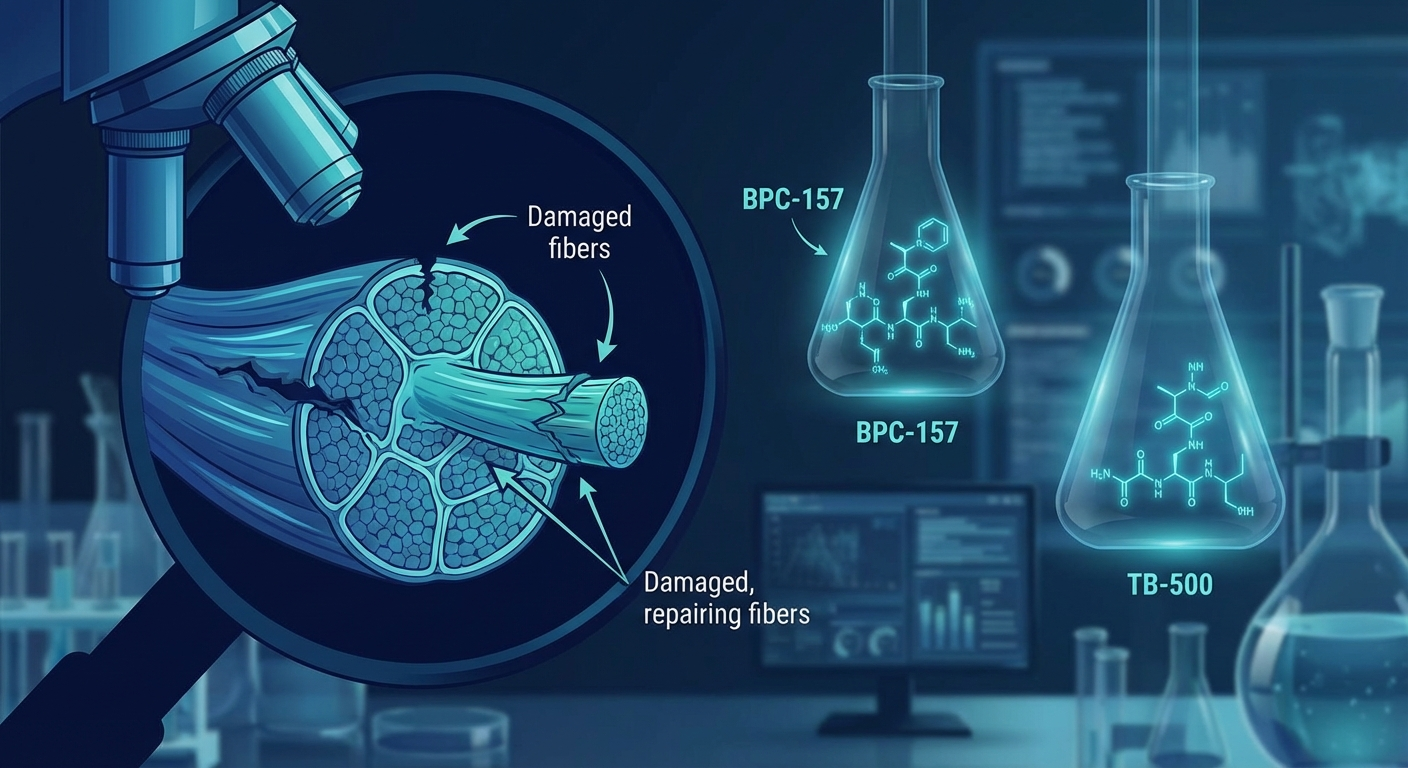
Best Peptides for Muscle Recovery: What the Research Actually Shows (2026)
The best peptides for muscle recovery include BPC-157 and TB-500. These remain the most-studied research compounds for tissue repair, with animal research showing accelerated healing of muscle tears, tendons, and connective tissue.
The Wolverine Stack (BPC-157 + TB-500 combined) is the most popular research protocol for full-spectrum recovery. IGF-1 LR3 drives satellite cell activation for actual muscle rebuilding. No human clinical trials exist yet for these specific recovery applications.
Why Researchers Study Peptides for Muscle Recovery
Choosing the best peptides for muscle recovery depends on understanding what the recovery process actually involves. Muscle recovery is more complex than most people assume. After intense training or injury, the body goes through a layered process: inflammation initiates repair, satellite cells activate and fuse into damaged fibers, collagen remodels connective tissue, and new blood vessels grow to supply the healing area. Each step is regulated by signaling molecules - and peptides, by design, can interact with those signals precisely.
Traditional recovery approaches - NSAIDs, ice baths, compression - primarily suppress inflammation. They do not accelerate the actual rebuilding process. That distinction matters. Some research suggests that aggressively suppressing inflammation in the early hours after injury can actually slow long-term healing by interfering with the inflammatory signals that kick off repair cascades.
Peptides take a different approach. Instead of blocking biological signals, certain research compounds appear to amplify the body's native repair mechanisms. BPC-157, for instance, has been shown in multiple animal studies to promote angiogenesis and collagen synthesis without fully suppressing inflammation. TB-500 works through actin regulation, which affects how quickly cells migrate to the injury site.
That said, the research base here is almost entirely preclinical. Human trials are limited, and researchers should approach these compounds with that in mind. The science is promising - but not settled.
For those new to peptide research, our guide on what peptides are and how they work covers the fundamentals. If you're already familiar, this breakdown focuses on the compounds with the strongest evidence for recovery applications specifically.
BPC-157: The Most Researched Recovery Peptide
BPC-157 - Body Protective Compound 157 - is a synthetic pentadecapeptide derived from a protein found in human gastric juice. One important context point: virtually all published research comes from a single lab - Dr. Predrag Sikiric's group at the University of Zagreb.
That research group has generated over 80 studies, nearly all in rodent models. That concentration from one lab is a real limitation on how confidently anyone should interpret the data.
With that noted, the mechanistic findings are difficult to dismiss. BPC-157 appears to work through several pathways simultaneously:
- Promotion of angiogenesis through nitric oxide modulation
- Upregulation of growth hormone receptors in tendon fibroblasts
- Activation of the FAK-paxillin signaling pathway, which governs cell migration
- Stimulation of collagen synthesis in injured connective tissue
A 2018 review by Rucman et al. in Current Pharmaceutical Design (PMID: 29998800) examined BPC-157 against standard angiogenic growth factors across tendon, ligament, muscle, and bone injury models - finding BPC-157 consistently effective where EGF, FGF, and VEGF showed inconsistent results in vivo. A 2022 review by Japjec et al. in Biomedicines (PMID: 36551977) covered BPC-157's effects on striated and smooth muscle recovery, summarizing decades of animal model data from the Zagreb laboratory.
For muscle recovery specifically, BPC-157 research suggests it may be most relevant for injuries involving connective tissue - tendon and ligament damage alongside muscle tears, rather than pure muscle hypertrophy. BPC-157 is also one of the more studied peptides for gut health, which connects to recovery through nutrient absorption.
The FDA has noted "significant safety risks" in its communications regarding BPC-157, reflecting the absence of approved human trials rather than a specific identified harm. Researchers should factor that regulatory status into their work.
Our complete BPC-157 guide covers mechanisms, protocols, and sourcing in full detail.