
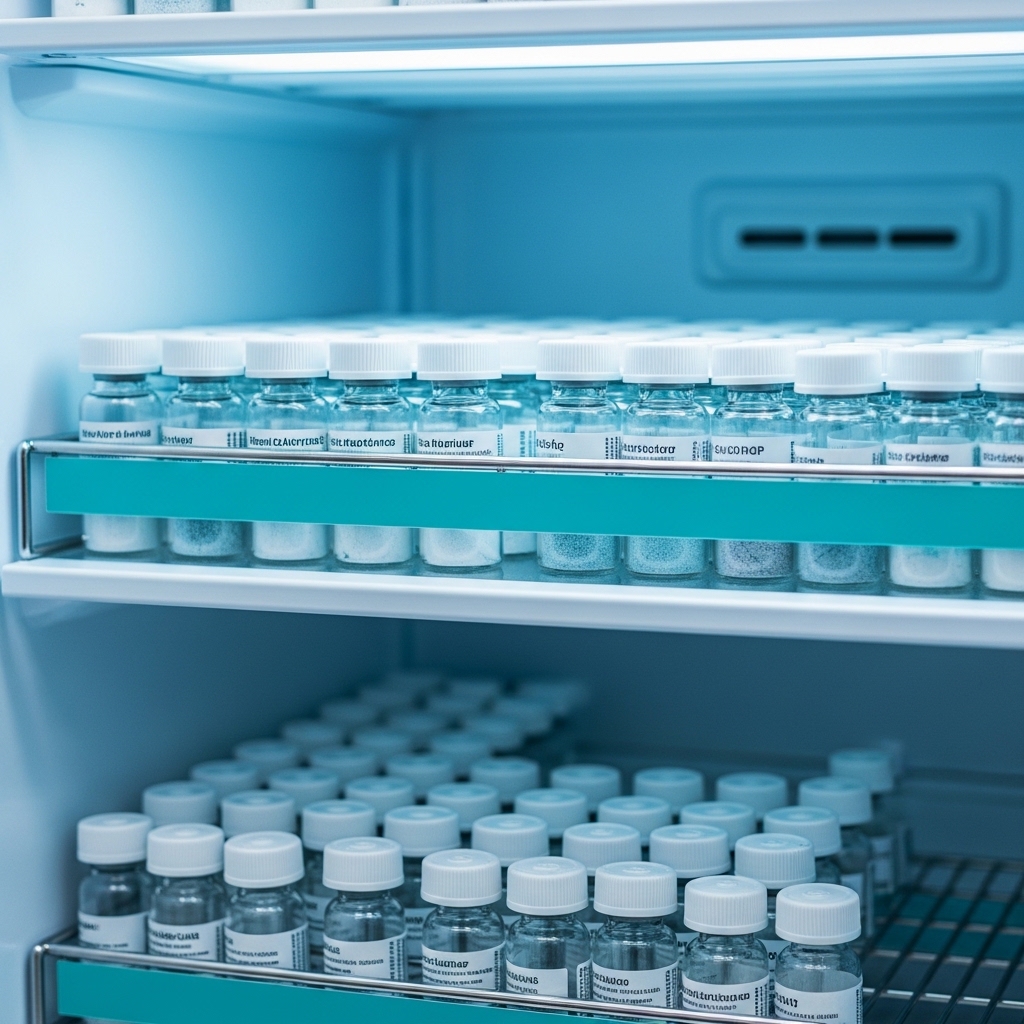
Do Peptides Expire? Complete Storage Guide for Maximum Shelf Life
Bottom Line
Yes, peptides expire. Lyophilized (freeze-dried) peptides last 12-24 months when stored at -20°C and up to 36 months at -80°C. Once reconstituted with bacteriostatic water, most peptides last only 21-28 days refrigerated at 2-8°C. The single biggest factor in peptide degradation is temperature - even brief exposure to room temperature after reconstitution can cut shelf life in half.
Peptides are chains of amino acids - and like all biological molecules, they break down over time. That simple fact drives everything in this guide. Whether you have purchased BPC-157 for research, TB-500 for a study protocol, or semaglutide from a compounding pharmacy, improper storage will destroy the active compound long before the printed expiration date. Published stability studies show that temperature, light exposure, and contamination are the three forces that degrade peptides fastest - and most storage mistakes involve at least one of these factors.
This guide covers exact shelf life data, storage temperatures by peptide type, signs of degradation, and the supplies needed to store peptides correctly.
Looking for a trusted source? Pinnacle Peptide Labs carries 99% pure, third-party tested peptides. Use code Peptidepick15 for 15% off your order.
Want a non-injectable option? Nootropics Depot carries third-party tested oral supplements for cognitive function, longevity, and recovery - no reconstitution needed.
Table of Contents
Do Peptides Expire?
All peptides degrade over time. The peptide bond between amino acids is susceptible to hydrolysis, oxidation, and deamidation - three chemical processes that break the molecular structure and reduce biological activity. Published stability research confirms that even under ideal conditions, peptides lose potency gradually.
The rate of degradation depends on two things: the physical form of the peptide and the storage conditions. A lyophilized peptide stored at -20°C in a sealed vial will retain over 95% purity for 24 months. That same peptide reconstituted in sterile water and left at room temperature can lose significant biological activity within 48 hours.
Printed expiration dates on peptide vials assume specific storage conditions. Break those conditions, and the date means nothing.
Lyophilized vs Reconstituted: Two Very Different Timelines
| Form | Storage Temp | Shelf Life |
|---|---|---|
| Lyophilized | -80°C (deep freezer) | 24-36 months |
| Lyophilized | -20°C (standard freezer) | 12-24 months |
| Lyophilized | 2-8°C (refrigerator) | 6-12 months |
| Lyophilized | 20-25°C (room temp) | 1-3 months |
| Reconstituted (bac water) | 2-8°C (refrigerator) | 21-28 days |
| Reconstituted (sterile water) | 2-8°C (refrigerator) | 3-7 days |
| Reconstituted (any) | Room temperature | 24-48 hours max |
Lyophilized (Freeze-Dried) Peptides
Lyophilization removes water from the peptide solution, leaving a dry powder or cake that resists chemical degradation. Without water molecules present, hydrolysis cannot occur. This is why freeze-dried peptides last dramatically longer than their reconstituted counterparts.
Typical shelf life for lyophilized peptides:
- -80°C (deep freezer): 24-36 months with minimal degradation
- -20°C (standard freezer): 12-24 months at greater than 95% purity
- 2-8°C (refrigerator): 6-12 months, depending on the specific peptide sequence
- 20-25°C (room temperature): 1-3 months before measurable degradation
Most reputable peptide suppliers ship lyophilized products with cold packs and recommend immediate freezer storage upon arrival.
Reconstituted Peptides
Once you add bacteriostatic water or sterile water to a lyophilized peptide, the clock accelerates dramatically. Water reintroduces the hydrolysis pathway. Bacterial contamination becomes a risk with every needle puncture through the vial septum.
Typical shelf life for reconstituted peptides:
- Bacteriostatic water, refrigerated (2-8°C): 21-28 days
- Sterile water, refrigerated (2-8°C): 3-7 days
- Room temperature: 24-48 hours maximum
The difference between bacteriostatic water and sterile water matters enormously. Bacteriostatic water contains 0.9% benzyl alcohol, which inhibits microbial growth and extends usable life by roughly 3-4x compared to plain sterile water. For any multi-use protocol, bacteriostatic water is the correct choice. Our reconstitution guide covers the full process.
Temperature Storage Guide
The Most Important Storage Rule
Never let a reconstituted peptide sit at room temperature for more than 10 minutes. Every hour above 8°C accelerates degradation exponentially. Pull the vial from the fridge, draw your dose, and return it immediately. This single habit determines whether your peptide lasts 4 weeks or 4 days.
Temperature is the dominant variable in peptide stability. General guidelines from peptide manufacturers and published stability data:
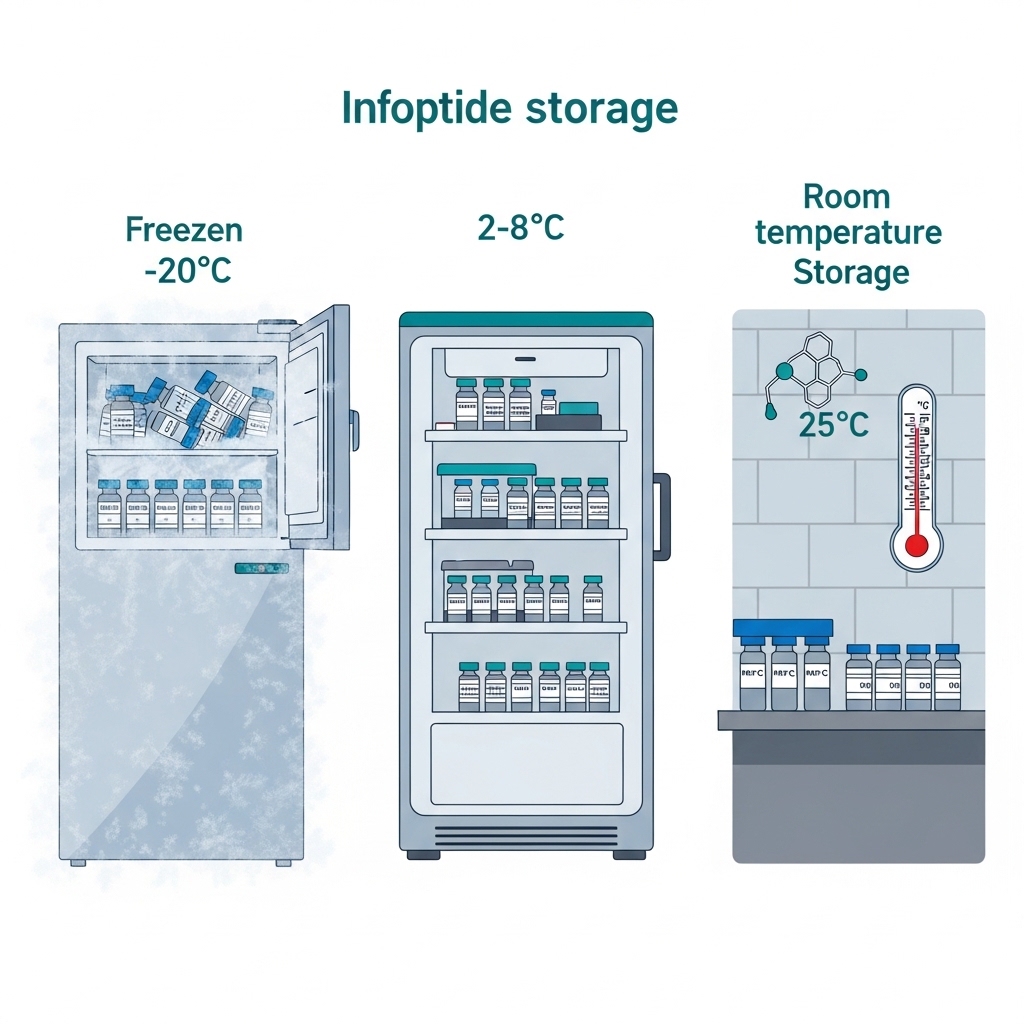
Deep Freezer (-20°C or colder): Gold standard for long-term storage of unopened lyophilized vials. Most research-grade peptides ship with this recommendation. A dedicated mini freezer costs $150-250 and pays for itself by preventing waste.
Refrigerator (2-8°C): Required for all reconstituted peptides. Also acceptable for short-term storage (under 3 months) of lyophilized peptides. The back of the fridge maintains the most consistent temperature - avoid the door shelves where temperature fluctuates with every opening.
Room Temperature (20-25°C): Acceptable only during shipping of lyophilized peptides (1-3 days) or during the brief moment of drawing a dose. Extended room temperature storage degrades both lyophilized and reconstituted peptides rapidly.
Reconstituted Peptide Storage Specifics
Reconstitution is where most peptide waste occurs. Getting this right saves money and ensures accurate research results.
Bacteriostatic Water Is Non-Negotiable
Sterile water contains no preservative. Once the vial septum is pierced, microorganisms can enter with each subsequent needle insertion. Bacteriostatic water's 0.9% benzyl alcohol content prevents bacterial growth for up to 28 days. The cost difference is negligible - roughly $5-8 per 30ml vial - but the impact on peptide longevity is massive.
Refrigeration Timeline
After reconstituting a peptide, follow this protocol:
- Label the vial with the reconstitution date, peptide name, and concentration
- Place immediately in the refrigerator at 2-8°C
- Use within 21-28 days (bacteriostatic water) or 5-7 days (sterile water)
- Never freeze a reconstituted peptide - ice crystal formation damages the peptide structure through a process called cryodenaturation
- Discard any reconstituted peptide that has been at room temperature for more than 2 hours
Minimize Septum Punctures
Each needle insertion through the rubber septum creates a slightly larger hole, increasing contamination risk. Use the smallest gauge needle practical (typically 29-31 gauge for peptide injections). If your protocol requires 30 doses from one vial, the septum may begin to leak or allow air exchange by dose 20-25. Consider splitting into smaller aliquots if the protocol is lengthy.
Storage by Peptide Type
Different peptides have different stability profiles based on their amino acid sequences. Peptides containing methionine residues are particularly vulnerable to oxidation, while those with asparagine are prone to deamidation. Here are storage specifics for the most commonly researched peptides.
BPC-157
BPC-157 is relatively stable as peptides go. The 15-amino acid sequence lacks highly oxidation-prone residues. Lyophilized BPC-157 stored at -20°C maintains stability for 24+ months. Reconstituted in bacteriostatic water and refrigerated, expect 25-28 days of reliable potency. BPC-157 is also one of the few peptides studied for oral stability, showing some resistance to gastric degradation in animal models.
TB-500
TB-500 (Thymosin Beta-4 fragment) is moderately stable in lyophilized form, with a recommended storage temperature of -20°C for periods exceeding 3 months. Reconstituted TB-500 follows the standard 21-28 day refrigerated window. Anecdotal reports suggest that TB-500 solutions may develop a slight yellow tint after 3+ weeks, which could indicate early oxidation - discard if the color change is pronounced.
GHK-Cu
GHK-Cu presents a unique storage challenge because it contains a copper ion. Copper-peptide complexes can catalyze oxidation reactions, making GHK-Cu more sensitive to light and heat than most peptides. Store lyophilized GHK-Cu at -20°C in amber vials or wrapped in foil. Some researchers recommend using within 14-21 days given the copper ion's catalytic properties - shorter than the typical 28-day window for other peptides.
Semaglutide
Pharmaceutical semaglutide (Ozempic, Wegovy) comes pre-reconstituted in pen form with preservatives. Unopened pens are stable in the refrigerator until the printed expiration date (typically 18-24 months from manufacture). Once in use, semaglutide pens last 56 days (8 weeks) at room temperature below 30°C or refrigerated. Compounded semaglutide from research suppliers follows different rules - typically 28 days refrigerated after reconstitution.

Signs of Degraded or Expired Peptides
Degraded peptides do not always look different. That is the frustrating reality. A peptide can lose 40% of its biological activity while appearing identical to a fresh solution. Still, there are observable indicators that a peptide has degraded beyond usability.
Visual Signs
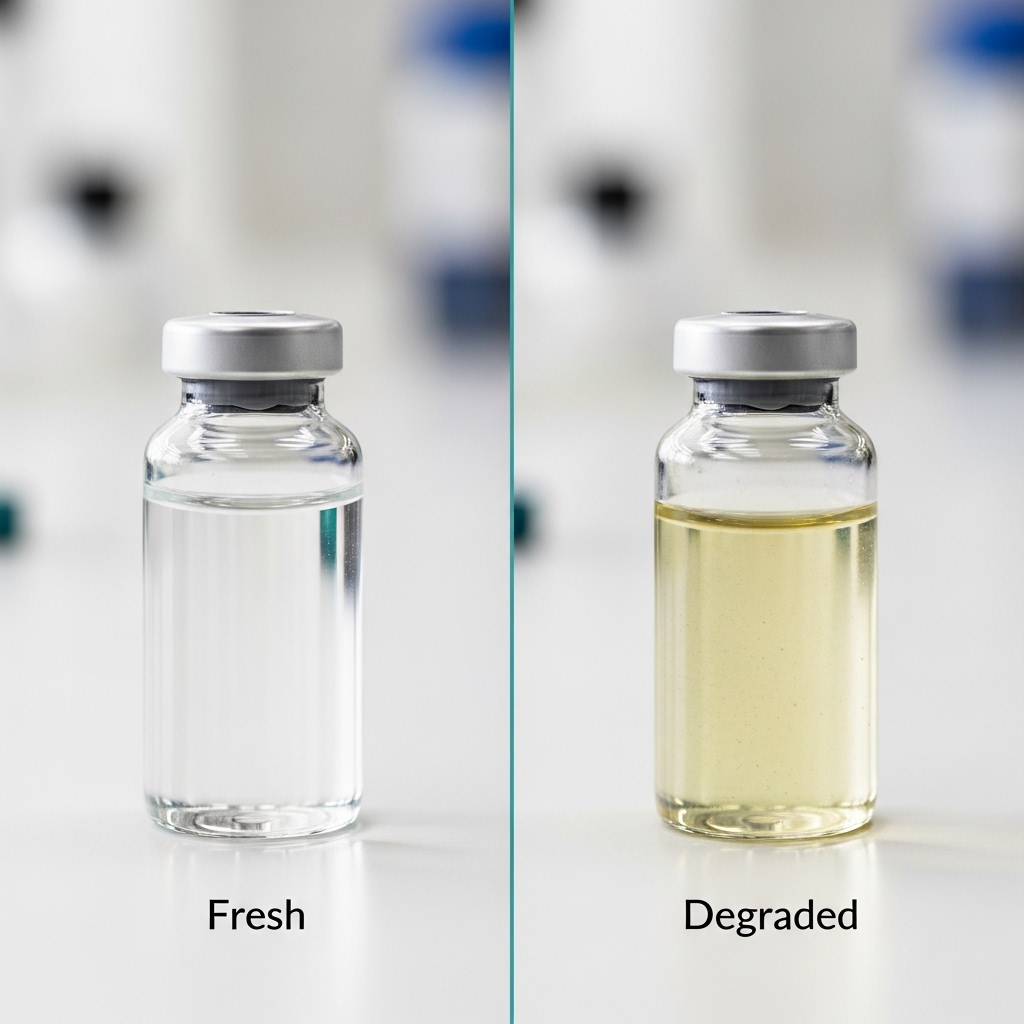
- Cloudiness or turbidity: A reconstituted peptide solution should be clear. Cloudiness suggests bacterial contamination or protein aggregation.
- Particles or floaters: Visible particulate matter means the peptide has aggregated or the solution is contaminated. Discard immediately.
- Color change: Most peptide solutions are colorless to very faint yellow. Darkening to amber or brown indicates oxidation.
- Clumping in lyophilized powder: If a freeze-dried peptide has absorbed moisture, the powder may appear clumpy or glassy instead of fluffy. This suggests compromised storage.
Efficacy Signs
- Reduced or absent expected effects: The most common sign of degraded peptides is simply that they stop producing the expected research outcomes at established doses
- Inconsistent results: Partially degraded peptides may produce erratic results as the active concentration varies throughout the vial
Third-party testing through services like peptide verification labs can confirm purity levels via HPLC analysis, which measures the percentage of intact peptide remaining in a sample.
Common Storage Mistakes
These errors account for the majority of premature peptide degradation:
1. Storing vials in the refrigerator door. Door shelves experience temperature swings of 5-10C every time the fridge opens. Place peptide vials in the back of the main compartment where temperature stays between 2-4°C consistently.
2. Using sterile water instead of bacteriostatic water. This cuts usable life from 28 days to under 7 days. The $5 difference per vial of bacteriostatic water protects $50-200 worth of peptide.
3. Leaving reconstituted vials on the counter. Even 30 minutes at room temperature during meal prep or distraction compounds over multiple occurrences. Treat the vial like ice cream - it goes right back in.
4. Freezing reconstituted peptides. Freezing creates ice crystals that physically shear peptide chains. Only lyophilized peptides belong in the freezer.
5. Exposing vials to direct light. UV radiation accelerates oxidation, particularly in peptides containing tryptophan, tyrosine, or methionine residues. Store vials in a dark box or wrap them in aluminum foil.
6. Not labeling vials. Without dates, researchers lose track of how long ago a peptide was reconstituted. A piece of tape and a pen takes 10 seconds and prevents guesswork.
7. Buying more than 3 months of supply. Bulk purchasing seems economical until half the stock degrades before use. Buy what you will use within the peptide's storage window.
Best Storage Supplies and Containers
Proper storage supplies are inexpensive insurance for protecting peptide investments. Here is what a complete storage setup requires.

Essential Supplies
- Bacteriostatic water (30ml vials): $5-10 per vial. Always use for reconstitution of multi-dose vials. Available from SwissChems (visit site) and Paradigm Peptides.
- Insulin syringes (29-31 gauge): Minimizes septum damage. 100-pack runs $12-18.
- Alcohol swabs: Sterilize the vial septum and injection site before every use. A box of 200 costs under $5.
- Small opaque storage box: A simple plastic container with a lid blocks light and keeps vials organized in the fridge. $3-8 at any pharmacy.
- Adhesive labels or medical tape: For marking reconstitution dates and concentrations. Under $3.
Recommended Upgrades
- Dedicated mini fridge: A small 1.7 cubic foot fridge ($80-150) dedicated to peptide storage eliminates temperature fluctuations from frequent door opening of a household refrigerator.
- Digital thermometer with alarm: Units that alert when temperature exceeds a set threshold ($15-30) provide peace of mind, especially during power outages.
- Amber glass vials: If transferring reconstituted peptide to smaller aliquots, amber glass blocks UV light and reduces oxidation.
Top peptide suppliers like SwissChems, Core Peptides, and Paradigm Peptides sell bundled supply kits that include bacteriostatic water, syringes, and alcohol swabs at a discount compared to buying individually. Check our best peptide companies guide for current pricing.