
Vendor shortcuts
Compare the right source before you keep reading
Pick the lane that matches your research goal, then verify current COAs, label language, and shipping policy on the vendor page.
Research-only affiliate links. PeptidePick may earn a commission at no extra cost to you.
GHK-Cu and microneedling: how to combine copper peptides with dermarolling
GHK-Cu and microneedling often get paired in skincare forums because both are tied to collagen support, wound repair signaling, and smoother texture.
But the pairing is not as simple as rolling needles and slapping on a serum. Timing matters. Product type matters. The evidence is stronger for topical copper peptides and transdermal delivery mechanics than for DIY claims about dramatic overnight skin changes.
- GHK-Cu is a copper-binding tripeptide studied for wound repair, collagen signaling, and skin remodeling.
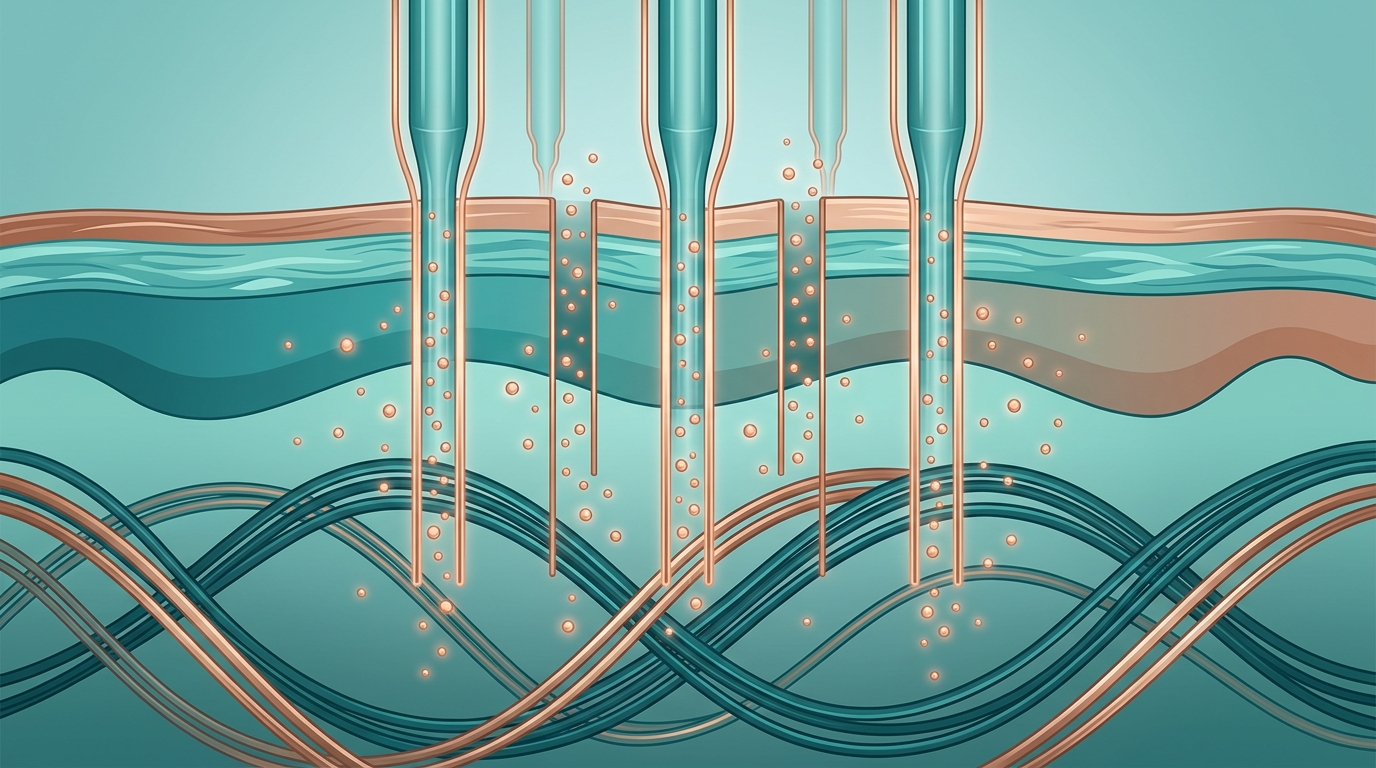
- Microneedling creates temporary microchannels, which can increase peptide penetration through skin.
- A 2015 transdermal delivery study found much higher GHK-Cu permeation after microneedle treatment than through intact skin.
- That does not mean more is always better. Freshly needled skin is irritated skin, so concentration, sterility, and timing matter.
- If you are using a copper peptide after microneedling, gentler formulations and conservative timing usually make more sense than aggressive same-minute layering.
What is GHK-Cu?
GHK-Cu is the copper complex of the tripeptide glycyl-L-histidyl-L-lysine. It was first identified in human plasma in the 1970s. Since then, researchers have studied it in cell culture, wound models, and cosmetic skin contexts for effects tied to tissue repair, collagen production, glycosaminoglycan synthesis, and inflammation control.
The short version: this is a skin-focused peptide with a real research trail behind it. That makes it very different from trend-driven ingredients that blow up on TikTok and disappear six months later.
One nuance matters here. Much of the strongest evidence around GHK-Cu comes from lab, ex vivo, or small clinical settings rather than large long-term randomized cosmetic trials. So the signal is interesting, but the certainty has limits.
Looking for copper peptide skincare and recovery formulas?
Ascension Peptides fits skin and recovery topics well, with third-party tested research peptides and ready-made stacks.
60+ third-party tested research peptides and stacks
Why people pair GHK-Cu with microneedling
Microneedling creates controlled micro-injuries in the skin. That process is meant to trigger repair pathways linked to collagen, elastin, and texture changes over time. GHK-Cu gets added to the conversation because it has been studied in wound healing and extracellular matrix remodeling.
There is also a practical reason the combo keeps coming up. Intact skin is a strong barrier. Many peptides do not penetrate well on their own. Microneedling can temporarily change that.
That idea is backed by lab delivery data, not just aesthetics marketing. One 2015 study on human skin found that microneedle pretreatment dramatically increased the permeation of copper peptide compared with intact skin. The numbers were stark: after 9 hours, the microneedle-treated skin allowed 134 ± 12 nanomoles of peptide and 705 ± 84 nanomoles of copper through, while almost no peptide or copper crossed intact skin.
GHK-Cu and microneedling research worth knowing
Here are the main evidence points behind the pairing.
- Collagen signaling: Maquart et al. reported that GHK-Cu stimulated collagen synthesis in cultured fibroblasts in a 1988 FEBS Letters paper.
- Wound repair: A 1993 Journal of Clinical Investigation study found increased connective tissue accumulation in experimental wounds treated with GHK-Cu.
- Skin penetration: Hostynek and colleagues found that copper tripeptide can penetrate and remain within skin layers in vitro, which matters for topical use.
- Microneedle delivery: Kang and colleagues published the 2015 Pharmaceutical Research paper showing that microneedles increased transdermal delivery of copper peptide through skin.
- Acne-scar context: A clinical comparison in the Journal of Cutaneous and Aesthetic Surgery reported better scar-grade improvement in the dermaroller plus copper peptide group than dermaroller alone over the study period.
- Broader skin biology: a 2018 review summarized GHK's reported regenerative actions across skin, wound-healing, and other tissue models.
But there is a catch. These papers do not prove every over-the-counter copper peptide serum is ideal right after a home microneedling session. Formulation quality, pH, sterility, preservative load, and needle depth all change the risk profile.
What competitors usually miss
Many ranking pages flatten the topic into a simple yes or no. Realistically, the better question is when and which formula. A mild copper peptide serum used after the skin calms down is a different scenario from putting a strong active blend onto freshly punctured skin.
Some dermatology-facing sources also point out that post-needling irritation can get worse when people stack too many actives. So while GHK-Cu looks interesting on paper, patience may beat intensity here.
Want the widest range of delivery formats?
Limitless carries a huge catalog with injectable, spray, and capsule options. Start with the VIP link first so the tracking cookie is set before any later visit.
Create your free Limitless account →
118+ research peptides in injectable, spray, and capsule forms - create a free account to access the full catalog
Use code PeptidePick for a discount at checkout
How to use GHK-Cu around microneedling
For most readers, a cautious framework is more useful than a hype-heavy protocol.
| Question | Practical takeaway |
|---|---|
| Can microneedling increase GHK-Cu delivery? | Yes, ex vivo skin data suggests it can increase penetration substantially. |
| Should you apply it immediately after needling? | Not always. Immediate use may raise irritation or contamination concerns if the product is not appropriate for freshly treated skin. |
| What does a conservative approach look like? | Use clean technique, avoid harsh actives, and consider waiting until the skin settles before applying a copper peptide serum. |
| Who should be more careful? | Anyone with reactive skin, eczema, barrier damage, active infection, or a history of post-inflammatory hyperpigmentation. |
A simple decision tree helps:
- If the session is shallow cosmetic needling and the product is a gentle, sterile, low-irritant copper peptide formula, some people use it later the same day.
- If the session is deeper, if the skin is burning, or if the formula includes added actives, fragrances, or questionable preservatives, waiting is the safer play.
- If you are unsure, a dermatologist is the right person to ask. That answer is less exciting than a forum hack, but it is probably the honest one.
Readers who want broader peptide context can compare vendors in our best peptide companies guide. For skin-focused peptide education, it also helps to review related anti-aging coverage rather than treating microneedling as a standalone fix.
And yes, this article is skincare-focused. It is not about injectable research peptides or mixed reconstitution math. If you do need that background for other compounds, see the peptide reconstitution calculator and how to reconstitute peptides guide.
What real users usually want to know before trying this combo
Search intent around this topic is pretty consistent. Readers want to know if copper peptides should go on before or after dermarolling, whether the combo can help acne scars or fine lines, and whether it is safe to use at home.
Those questions make sense. Microneedling has visible downtime. Copper peptide products vary a lot. And skincare brands rarely explain the difference between a cosmetic serum for intact skin and a product someone plans to apply over fresh microchannels.
- Timing: before needling, immediately after, or the next day?
- Goal: texture, post-acne marks, fine lines, or general skin quality?
- Formulation: watery serum, cream, added acids, fragrance, or other potential irritants?
- Procedure intensity: shallow cosmetic rolling versus deeper professional treatment?
That last point gets ignored a lot. A light cosmetic session and a deeper treatment are not the same thing. Advice that sounds fine for one can be reckless for the other.
Potential benefits people are chasing
Most people are chasing one of four outcomes: smoother texture, softer fine lines, better-looking acne scars, or faster recovery after controlled skin injury.
The reason GHK-Cu keeps showing up in those conversations is simple. Research has linked it to collagen-related activity, fibroblast behavior, wound repair, and anti-inflammatory effects in certain models. That does not guarantee a dramatic mirror result. Still, it explains why the ingredient has outlasted countless trendy actives.
Microneedling adds a separate mechanism. It does not work because a serum is magic. It works because controlled puncture injury can trigger remodeling signals over time.
So the theory behind the combo is not random at all. It is just easier to oversell than to explain honestly.
What a cautious post-needling routine can look like
If a reader wants the lowest-drama approach, the checklist is boring on purpose. Clean hands. Clean device. No aggressive acids.
No fragranced actives. No mixing six trendy serums because a comment section said it worked.
A cautious routine often looks like this:
- Use a conservative needle depth appropriate for home cosmetic use.
- Keep the immediate post-treatment routine simple and bland.
- Wait for visible heat and stinging to settle before adding extra actives.
- Patch test any copper peptide product on intact skin first.
- Stop if redness, burning, or delayed irritation starts getting worse instead of better.
None of that sounds glamorous. It is still the advice most likely to prevent a self-inflicted setback.
Safety and legal caveats
GHK-Cu occupies an awkward space. It appears in cosmetic products, research discussions, and peptide vendor catalogs, but that does not make every product equivalent or every use case well studied.
Key points:
- Microneedling creates open channels. That can help delivery, but it also raises the stakes for sterility and irritation.
- More penetration is not automatically better. Higher transport through skin could also mean more redness, stinging, or barrier disruption if the formula is not suited for post-procedure use.
- Home protocols vary wildly. Needle depth, device quality, skin prep, and aftercare are inconsistent, which makes broad claims shaky.
- Cosmetic evidence is still limited. The mechanistic case for GHK-Cu is stronger than the long-term consumer trial data.
People also confuse categories here. GHK-Cu is a peptide complex discussed in cosmetic and research settings. It is not the same conversation as BPC-157 or other compounds sold strictly for research use.
And for the record, BPC-157 discussions always need the Zagreb lab origin caveat and the FDA's warning about significant safety risks. That is a separate lane.
Where readers usually compare vendors
For skin, recovery, and cosmetic peptide topics, readers usually compare catalog depth, delivery forms, and pricing. These are the three vendors that fit this topic best.
Comparing premium peptide catalogs?
Pinnacle covers GHK-Cu and other skin-focused compounds, plus bundled stacks for people comparing options across categories.
99% pure research peptides - use code Peptidepick15 for 15% off
Use code Peptidepick15 for 15% off your order
Some readers also want a non-injectable route that does not involve peptide vendors at all. In that case, Nootropics Depot is the oral supplement alternative worth knowing. It does not sell injectable peptides. But for people more interested in skin support basics, longevity supplements, or simple daily routines, that path may feel easier than a full peptide protocol.
Related reading on PeptidePick
- best peptides for anti-aging
- best peptides for muscle recovery
- peptides for weight loss
- free peptide reconstitution calculator
- how to reconstitute peptides
- best peptide companies
FAQ
Can you use GHK-Cu right after microneedling?
Possibly, but it depends on needle depth, skin sensitivity, and the formula itself. Freshly needled skin is more permeable and more reactive. A conservative approach is usually smarter than rushing to apply multiple actives right away.
Does microneedling make copper peptides work better?
It may improve delivery through the skin barrier. The best-cited evidence is the 2015 microneedle delivery paper showing much higher GHK-Cu permeation through treated human skin than intact skin.
Is GHK-Cu the same as injectable peptide therapy?
No. In this context, GHK-Cu is usually discussed as a topical copper peptide used in skincare or cosmetic research. That is different from injectable research peptide use.
Who should avoid this combination?
People with active infection, open wounds, severe rosacea, eczema flares, or a damaged skin barrier should be careful. Anyone with a history of pigment issues after procedures should also think twice before experimenting at home.
What matters more: the serum or the microneedling device?
Both matter. But device quality, hygiene, and needle depth can create bigger downside risk than people expect.
Are there internal resources for broader peptide research?
Yes. Use PeptidePick's reconstitution and vendor comparison guides if you are branching into other peptide categories.
Related skin and collagen peptide research
Skin-focused peptide research should separate topical cosmetic peptides, collagen peptides, and injectable research compounds.
- EGF peptide for microneedling - growth-factor timing and safety context
- hydrolyzed collagen vs collagen peptides - oral collagen terminology explained
- copper peptides for skin - broader GHK-Cu guide