
FDA Disclaimer: The peptides discussed in this article are sold for research purposes only. They are not approved by the FDA for human use. This content is for educational purposes and does not constitute medical advice. Consult a qualified healthcare provider before beginning any peptide protocol.
How long do peptides take to work? Realistic timelines for every compound
If you're considering peptides for research purposes, one question dominates every forum and search result: how long do peptides take to work? The answer depends entirely on which peptide you're using, your goals, and a handful of biological factors that vary from person to person.
Some peptides produce noticeable effects within days. Others require months of consistent use before meaningful changes appear. And a few work behind the scenes in ways you might never directly feel.
This guide breaks down realistic timelines for the most popular research peptides - backed by study data where available, not anecdotal hype.
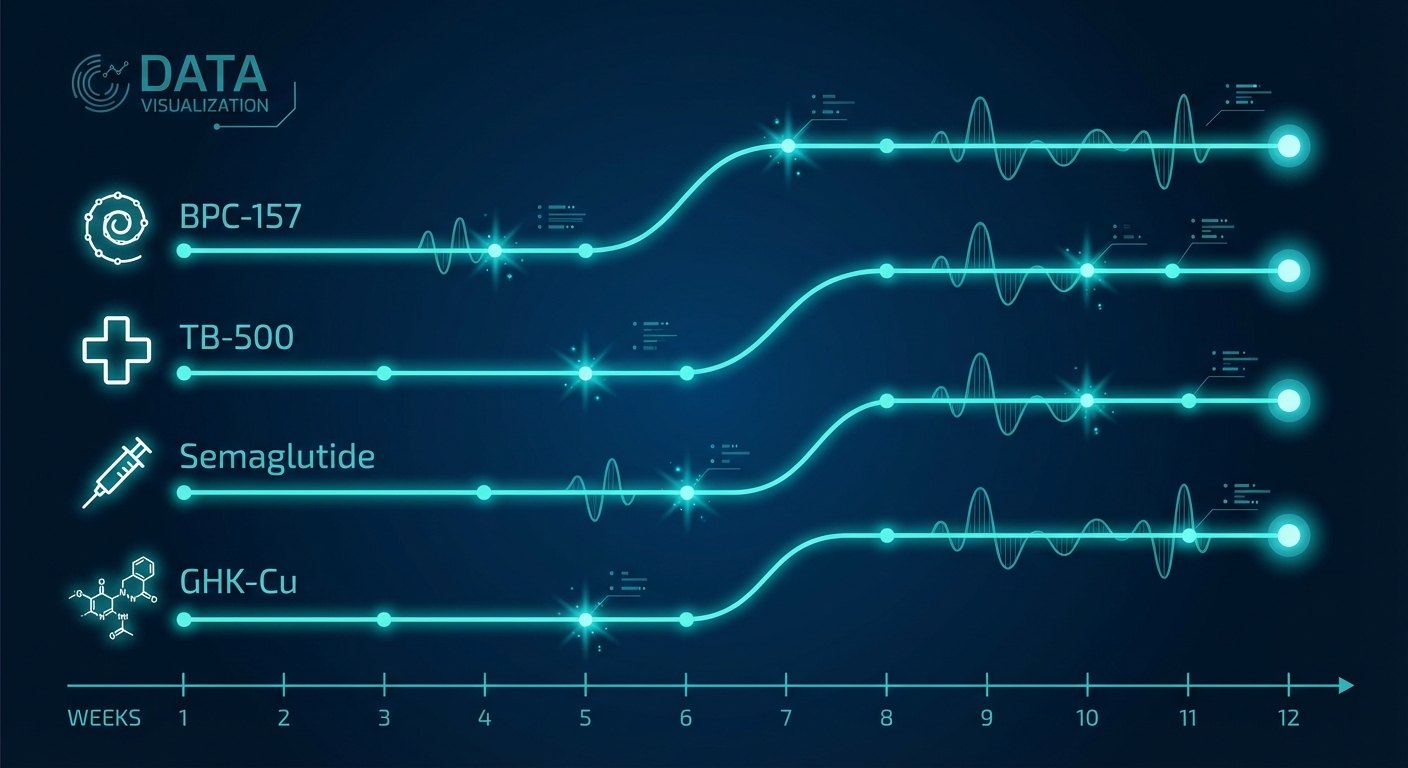
TLDR - Quick peptide timelines
- BPC-157: 1-3 weeks for initial effects, 4-8 week cycles typical
- TB-500: 1-2 weeks for subtle changes, 4-8 weeks for full effects
- GHK-Cu: 2-4 weeks topical, 8-12 weeks for skin firmness
- Semaglutide: 1-4 weeks appetite changes, peak weight loss 5-20 weeks
- CJC-1295/Ipamorelin: 1-4 weeks sleep/recovery, 2-3 months body composition
- Epithalon: First week for subtle effects, 10-20 day cycles
- Semax: 30 minutes to days for cognitive effects
How long do peptides take to work?
The short answer: anywhere from 30 minutes to 6 months, depending on the compound and what you're measuring.
Cognitive peptides like Semax can produce effects within an hour. Recovery peptides like BPC-157 typically show initial improvements in 1-3 weeks. And growth hormone-releasing peptides require 2-3 months before visible body composition changes emerge.
Why such a huge range? Peptides work through different biological mechanisms. Some trigger immediate receptor responses. Others initiate cascading effects that take weeks or months to manifest visibly.
The other factor: what counts as "working"? A peptide might begin cellular processes immediately while you won't notice subjective changes for weeks. Research papers often measure biomarkers that don't translate directly to what users actually feel.
Understanding how peptides work mechanistically helps set realistic expectations. If you're new to peptides, start with the complete guide to peptides for foundational knowledge.
Peptide timeline comparison table
This table summarizes how long research suggests each peptide takes to produce noticeable effects. Individual responses vary based on factors covered later in this article.
| Peptide | First effects | Peak results | Typical cycle |
|---|---|---|---|
| BPC-157 | 7-10 days (gut), 2-3 weeks (tissue) | 2-4 weeks | 4-8 weeks |
| TB-500 | 1-2 weeks | 4-8 weeks | 6-12 weeks |
| GHK-Cu | 2-4 weeks (topical), 1-2 weeks (injectable) | 8-12 weeks | 4-12 weeks |
| Semaglutide | 1-4 weeks | 5-20 weeks | Ongoing (prescribed) |
| CJC-1295/Ipamorelin | 1-4 weeks | 4-6 months | 12-16 weeks |
| Epithalon | Within first week | 2-6 weeks post-cycle | 10-20 days, 1-2x yearly |
| Semax | 30 minutes - few days | 1-2 weeks | 10 days - 6 weeks |
Keep in mind: these timelines come from available research data and user reports. Your experience may differ. Peptide quality, proper storage, and correct reconstitution technique all affect outcomes.