
Peptide Injection Techniques: A Reference for Research Protocols
Proper injection technique is a fundamental component of peptide research protocols. Poor technique can compromise dosing accuracy, cause injection site reactions, introduce contamination, and waste valuable research material. This reference covers standard injection techniques used in peptide research settings.
Table of Contents
Subcutaneous vs Intramuscular Injection
Most research peptides are administered via one of two injection routes. Understanding the differences is important for proper protocol design.
Subcutaneous (SubQ) Injection
Subcutaneous injection delivers the peptide into the fat layer just beneath the skin. This is the most common route for research peptides.
- Depth: Shallow - needle goes into the fatty tissue between skin and muscle
- Needle size: 29-31 gauge, 1/2 inch (insulin syringes)
- Absorption rate: Slower, more gradual absorption into the bloodstream
- Pain level: Generally minimal with proper technique
- Common sites: Abdomen (around the navel), thigh, upper arm
- Best for: Most peptides including BPC-157, TB-500, GHK-Cu, semaglutide, CJC-1295, ipamorelin
Intramuscular (IM) Injection
Intramuscular injection delivers the peptide directly into muscle tissue. This is less common for peptides but used in some research protocols.
- Depth: Deeper - needle penetrates through skin and fat into the muscle
- Needle size: 23-25 gauge, 1-1.5 inches
- Absorption rate: Faster absorption due to greater blood flow in muscle tissue
- Pain level: Can be more uncomfortable due to larger needle and deeper penetration
- Common sites: Deltoid (upper arm), vastus lateralis (outer thigh), ventrogluteal (hip)
- Best for: Certain peptides where faster absorption is desired, or specific research protocols
Which should you use? For the vast majority of research peptides, subcutaneous injection is the standard. It's simpler, less painful, requires smaller needles, and provides adequate absorption for most compounds. Unless a specific research protocol calls for intramuscular administration, subcutaneous is the default choice.
Equipment Needed
Having the right supplies prepared before beginning ensures a safe and efficient process. Here's what you need:
Essential Equipment
- Insulin syringes (29-31 gauge, 1/2 inch): These are the standard for subcutaneous peptide injection. The fine gauge minimizes pain and tissue damage. Use 1mL (100 unit) or 0.5mL (50 unit) syringes depending on your injection volume. Always use a new, sterile syringe for each injection.
- Alcohol swabs (70% isopropyl alcohol): For cleaning the injection site and the vial stopper before drawing. Pre-packaged individual swabs are most convenient.
- Reconstituted peptide vial: Your peptide should already be reconstituted with bacteriostatic water (BAC water) and stored at 2-8 degrees Celsius. See our reconstitution guide if you haven't prepared your peptide yet.
- Sharps container: A proper sharps disposal container for used needles. Never throw loose needles in regular trash.
Optional but Recommended
- Gloves (nitrile, powder-free): Recommended for maintaining sterile conditions during research protocols
- Cotton balls or gauze pads: For applying light pressure after injection if there's any bleeding
- Bandaids: Small adhesive bandages for the injection site if needed
- Clean, flat surface: To organize your supplies and work in a sanitary environment
Need to Reconstitute First?
Before injection, peptides must be properly reconstituted. Follow our step-by-step protocol.
Preparing the Injection
Proper preparation prevents contamination and ensures accurate dosing.
Step 1: Wash Your Hands
Thoroughly wash your hands with soap and water for at least 20 seconds. Dry with a clean towel. This is the single most important step for preventing infection.
Step 2: Gather and Inspect Supplies
Lay out all supplies on a clean surface. Check that your syringe packaging is sealed and undamaged. Inspect the peptide vial - the solution should be clear and free of particles or cloudiness. If the solution looks discolored or contains visible particles, do not use it.
Step 3: Clean the Vial Stopper
Wipe the rubber stopper of the peptide vial with an alcohol swab. Allow it to air dry for a few seconds. Do not blow on it or wipe it dry - let the alcohol evaporate naturally.
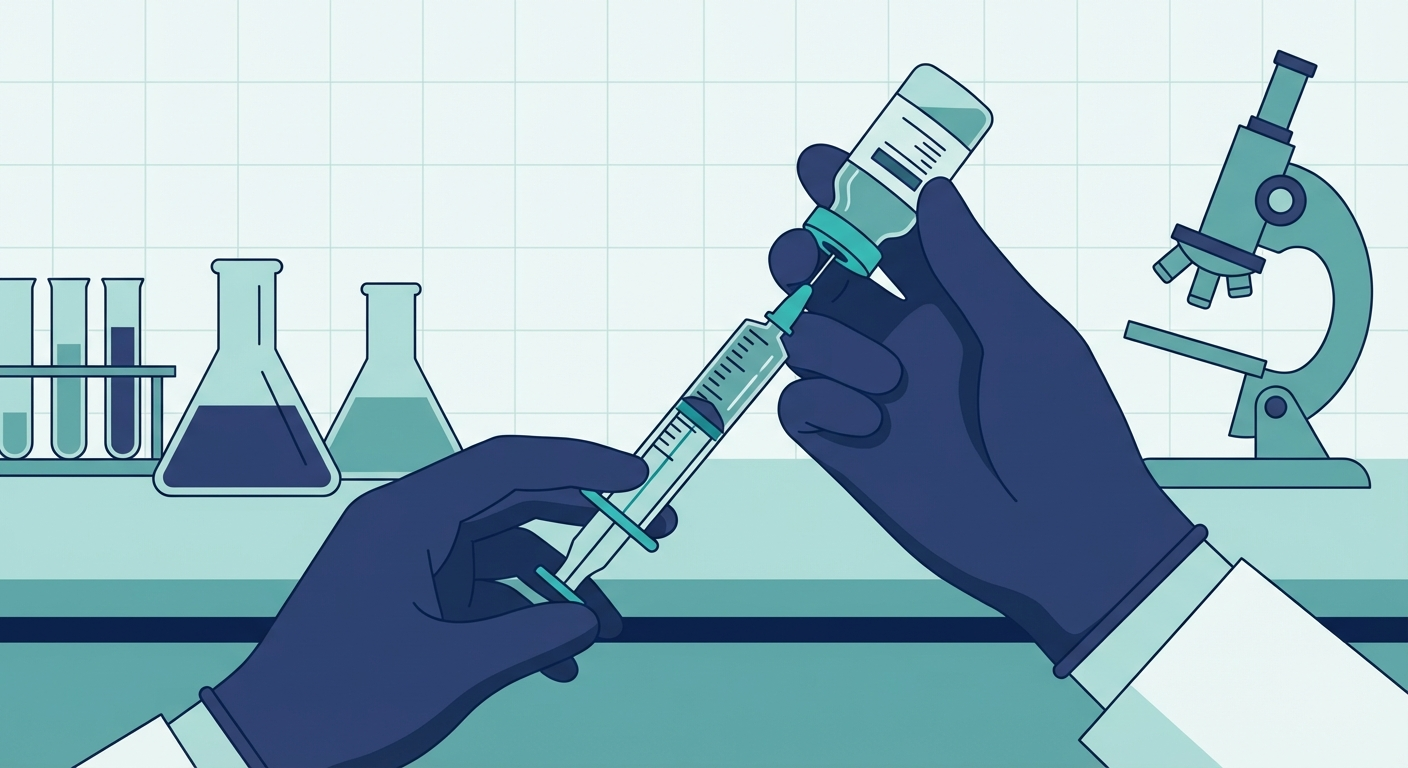
Step 4: Draw the Peptide
- Remove the syringe from its sterile packaging. Pull the plunger back to draw in air equal to the volume you plan to inject.
- Insert the needle through the center of the vial's rubber stopper.
- Push the air into the vial - this creates positive pressure that makes drawing easier.
- Invert the vial (turn it upside down) with the needle still inserted.
- Slowly pull the plunger back to draw the desired amount of peptide solution.
- Check for air bubbles. If present, gently tap the syringe barrel to move bubbles to the top, then push the plunger slightly to expel them back into the vial.
- Verify the correct volume is in the syringe, then withdraw the needle from the vial.

Step-by-Step Injection Process (Subcutaneous)
With your syringe prepared, follow these steps for a subcutaneous injection:
Step 1: Select and Clean the Injection Site
Select the injection site per the research protocol (see the rotation section below). Clean the area with a fresh alcohol swab using a circular motion, starting from the center and moving outward. Allow the alcohol to dry completely before proceeding - injecting through wet alcohol causes discomfort.
Step 2: Pinch the Skin
Using your non-dominant hand, gently pinch a fold of skin at the injection site. This lifts the fatty tissue away from the underlying muscle, ensuring the injection goes into the subcutaneous layer rather than the muscle.
Step 3: Insert the Needle
Hold the syringe like a pencil or dart in your dominant hand. Insert the needle at a 45-degree angle (for leaner individuals) or 90-degree angle (for those with more subcutaneous fat) in a smooth, quick motion. Hesitating or going slowly actually increases discomfort - a swift insertion is less painful.
Step 4: Inject the Peptide
Once the needle is fully inserted, slowly push the plunger down with steady, even pressure. Injecting too quickly can cause discomfort and may lead to the solution pooling under the skin. Take about 5-10 seconds for a typical injection volume.
Step 5: Withdraw and Apply Pressure
After the plunger is fully depressed, wait 5 seconds before withdrawing the needle. This allows the solution to disperse and reduces leakage. Pull the needle out at the same angle it went in. If there's any bleeding, apply light pressure with a cotton ball or gauze for a few seconds. Do not rub the injection site.
Step 6: Dispose of the Syringe
Immediately place the used syringe in a sharps container. Never recap needles - recapping is a common cause of needlestick injuries. Never reuse syringes.
Source Verified Research Peptides
Quality matters for research. Browse vendors with third-party testing and full COAs.
Injection Sites and Rotation
Rotating injection sites is essential for preventing tissue irritation, lipodystrophy (changes in fat tissue), and scar tissue buildup. Here are the primary subcutaneous injection sites:
Abdomen
The area around the navel is the most popular injection site for subcutaneous peptides. Use the fatty area at least 2 inches (5 cm) away from the belly button. Avoid injecting directly at the navel or into any scars. The abdomen generally provides consistent absorption and has ample subcutaneous fat in most individuals.
Thigh
The front and outer sides of the thigh, roughly in the middle third between the hip and knee. Avoid the inner thigh and the area directly above the kneecap. The thigh is convenient for self-injection since it's easy to access visually.
Upper Arm
The back or outer area of the upper arm, between the shoulder and elbow. This site can be harder to reach for self-injection and may have less subcutaneous fat in leaner individuals. It works well when someone else is administering the injection.
Rotation Strategy
A systematic rotation approach prevents overuse of any single area:
- Divide each site into quadrants: For the abdomen, imagine four quadrants around the navel. Rotate between them.
- Space injections at least 1 inch apart: Don't inject in the exact same spot within the same area.
- Alternate between body regions: For example, left abdomen on Monday, right thigh on Tuesday, right abdomen on Wednesday, left thigh on Thursday.
- Keep a log: Note the date, site, and any reactions. This helps maintain consistent rotation and identify sites that may be more reactive.
Common Mistakes to Avoid
Even experienced researchers sometimes develop bad habits. Here are the most common mistakes and how to avoid them:
1. Reusing Syringes
Never reuse a syringe, even on the same day. Used needles are contaminated, dulled, and can introduce bacteria. The small cost of a new syringe is not worth the infection risk.
2. Injecting Into the Same Spot Repeatedly
This causes tissue damage, scar tissue buildup, and can lead to lipodystrophy - visible changes in the fat tissue that affect both appearance and absorption. Follow a rotation plan.
3. Not Allowing Alcohol to Dry
Injecting through wet alcohol causes an immediate stinging sensation and can potentially introduce alcohol into the subcutaneous tissue. Wait 10-15 seconds after swabbing for the alcohol to evaporate.
4. Injecting Too Quickly
Pushing the plunger rapidly forces the solution into a small area, causing pressure, pain, and sometimes a visible lump. Slow, steady pressure over 5-10 seconds is ideal.
5. Incorrect Storage of Reconstituted Peptides
Leaving reconstituted peptides at room temperature degrades them. Always return vials to the refrigerator (2-8 degrees Celsius) immediately after drawing your dose. Most reconstituted peptides remain stable for 2-4 weeks when properly refrigerated.
6. Drawing Air Bubbles
Small air bubbles in a subcutaneous injection are generally harmless (unlike intravenous injection), but they can affect dosing accuracy. Always tap bubbles to the top of the syringe and expel them before injecting.
7. Skipping Hand Washing
It seems basic, but rushing through preparation and skipping proper hand washing is one of the most common causes of injection site infections. Make it non-negotiable.
Safety Considerations
Beyond injection technique, several broader safety considerations apply to peptide research involving injections:
Infection Prevention
- Use a new, sterile syringe for every injection
- Never share needles or peptide vials between individuals
- Store reconstituted peptides in the refrigerator and check expiration
- If a vial's stopper has been punctured many times and appears compromised, discard the vial
- Watch for signs of infection: increasing redness, warmth, swelling, pus, or red streaks from the injection site
Sharps Disposal
Used needles must be disposed of in a proper sharps container - a rigid, puncture-proof container specifically designed for medical waste. Many pharmacies sell inexpensive sharps containers, and many communities have sharps disposal programs. Never put loose needles in regular trash or recycling.
Allergic Reactions
While rare with peptides, allergic reactions can occur. Be familiar with the signs: hives, itching beyond the injection site, swelling (especially of face/lips/tongue), difficulty breathing, or dizziness. Have a plan for seeking emergency care if a severe reaction occurs.
Record Keeping
Maintain detailed records of each injection: date, time, peptide, dose, injection site, and any reactions. This documentation is valuable for research purposes and helps identify patterns if issues arise.
For more on potential reactions, see our peptide side effects guide. For sourcing quality peptides and supplies, check our best peptide companies guide.
Frequently Asked Questions
What is the expected discomfort level with subcutaneous peptide injection?
With proper technique and 29-31 gauge insulin syringes, subcutaneous injection with fine-gauge (29-31G) needles is associated with minimal tissue disruption and discomfort in research settings. Allowing alcohol to dry before injecting, using room-temperature solution, and inserting the needle quickly all help minimize discomfort. Proper technique minimizes discomfort significantly.
What size needle should I use for peptide injections?
For subcutaneous peptide injections, use 29-31 gauge insulin syringes with a 1/2 inch needle. These are thin enough to minimize pain and tissue damage while being long enough to reach the subcutaneous fat layer. For intramuscular injections (less common with peptides), use 23-25 gauge needles with 1-1.5 inch length.
Where is the best place to inject peptides?
The abdomen (at least 2 inches from the navel) is the most popular subcutaneous injection site due to consistent absorption and ample fat tissue. The front/outer thigh and upper arm are also common alternatives. Rotate between multiple sites to prevent tissue irritation and lipodystrophy.
Can you inject peptides intramuscularly instead of subcutaneously?
While some peptides can be injected intramuscularly, subcutaneous injection is the standard route for most research peptides. IM injection provides faster absorption but uses larger needles and is more uncomfortable. Unless a specific protocol requires IM administration, subcutaneous is recommended.
How do I know if my injection technique is correct?
Signs of proper technique include minimal pain during injection, no significant bleeding, no large lumps forming under the skin, and no persistent redness or swelling beyond a few hours. If you consistently experience pain, bruising, lumps, or injection site reactions, review your technique - angle, speed, and site rotation are the most common areas for improvement.
Need quality peptides for your research? Check out our Best Peptide Companies [2026] guide for reviewed and vetted suppliers.
Last updated: February 2026. This article is for educational and research purposes only. PeptidePick does not encourage or condone the use of peptides outside of legitimate research or clinical supervision. Consult your healthcare provider before starting any peptide protocol.