
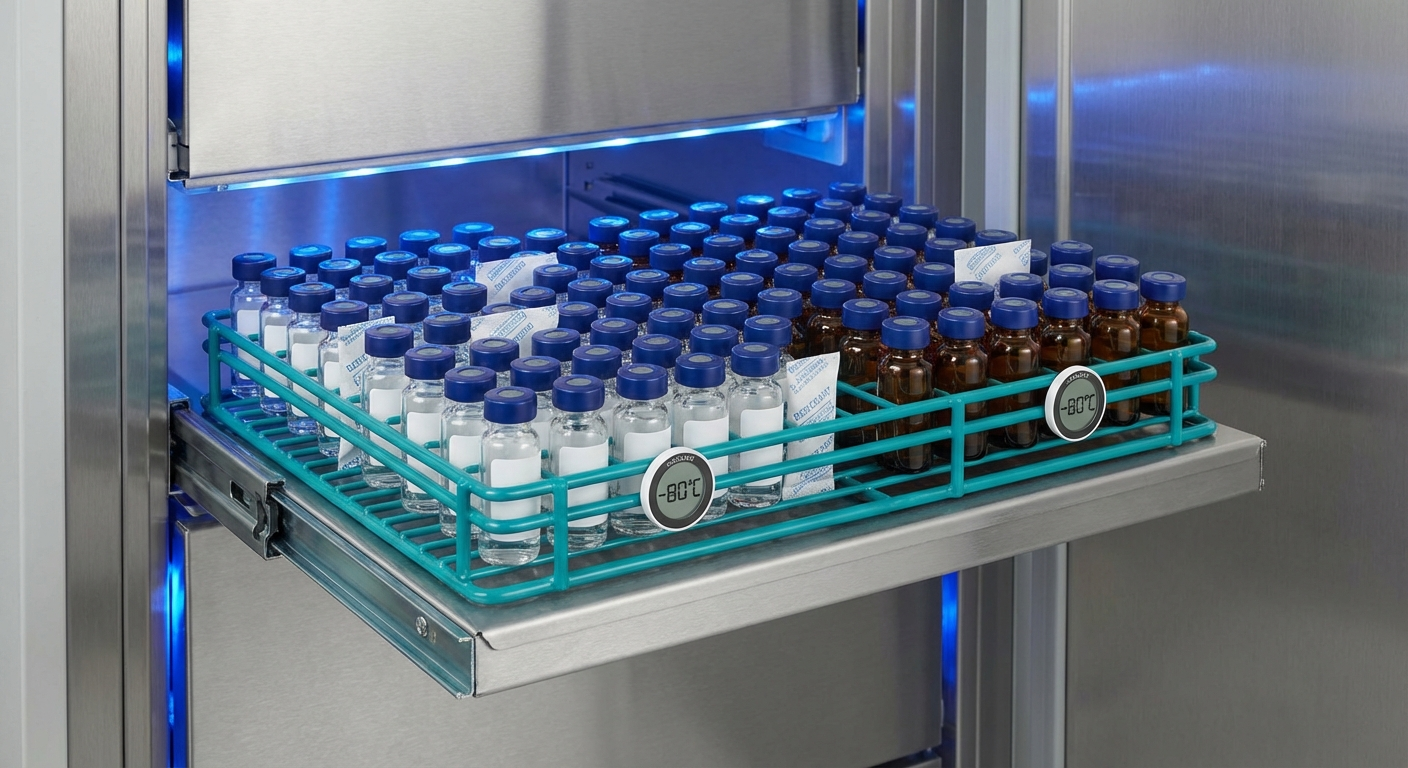
TLDR - Quick Peptide Storage Guide
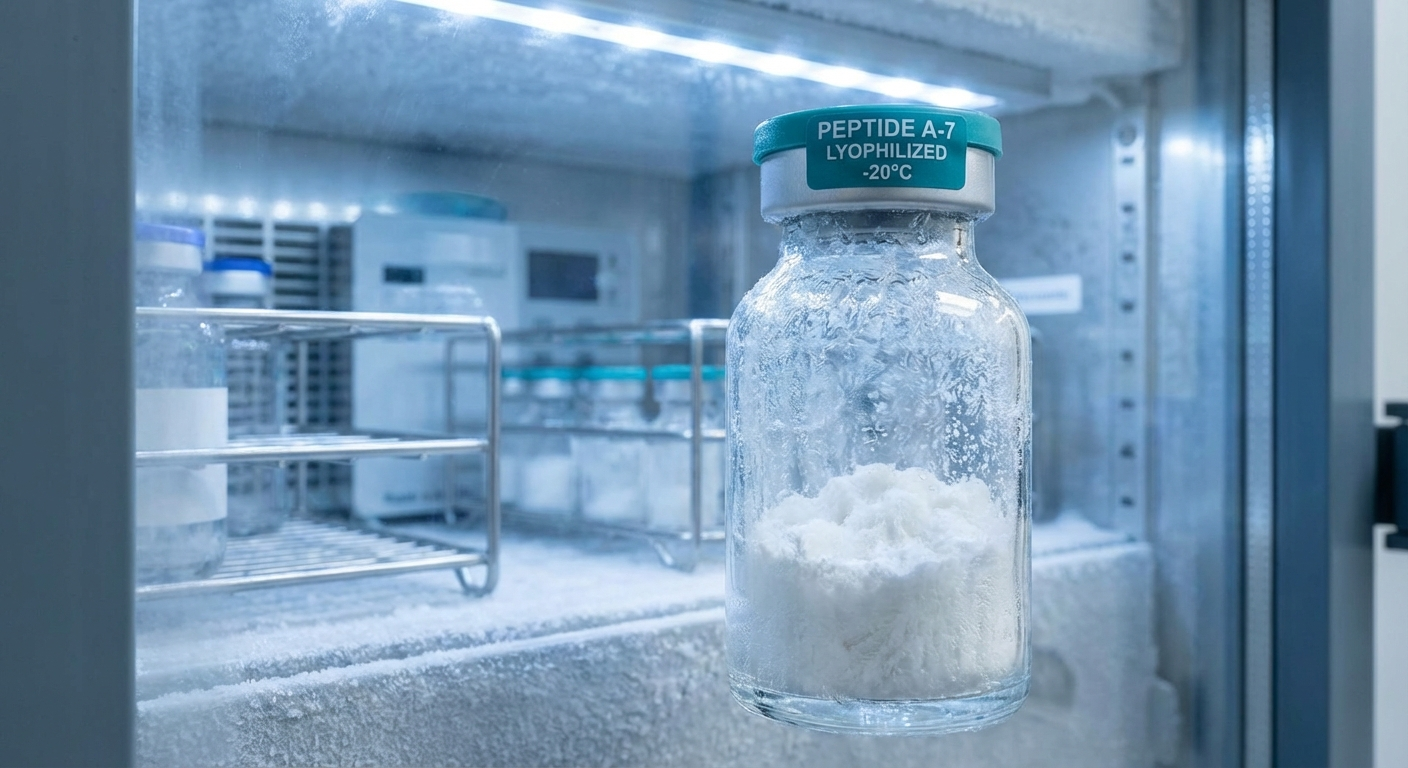
- Lyophilized (powder): Store at -20C or colder, away from light and moisture. Stable for years when handled correctly.
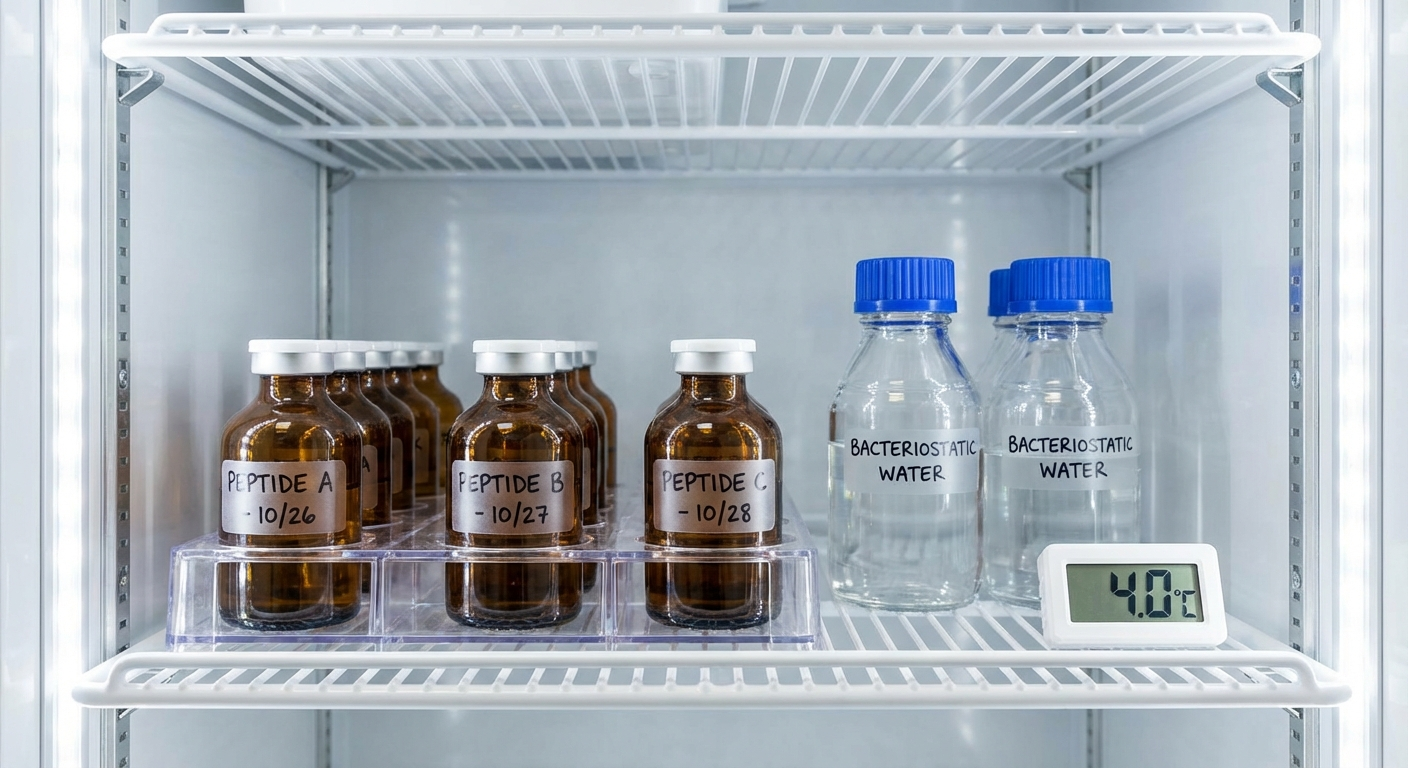
- Reconstituted (liquid): Refrigerate at 2-8C and use within 4-8 weeks. Never leave at room temperature.
- The big three enemies: Heat, light, and moisture. Avoid all three and your peptides will last far longer than you expect.
- Freeze-thaw cycles: Aliquot into single-use portions. Repeated freezing and thawing degrades peptides faster than almost anything else.
Looking for a trusted source? Pinnacle Peptide Labs carries 99% pure, third-party tested peptides. Use code Peptidepick15 for 15% off your order.
Why How You Store Peptides Matters More Than You Think
Knowing how to store peptides properly is the difference between reliable research and wasted money. You spent real money on research-grade compounds. You verified purity with third-party COAs. You reconstituted everything perfectly.
And then you left the vial sitting on your kitchen counter for a weekend.
That kind of mistake can undo everything. Peptides are fragile molecules - chains of amino acids linked by amide bonds that are sensitive to heat, light, moisture, and oxygen. Poor storage doesn't just shorten shelf life. It can silently degrade your peptides to the point where they're functionally useless, and you'd never know it just by looking at the vial.
According to data published by Sigma-Aldrich (now MilliporeSigma), peptides stored improperly can lose significant bioactivity within days, while properly stored lyophilized peptides remain stable for years. The difference between wasted money and reliable research often comes down to a few simple storage decisions.
This guide covers everything: the science behind peptide degradation, optimal storage conditions for both powder and liquid forms, peptide-specific requirements, and the most common mistakes that destroy potency. If you've ever asked yourself "do I really need to refrigerate this?" - the answer is almost always yes, and this article explains exactly why.
Before diving in, it helps to understand the basics of peptide structure. If you're new to peptides entirely, our guide to what peptides are covers the fundamentals.
Source Research-Grade Peptides With Verified Purity
Proper storage starts with quality peptides. Ascension Peptides provides third-party tested compounds shipped in proper lyophilized form.
60+ third-party tested research peptides and stacks
How Peptides Degrade - The Science Behind Potency Loss
Knowing why peptides break down helps you make smarter storage decisions. There are several chemical pathways that can damage peptide integrity, and each one responds to different environmental factors.
Oxidation
This is the most common form of peptide degradation. Amino acid residues like methionine, cysteine, and tryptophan are particularly vulnerable to reaction with atmospheric oxygen. When these residues oxidize, the peptide's three-dimensional structure changes - and with it, its biological activity.
Research published in the journal Biochemical Journal shows that methionine oxidation produces methionine sulfoxide, which can significantly alter protein function. For peptides containing these sensitive residues, even brief exposure to air during handling can start the degradation process.
Hydrolysis
Water is the second major enemy. Hydrolysis cleaves peptide bonds directly, breaking the molecule into smaller, inactive fragments. Peptides containing aspartic acid (Asp) are especially prone to this, as Asp residues can form cyclic imide intermediates that accelerate bond cleavage.
According to Sigma-Aldrich's peptide stability documentation, asparagine-glycine (Asn-Gly) sequences represent a known "hot spot" for deamidation - a closely related degradation pathway where the amino acid loses its amide group.
Photodegradation
UV and visible light can trigger photo-oxidation of sensitive amino acids. Tryptophan is the worst offender here - it absorbs UV light efficiently and generates reactive oxygen species that damage surrounding residues. Even normal indoor lighting, given enough exposure time, can cause measurable degradation.
Aggregation
When peptides in solution are exposed to temperature fluctuations - particularly freeze-thaw cycles - they can aggregate. This means individual peptide molecules clump together into larger structures that no longer function as intended. According to research published in Interface Focus (Royal Society Publishing), aggregation is one of the primary physical stability challenges for peptide therapeutics.
So what does all of this mean in practice? Your storage strategy needs to address oxygen, water, light, and temperature simultaneously. Miss any one of them and degradation can still occur.
For a deeper look at whether your peptides might already be past their prime, check our article on whether peptides expire.
How to Store Lyophilized (Powder) Peptides
Lyophilized peptides - the dry powder form you receive from most suppliers - are your most stable format. Freeze-drying removes nearly all water from the molecule, which slows or stops hydrolysis and many other degradation pathways.
But "more stable" doesn't mean indestructible. Here's what the research says about optimal conditions.
Temperature
The gold standard is -20C (-4F) for routine storage. Most lyophilized peptides remain stable for 2-5 years at this temperature when kept dry and sealed.
For long-term storage beyond a year, -80C (-112F) is better. Sigma-Aldrich, GenScript, and Bachem all recommend -80C as the preferred temperature for archival storage. The colder the environment, the slower every chemical reaction - including degradation.
Short-term storage at 4C (standard refrigerator) is acceptable for weeks to a few months, according to NIBSC (National Institute for Biological Standards and Control). And dry peptides can tolerate room temperature for days without catastrophic loss - useful during shipping - but this should never be your long-term plan.
Moisture Control
This is where many researchers make their first mistake. When you pull a frozen vial out of the freezer, condensation forms on and inside the container as it warms. That moisture is enough to kickstart hydrolysis.
The solution: let the sealed vial equilibrate to room temperature before opening. GenScript specifically recommends this step in their handling guidelines. Place the sealed container on the bench for 15-20 minutes before you remove the cap. This prevents moisture from condensing directly onto the lyophilized powder.
After dispensing what you need, desiccant packs in the storage container add an extra layer of protection. Silica gel packets work well and are cheap.
Light Protection
Store vials in a dark environment - inside a freezer drawer, in a closed box, or wrapped in aluminum foil. JPT Peptide Technologies specifically notes that even lyophilized peptides containing light-sensitive amino acids (tryptophan, tyrosine, phenylalanine) should be kept in amber-colored vials or dark conditions.
Atmosphere Control
For oxidation-sensitive peptides - anything containing methionine, cysteine, or free thiol groups - purging the vial headspace with inert gas (nitrogen or argon) before resealing makes a real difference. Multiple peptide manufacturers including Vivitide, AAPPTEC, and Peptide Sciences recommend this practice.
Seal with parafilm after purging to maintain the inert atmosphere between uses.
How to Store Reconstituted Peptides
Once you add solvent to lyophilized peptides, the clock starts ticking much faster. Water reintroduces the possibility of hydrolysis, and the liquid format makes every other degradation pathway more active too.
Solvent Choice Matters
Bacteriostatic water (BAC water) - sterile water containing 0.9% benzyl alcohol as a preservative - is the standard choice for reconstitution in research settings. The benzyl alcohol inhibits bacterial growth, which extends the usable life of your reconstituted peptide.
Sterile water without preservative is an alternative, but reconstituted peptides in plain sterile water have a shorter window - typically days rather than weeks - due to bacterial contamination risk.
For detailed reconstitution procedures, our peptide reconstitution guide walks through the process step by step. And our free reconstitution calculator helps you get the math right.
Refrigeration Is Non-Negotiable
Reconstituted peptides must be stored at 2-8C (standard refrigerator temperature). Not in the door - temperatures there fluctuate too much. Place vials in the back of the main compartment or in a dedicated cold zone.
Most reconstituted peptides remain stable for 28-30 days when refrigerated with bacteriostatic water, according to manufacturer guidelines from multiple vendors. Some sources extend this to 6-8 weeks for certain peptides, but 4 weeks is the conservative benchmark that most researchers follow.
After 30 days, potency typically drops to 80-85% of original levels. That's not catastrophic, but it means your experimental results might become less reliable the longer you push it.
Honestly, the exact degradation timeline for any specific peptide is hard to pin down with certainty. Published stability data often comes from manufacturers with specific formulations and conditions that may not match your setup. The 4-week guideline is a reasonable default, but your mileage will genuinely vary depending on peptide purity, solvent choice, how many times the vial gets opened, and even your refrigerator's actual temperature stability.
Aliquoting - The Single Most Important Habit
If you're going to take one practice away from this entire article, make it this: aliquot your reconstituted peptides into single-use portions immediately after mixing.
Every time you pull a vial from the fridge, insert a needle, withdraw some solution, and put it back, you introduce:
- Air (oxidation risk)
- Potential contaminants from the needle and syringe
- Temperature fluctuation from handling
Pre-portioning into individual vials eliminates all of these risks. Use sterile, capped microcentrifuge tubes or individual glass vials. Label each with the peptide name, concentration, date of reconstitution, and aliquot number.
Research-Grade GLP-1 Peptides for Your Studies
Apollo Peptide Sciences specializes in semaglutide, tirzepatide, and retatrutide - all shipped lyophilized for maximum shelf life.
Shop Apollo Peptide Sciences →
Specializing in GLP-1 research peptides and growth factors
Can You Freeze Reconstituted Peptides?
Yes, but with major caveats. Freezing reconstituted peptides at -20C can extend their life to several months. But you absolutely cannot freeze and thaw the same vial repeatedly.
Each freeze-thaw cycle causes ice crystals to form and melt, creating mechanical stress on the peptide structure. Research from JPT Peptide Technologies shows that repeated freeze-thaw cycles cause micro-condensation and aggregation that permanently damages molecular structure.
The rule: if you freeze reconstituted peptides, freeze individual aliquots. Thaw only what you need for that session. Once thawed, use it. Don't refreeze.
Storage Requirements by Peptide Type
Not all peptides are equally fragile. Some tolerate poor storage conditions surprisingly well, while others are remarkably sensitive. Here's what the available data says about common research peptides.
BPC-157
BPC-157 is unusual among research peptides - it demonstrates remarkable stability across a wide pH range, which is consistent with its origin as a fragment of a gastric body protection compound (first studied at the University of Zagreb). Lyophilized BPC-157 stores well at -20C. Once reconstituted in bacteriostatic water, it remains stable for approximately 3-4 weeks at 2-8C. That's slightly longer than average for research peptides.
For more on this peptide, see our full BPC-157 guide.
TB-500 (Thymosin Beta-4)
TB-500 follows standard storage protocols - lyophilized at -20C, reconstituted at 2-8C. It's generally considered stable for 3-4 weeks after reconstitution. This peptide doesn't contain the most oxidation-sensitive residues, so it's relatively forgiving compared to peptides heavy in methionine or cysteine.
Researchers comparing these two popular recovery peptides can find a detailed breakdown in our BPC-157 vs TB-500 comparison.
Semaglutide and Other GLP-1 Agonists
GLP-1 receptor agonists like semaglutide are modified peptides engineered for extended stability - Novo Nordisk specifically designed semaglutide with an albumin-binding fatty acid side chain that protects against degradation and extends its half-life. The FDA-approved commercial formulations (Ozempic, Wegovy) recommend refrigeration at 2-8C and allow room-temperature storage at or below 30C for limited periods.
Research-grade semaglutide follows the same general rules: lyophilized at -20C for long-term storage, reconstituted at 2-8C with a 4-week usage window. For a full overview, check our semaglutide research guide.
GHK-Cu
The copper tripeptide GHK-Cu adds a wrinkle: the copper ion. Copper can catalyze oxidation reactions if exposed to the wrong conditions. Store lyophilized GHK-Cu at -20C in amber vials or wrapped to block light.
After reconstitution, use within 2-3 weeks and avoid any contact with reducing agents. Our GHK-Cu guide covers dosage and application details.
CJC-1295 and Growth Hormone Secretagogues
CJC-1295 (with or without DAC) is a synthetic peptide that benefits from strict cold storage. The DAC (Drug Affinity Complex) variant is designed for extended release but still degrades at higher temperatures. Lyophilized storage at -20C is standard. Reconstituted CJC-1295 should be used within 2-4 weeks from the refrigerator.
| Peptide | Lyophilized Temp | Reconstituted Life | Special Notes |
|---|---|---|---|
| BPC-157 | -20C | 3-4 weeks | Unusually pH-stable |
| TB-500 | -20C | 3-4 weeks | Relatively forgiving |
| Semaglutide | -20C | 4 weeks | Fatty acid side chain adds stability |
| GHK-Cu | -20C | 2-3 weeks | Copper ion - protect from light |
| CJC-1295 | -20C | 2-4 weeks | Strict cold storage needed |
| Epithalon | -20C | 3-4 weeks | Standard handling |
| NAD+ | -20C to -80C | 1-2 weeks | Highly sensitive to heat and light |
Storage Equipment and Containers
The container you store peptides in matters almost as much as the temperature. Here's what works and what doesn't.
Glass Vials
Glass is the gold standard. It's inert, doesn't leach chemicals into your peptide solution, and provides an excellent seal when paired with rubber stoppers or Teflon-lined caps. Amber glass vials are ideal because they block UV and visible light that could trigger photodegradation.
If you only have clear glass vials, wrap them in aluminum foil. It's not elegant, but it works.
Avoid Plastic for Long-Term Storage
Standard plastic containers can cause problems. Some peptides adsorb onto plastic surfaces, which means the concentration in solution gradually decreases as the peptide sticks to the container walls. Low-binding polypropylene tubes are acceptable for short-term use (days), but glass is better for anything longer.
Desiccant Packs
For lyophilized peptides, adding silica gel desiccant packs to the outer storage container absorbs ambient moisture. Replace them periodically - they don't last forever. You'll know they're saturated when the indicating crystals change color (typically from blue to pink or orange to green, depending on the type).
Parafilm
Wrapping vial caps with parafilm after sealing adds an extra barrier against air and moisture infiltration. It's cheap, takes seconds to apply, and it works. Multiple manufacturers (AAPPTEC, Peptide Sciences, Bachem) specifically recommend this step.
Inert Gas
For researchers working with oxidation-sensitive peptides, small cans of argon or nitrogen gas are available from laboratory suppliers. A brief purge of the vial headspace before sealing displaces oxygen and dramatically reduces oxidation risk. Argon is denser than air, so it settles into the vial and stays there better than nitrogen.
7 Storage Mistakes That Destroy Peptide Potency
These are the errors that waste the most money and produce the most unreliable results.
1. Leaving reconstituted peptides at room temperature - Even an hour at 25C accelerates every degradation pathway. Get your peptide from the fridge, draw what you need, and put it back.
2. Repeated freeze-thaw cycles - Each cycle forms ice crystals that mechanically stress the peptide, plus introduces condensation. Aliquot immediately after reconstitution - it takes five extra minutes and saves you from wasting entire batches.
3. Opening frozen vials before they reach room temperature - The condensation that forms on cold surfaces is pure water, and it goes straight into your lyophilized powder. Wait 15-20 minutes for the sealed vial to warm up before removing the cap.
4. Storing in the refrigerator door - Door compartments experience temperature swings of 5-10C every time you open the fridge. Place peptide vials in the back of the main compartment where temperature stays consistent.
5. Using sterile water instead of bacteriostatic water - Without the benzyl alcohol preservative, reconstituted peptides become breeding grounds for bacteria. BAC water extends usable life from days to weeks.
6. Ignoring light exposure - Leaving vials on a windowsill or under fluorescent lights seems harmless, but it's not. UV and visible light cause measurable degradation of tryptophan-containing peptides within hours.
7. Failing to label and date vials - After three weeks in the fridge, all reconstituted peptide vials look identical. Without labels, you're guessing at concentration, identity, and age. Label everything and date everything.
For step-by-step mixing instructions that help you avoid contamination during the reconstitution process, we've built a dedicated guide.
Stock Up on Peptides and Storage Essentials
Ascension Peptides carries over 60 research compounds plus bacteriostatic water - everything you need to set up a proper storage protocol.
60+ third-party tested research peptides and stacks
Peptide Shelf Life Reference Chart
This chart summarizes general stability expectations. Individual results vary based on purity, formulation, and how strictly storage conditions are maintained.
| Form | Storage Temp | Expected Stability | Key Condition |
|---|---|---|---|
| Lyophilized | -80C | 5+ years | Sealed, desiccated, dark |
| Lyophilized | -20C | 2-5 years | Sealed, desiccated, dark |
| Lyophilized | 4C (fridge) | Weeks to months | Acceptable for short-term |
| Lyophilized | Room temp | Days to weeks | Transit only - not for storage |
| Reconstituted (BAC water) | 2-8C | 4-8 weeks | No repeated needle punctures |
| Reconstituted (sterile water) | 2-8C | Days | Use quickly - no preservative |
| Reconstituted (frozen aliquot) | -20C | Months | Single thaw only - never refreeze |
If you're trying to evaluate different suppliers and their storage recommendations, our roundup of the best peptide companies compares quality standards across the industry.
Quality verification is another factor that interacts with storage - peptides with higher initial purity degrade more predictably. Our guide on peptide quality verification explains how to read COAs and what purity numbers actually mean.
Shop 118+ Research Peptides at Limitless Biotech - Proper Storage Starts with Quality
Injectable, spray, and capsule peptides for research
Use code PeptidePick for a discount at checkout
Frequently Asked Questions
Can I store peptides at room temperature?
Lyophilized (powder) peptides can tolerate room temperature for short periods - days to a couple of weeks - without major degradation. This is normal during shipping. But for any storage beyond a few days, refrigeration or freezer storage is strongly recommended. Reconstituted peptides should never be kept at room temperature; they need refrigeration at 2-8C immediately after mixing.
How long do reconstituted peptides last in the fridge?
When mixed with bacteriostatic water and stored at 2-8C, most reconstituted peptides remain stable for 28-30 days. Some peptides like BPC-157 may remain usable for up to 6-8 weeks, though potency does decline over time. Conservative best practice is to use reconstituted peptides within 4 weeks. If mixed with plain sterile water (no preservative), use within a few days.
Should I use bacteriostatic water or sterile water for reconstitution?
Bacteriostatic water is the better choice for most research applications. It contains 0.9% benzyl alcohol, which prevents bacterial growth and allows the reconstituted peptide to remain usable for weeks. Sterile water lacks this preservative, meaning bacterial contamination becomes a risk within days. The only exception is if your specific protocol calls for preservative-free solvent due to assay interference concerns.
Do lyophilized peptides expire?
Technically yes, but properly stored lyophilized peptides last a long time. At -20C in a sealed, desiccated, light-protected container, most remain stable for 2-5 years, and at -80C stability can extend beyond 5 years. The degradation process is gradual rather than sudden. For a deeper look, check our article on whether peptides expire.
Can I freeze reconstituted peptides?
Yes, but only as single-use aliquots. Divide your reconstituted peptide into individual portions, freeze them at -20C, and thaw only one at a time when needed. Never refreeze a thawed aliquot - the freeze-thaw cycle damages peptide structure through ice crystal formation and can cause aggregation. If you freeze in individual portions, stability can extend to several months.
How can I tell if a peptide has degraded?
Visual signs are unreliable - degraded peptides often look identical to fresh ones. Some red flags include cloudiness, color change, or visible particles in a reconstituted solution. But many forms of degradation produce no visible change at all. The only definitive way to confirm integrity is analytical testing such as HPLC or mass spectrometry.
Is it safe to travel with peptides?
Transporting lyophilized peptides is relatively straightforward - they tolerate room temperature for days. Use an insulated container if possible, but they won't degrade catastrophically during a day or two of transit.
Reconstituted peptides are trickier - they need to stay cold. An insulated bag with ice packs can maintain 2-8C for several hours. For longer trips, use a portable cooler with temperature monitoring. Check peptide legality in your destination before traveling.
Related Articles
- Do Peptides Expire? Complete Storage Guide for Maximum Shelf Life
- How to Reconstitute Peptides: Research Protocol Reference
- How to Mix Peptides: Step-by-Step Reconstitution Guide (2026)
- Peptide Quality Verification: How to Verify Purity
- Peptide Side Effects: What Research Shows
- How to Inject Peptides: Research Protocol Reference