Vendor shortcuts
Compare the right source before you keep reading
Pick the lane that matches your research goal, then verify current COAs, label language, and shipping policy on the vendor page.
Research-only affiliate links. PeptidePick may earn a commission at no extra cost to you.
Pinnacle Peptide Labs vs Ascension Peptides: Which Is Better?
If you are comparing Pinnacle Peptide Labs vs Ascension Peptides, the real question is not which site looks cleaner. It is which vendor fits your research goal, your budget, and your standards for documentation.
Both companies market themselves as research peptide suppliers. Both emphasize third-party testing and focus on U.S. buyers. But their catalogs, pricing hooks, and buyer experience appear meaningfully different.
Pinnacle Peptide Labs vs Ascension Peptides becomes a much easier decision once you separate catalog depth from documentation quality.
TL;DR
Pinnacle looks stronger for broad catalog depth, stack options, and obvious discount-driven value, especially if you want access to compounds like GLP-1SG, GLP-2TZ, GLP-3RT, MOTS-c, or ready-made blends.
Ascension looks simpler and more focused, with strong coverage in recovery, cognitive, and skin-related peptides like BPC-157, TB-500, Semax, SS-31, KPV, and GHK-Cu.
If you care most about variety, Pinnacle usually wins. If you want a tighter catalog with fewer distractions, Ascension may be the easier pick. Either way, buyers should still verify COAs, purity methods, storage practices, and legal status before ordering.
Pinnacle Peptide Labs vs Ascension Peptides at a glance
Pinnacle and Ascension overlap on the basics. Both sell research peptides. Both mention third-party testing. Both frame products as research-only.
Both focus on U.S. customers. That is where the similarity starts to thin out.
Pinnacle leans toward breadth. Its public positioning highlights 99% pure research peptides, stack products, and a wider spread across recovery, GLP compounds, anti-aging compounds, and performance-adjacent options. Ascension feels more curated, with a catalog built around staples like BPC-157, TB-500, Semax, SS-31, KPV, Epithalon, and GHK-Cu.
That difference matters. A narrower catalog can be easier to evaluate. But if you want more delivery options, specialty compounds, or bundled stacks, Pinnacle has the advantage on paper.
| Category | Pinnacle Peptide Labs | Ascension Peptides |
|---|---|---|
| Catalog depth | Broad catalog with recovery peptides, GLP compounds, stacks, anti-aging options, secretagogues, and specialty items | More focused catalog centered on popular recovery, skin, and nootropic peptides |
| Visible value hook | Peptidepick15 gives 15% off | Tiered pricing for larger orders is highlighted |
| Testing language | Third-party testing and COA availability emphasized in public FAQ pages | Third-party potency and contaminant-free claims emphasized on site copy |
| Best fit | Researchers comparing many compounds or looking for stacks and niche products | Researchers who want a smaller menu built around common staples |
Want the widest peptide menu in this comparison?
Pinnacle stands out for stacks, GLP compounds, recovery peptides, and a catalog built for side-by-side shopping.
99% pure research peptides - use code Peptidepick15 for 15% off
Catalog comparison: where Pinnacle pulls ahead and where Ascension stays focused
Catalog depth is usually the biggest separator in a vendor comparison like this. Pinnacle appears to carry a wider overall range, including BPC-157, TB-500, GHK-Cu, Semax, Selank, MOTS-c, NAD+, Epithalon, SS-31, AOD-9604, IGF-1 LR3, CJC-1295/Ipamorelin, Sermorelin, Tesamorelin, GLP compounds, and branded stacks. That breadth matters if your research involves comparing categories, not just a single peptide family.
Ascension's catalog looks tighter, but not weak. It covers many of the compounds most readers actually search for, especially in recovery and nootropic niches. BPC-157, TB-500, SS-31, Semax, KPV, Epithalon, GHK-Cu, Wolverine Stack, and NeuroPro Plus are all relevant to current buyer intent.
So the better pick depends on how you shop. A broad catalog helps when you want to compare multiple compounds or stack options in one place. A tighter catalog cuts noise and can make quality checks easier. The real tradeoff is simple: a huge menu helps only if the documentation stays solid across that menu.
For broader context on multi-vendor shopping, see this roundup of the best peptide companies. And if you are comparing Pinnacle specifically, the existing Pinnacle Peptide Labs review pairs well with this head-to-head guide.
- Pinnacle strengths: wider category spread, more stacks, more GLP-style options, more niche compounds.
- Ascension strengths: simpler navigation, fewer distractions, strong representation in recovery and cognitive peptide categories.
- Shared strength: both cover staple compounds that dominate search volume.
Quality and testing: what matters more than marketing copy
Both vendors make testing claims. Pinnacle's site copy and FAQ pages mention independent third-party laboratory testing and COA availability. Ascension's site copy says products are third-party tested for potency and marketed as contaminant-free. Those are good signs, but they should start your review process, not end it.
In peptide quality control, the core issue is whether purity and identity claims are backed by analytical methods that make sense. Published guidance on peptide standards points to reversed-phase HPLC and mass spectrometry as normal tools for evaluating peptide purity and identity. That is not a niche opinion. It is standard lab practice, reflected in peptide synthesis and analytical literature.
That is why buyers should ask a few direct questions before trusting any vendor claim:
- Is there a batch-specific COA, not just a generic sample PDF?
- Does the report mention HPLC, LC-MS, or another recognizable analytical method?
- Does the COA match the exact lot being sold?
- Is the peptide lyophilized and stored in a way that reduces moisture-related degradation risk?
If you want a refresher on what to look for, this site already has a useful primer on peptide quality verification. And if reconstitution is part of your workflow, bookmark the how to reconstitute peptides guide plus the free peptide reconstitution calculator.
Pricing and value: discounts, bulk orders, and what actually saves money
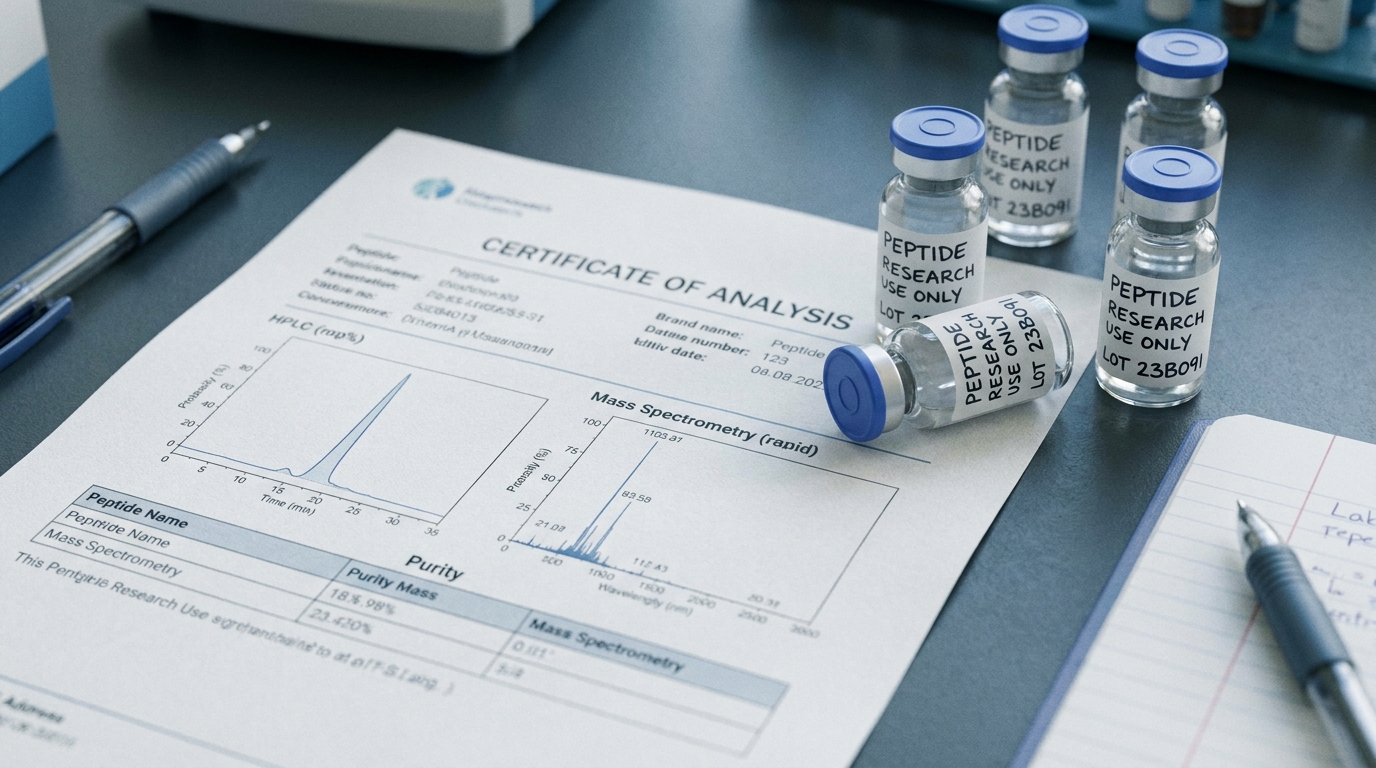
Value is not just sticker price. It is price relative to purity, shipping reliability, stock consistency, and how often a vendor runs useful discounts. Pinnacle has an obvious edge in one area: the discount is clear and public. Readers can use code Peptidepick15 for 15% off, which makes comparison shopping easier.
Ascension appears to put more emphasis on tiered pricing for larger orders. That may matter more to repeat buyers, labs, or resellers than to someone placing a small first order. For one-off orders, transparent coupon economics usually feel simpler.
Another cost factor gets ignored too often: failed orders and weak documentation are expensive. A slightly cheaper vial is not a bargain if the batch data is thin, shipping is inconsistent, or the peptide has to be discarded because storage details were unclear. This article on peptide therapy cost covers how expenses stack up once supplies, reconstitution materials, and repeat orders enter the picture.
Prefer a tighter peptide catalog with staple compounds front and center?
Ascension Peptides is a strong fit for recovery, skin, and nootropic shoppers who want popular compounds without a huge catalog to sort through.
60+ third-party tested research peptides and stacks
Pinnacle Peptide Labs vs Ascension Peptides for research use, shipping, and compliance
Both companies present products as research-only, which is exactly how this market is usually framed. Pinnacle's interstitial language explicitly says products are not intended for human consumption and are sold only for legitimate research use. Ascension states its products ship within the United States only and notes regulatory limitations on international shipping.
That U.S.-only detail matters. It tells you something concrete about how the vendor is operating, and it gives Ascension a small credibility boost on transparency. Buyers should still review current laws and site terms before ordering. The legal side of this category changes fast, and product availability can shift with regulation, payment processing, or internal compliance policy.
If you need a broader overview first, the site's guide to peptide legality is worth reading. For practical handling once products arrive, pair that with the mixing guide and the overview on bacteriostatic water for peptides.
One more nuance here: a vendor can be compliant in tone but still leave buyers guessing about operational details. That is where customer service, batch consistency, and lot-specific records start to matter more than homepage claims.
Who each vendor is best for
Pinnacle is probably the better fit if:
- You want more compound variety in one place.
- You care about stack options and niche categories.
- You want a visible discount code before checkout.
- You are already comparing multiple vendors and want a broader benchmark.
Ascension is probably the better fit if:
- You mostly want popular staples like BPC-157, TB-500, Semax, SS-31, KPV, or GHK-Cu.
- You prefer a smaller, more focused catalog.
- You may place larger orders where tiered pricing matters.
- You want a vendor that plainly states U.S.-only shipping.
For buyers who prefer oral supplement routes instead of injectable peptide research products, Nootropics Depot is a reasonable complement. It is not a peptide vendor. It sells third-party tested oral supplements, nootropics, and longevity compounds, so it fits better as an alternative path for readers who do not want peptide vials at all.
Want the broadest fallback catalog beyond this two-vendor comparison?
Limitless offers 118+ research products in injectable, spray, and capsule formats, which is useful if neither Pinnacle nor Ascension has the exact format you need.
Create your free Limitless account →
118+ research peptides in injectable, spray, and capsule forms - create a free account to access the full catalog
Use code PeptidePick for a discount at checkout
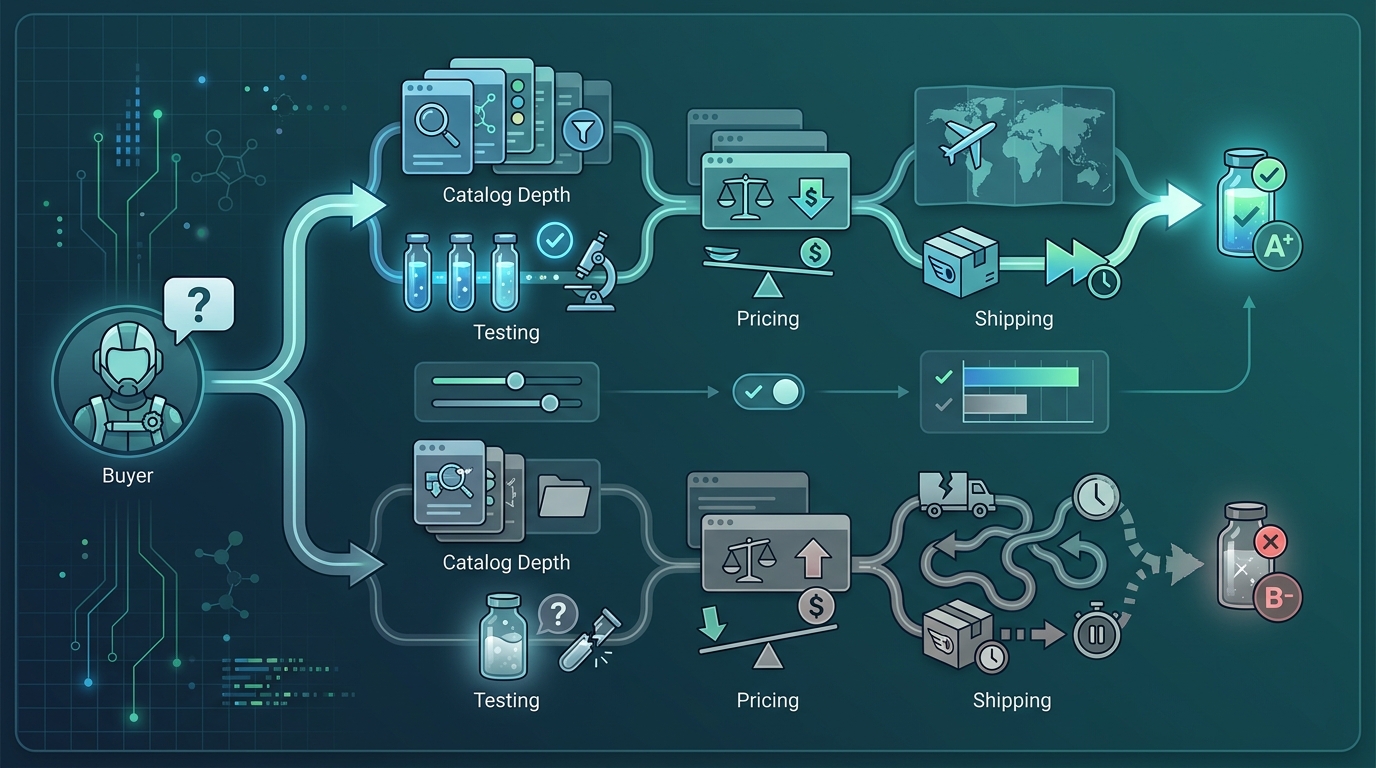
What serious buyers should compare before choosing either vendor
A vendor comparison gets more useful when you stop looking only at the product list. Buyers should compare how often staples go out of stock, whether the vendor shows batch dates, and whether support can answer technical questions without canned replies.
Shipping consistency matters too. A vendor can look great on day one, then frustrate repeat buyers if lead times stretch or tracking updates are weak. That is harder to measure from the homepage, but it matters more than headline copy.
Documentation quality is another separator. A clean COA should identify the compound, the lot, the test method, and the purity result in a way that can be checked. Generic screenshots are less useful than batch-specific files tied to the actual product in hand.
And then there is product fit. Many buyers do not need the largest catalog. They need the right peptide, consistent availability, and enough transparency to avoid guessing. That can favor a focused store over a bigger one, even if the bigger store looks better in a spreadsheet.
Why purity methods matter in vendor comparisons like this
Peptide buyers often repeat purity numbers without asking how those numbers were produced. That is risky. Published peptide quality guidance points back to standard analytical methods like reversed-phase HPLC and mass spectrometry because they help separate the target compound from impurities and confirm identity.
That matters in practical terms. Impurities can come from synthesis, cleavage, deprotection, extraction, purification, residual solvents, or storage conditions. A label that says 99% pure is only useful when the testing method behind it is real and current.
So when comparing Pinnacle Peptide Labs vs Ascension Peptides, buyers should not just ask who claims third-party testing. They should ask whether the documentation actually explains the test path well enough to trust the result.
That may sound picky. But in this category, picky is rational.
Frequently asked questions about Pinnacle Peptide Labs vs Ascension Peptides
Is Pinnacle Peptide Labs better than Ascension Peptides?
Pinnacle looks stronger for catalog breadth, stacks, and discount-driven value. Ascension looks stronger for buyers who want a more focused catalog centered on popular staples. Better depends on what you need.
Do both vendors claim third-party testing?
Yes. Pinnacle publicly references third-party lab testing and COAs, while Ascension says its products are third-party tested for potency and marketed as contaminant-free. Buyers should still verify batch-specific documents.
Which vendor has more peptide variety?
Pinnacle appears to have the broader catalog, especially across GLP products, stacks, secretagogues, anti-aging compounds, and specialty items.
Does Ascension Peptides ship internationally?
Its site copy states that orders ship within the United States only, with international shipping restricted due to regulations.
Is Pinnacle's discount code worth using?
Yes. The public Peptidepick15 code cuts 15% off, which makes Pinnacle easier to evaluate on total checkout cost versus competitors.
What should buyers check before ordering from either site?
Look for batch-specific COAs, analytical method details, storage guidance, shipping reliability, and current legal restrictions. Those points matter more than branding language.
Related articles
- Pinnacle Peptide Labs review
- Pinnacle Peptide Labs coupon code
- Peptide quality verification
- Are peptides legal to buy?
- How to reconstitute peptides
- Free peptide reconstitution calculator