
Tirzepatide vs Semaglutide: A Research-Based Comparison of Two GLP Peptides
The tirzepatide vs semaglutide comparison has become one of the most researched questions in GLP-1 peptide science. Both compounds target the GLP-1 receptor to reduce appetite and slow gastric emptying - but tirzepatide adds a second target, GIP, that appears to meaningfully change the weight loss outcome. This guide covers what the clinical data actually shows.
Mechanism of Action: GLP-1 vs Dual GLP-1/GIP
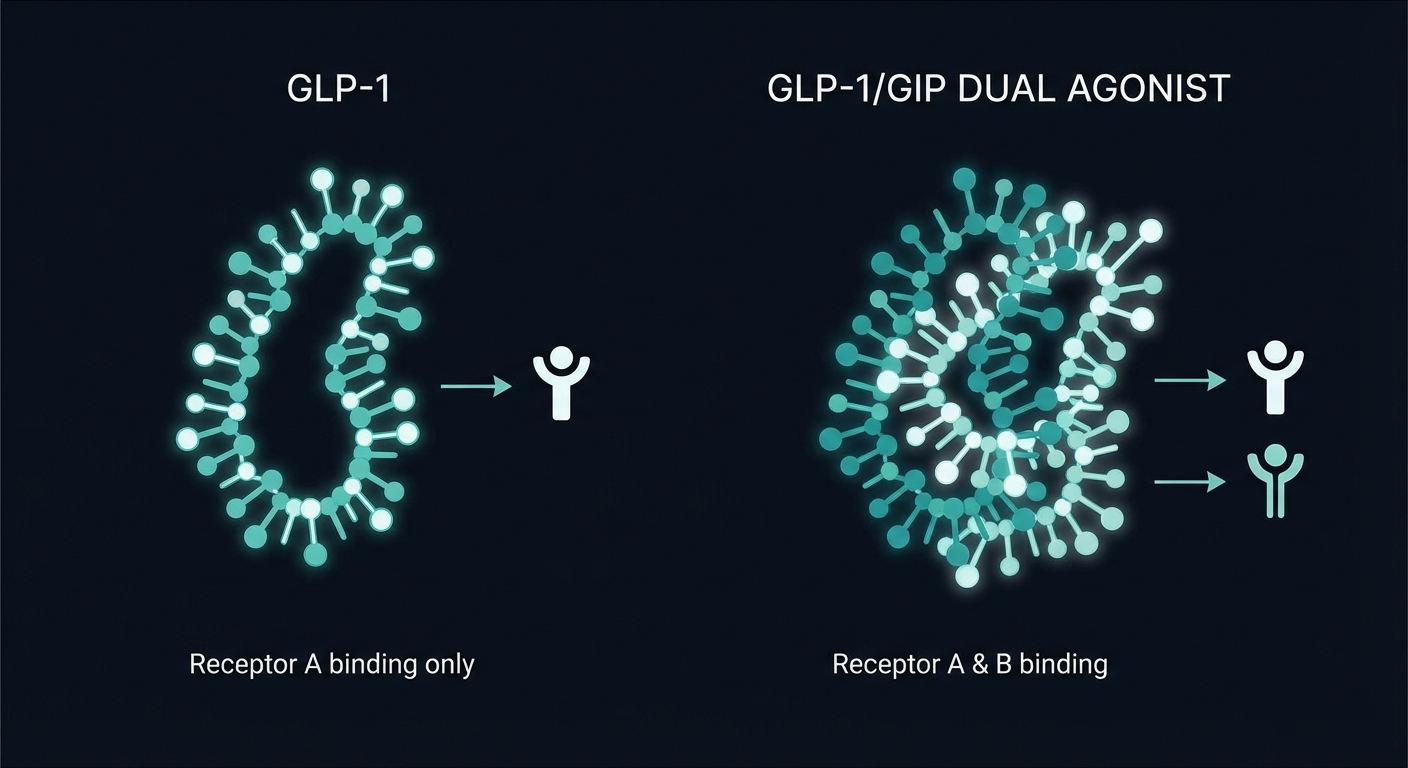
Semaglutide is a selective GLP-1 receptor agonist. It mimics the action of glucagon-like peptide-1, a hormone released from the gut after eating. When GLP-1 receptors are activated, the result is slower gastric emptying, reduced appetite signaling in the hypothalamus, and increased insulin secretion in response to glucose. Semaglutide binds to GLP-1 receptors with very high affinity and has a half-life long enough to support once-weekly subcutaneous dosing.
Tirzepatide adds a second receptor target. It is a dual GIP/GLP-1 receptor agonist - meaning it activates both GLP-1 receptors and glucose-dependent insulinotropic polypeptide (GIP) receptors simultaneously. GIP is the other major incretin hormone. Researchers believe the GIP pathway does something distinct from GLP-1: it may improve insulin sensitivity in adipose tissue and reduce some of the gastrointestinal side effects that come from pure GLP-1 stimulation.
Whether the GIP component genuinely accounts for tirzepatide's superior weight loss, or whether it is simply a more potent molecule overall, remains an open question in the literature. A 2024 review in PMC noted that the placebo-corrected weight loss was approximately 12% for semaglutide and 18% for tirzepatide across large clinical trials - suggesting the dual mechanism likely contributes meaningfully.
Both compounds are administered via subcutaneous injection. Both slow gastric emptying. And both reduce food intake through central appetite suppression. But the GIP component gives tirzepatide a different pharmacological fingerprint - one that ongoing research is still mapping.