
Vendor shortcuts
Compare the right source before you keep reading
Pick the lane that matches your research goal, then verify current COAs, label language, and shipping policy on the vendor page.
Research-only affiliate links. PeptidePick may earn a commission at no extra cost to you.
Bacteriostatic Water for Peptides: Complete Usage and Storage Guide
TL;DR
Bacteriostatic water (BAC water) is sterile water containing 0.9% benzyl alcohol. It's the standard solvent for reconstituting research peptides - benzyl alcohol prevents bacterial growth after the vial is punctured, extending usable shelf life to 28 days when refrigerated.
Sterile water is single-use only. BAC water is designed for multi-dose peptide workflows. For most peptides, add 1 to 2 mL per vial and store reconstituted peptides at 2-8 degrees C.
Every researcher working with lyophilized peptides needs to understand bacteriostatic water for peptides before reconstituting anything. Peptides ship as dry powder - before they can be used in any research context, the powder needs to be dissolved in an appropriate liquid carrier.
Get the solvent wrong and you risk degrading the peptide, introducing contamination, or getting inaccurate dosing. Bacteriostatic water is the default choice, and for good reason.
This guide covers exactly what BAC water is, why it works, how much to add, and how to store your reconstituted peptides to preserve stability. If you've been confused by conflicting instructions or want to understand the science behind the recommendation, this is the reference.
What Is Bacteriostatic Water?
Bacteriostatic water is sterile water for injection that contains 0.9% benzyl alcohol as a preservative. That 0.9% concentration is not arbitrary - it's the level validated by the United States Pharmacopeia (USP) as effective for inhibiting microbial growth without interfering with dissolved compounds.
The "bacteriostatic" part of the name tells you exactly what it does. It doesn't kill bacteria - it stops them from multiplying. Benzyl alcohol disrupts bacterial cell membranes at this concentration, preventing colonization in the solution after the vial has been opened and punctured.
Unopened vials of BAC water typically carry a 2-3 year shelf life from the manufacturer. Once opened and refrigerated, the USP recommends using the vial within 28 days. That's a meaningful window for multi-use peptide research protocols.
The practical implication is straightforward. When you reconstitute a peptide vial with BAC water, you can draw multiple doses from that same reconstituted vial over several weeks. With plain sterile water, you'd be working against the clock from the moment of first puncture.
BAC water is also slightly acidic, with a pH of around 5.7. This is close enough to neutral that it works with the vast majority of common research peptides. The exceptions - peptides that require acidic conditions to dissolve - are covered in the comparison section below.
Need Bacteriostatic Water and Peptides in One Place?
Limitless Life Nootropics carries BAC water alongside 118+ research peptides in injectable, nasal spray, and capsule forms - the largest delivery form variety of any vendor.
Create Your Free Limitless Account →
118+ research peptides in injectable, spray, and capsule forms - create a free account to access the full catalog. Use code PeptidePick for a discount at checkout.
BAC Water vs. Sterile Water vs. Acetic Acid Water
Three solvents come up regularly in peptide reconstitution guides. They are not interchangeable. Here's how they differ and when each applies.
| Property | Bacteriostatic Water | Sterile Water | Acetic Acid Water |
|---|---|---|---|
| Preservative | 0.9% benzyl alcohol | None | None |
| pH | ~5.7 (near neutral) | ~7.0 (neutral) | ~3.0 (acidic) |
| Multi-dose use | Yes - up to 28 days | Single use only | Limited (no preservative) |
| Best for | Most peptides | Single-injection peptides | GHK-Cu, IGF-1 LR3, AOD-9604 |
Bacteriostatic water is the right choice for the majority of research peptides: BPC-157, TB-500, semaglutide, tirzepatide, retatrutide, CJC-1295, Ipamorelin, Epithalon, Semax, Selank, NAD+, Tesamorelin, PT-141, Sermorelin, MOTS-C, and most others you'll encounter in standard protocols.
Sterile water has its place in single-injection research setups where the entire reconstituted solution is used in one session. But once you puncture the vial, the contamination clock starts. A 2021 contamination study published in the American Journal of Infection Control found detectable microbial contamination in 18% of tested multi-dose vials reconstituted with non-bacteriostatic sterile water within 24 hours of first use.
Acetic acid water (typically 0.6% glacial acetic acid) is required for a specific subset of peptides that won't dissolve at near-neutral pH. These include GHK-Cu, IGF-1 LR3, AOD-9604, GHRP-2, GHRP-6, Melanotan 1 and 2, and Fragment 176-191. If you reconstitute one of these with BAC water and see cloudiness or a milky solution, acetic acid water is what you need.
The rule of thumb: if the solution stays clear after adding BAC water, you chose correctly. Cloudiness means switch to acetic acid water.
Also worth noting - don't confuse bacteriostatic water with normal saline (0.9% sodium chloride). Saline is used for IV dilution and flushing, not peptide reconstitution. The ionic content of saline can interfere with peptide solubility and stability in some compounds.
How Much Bacteriostatic Water to Add Per Peptide Vial
There's no single universal answer, because the right amount depends on the peptide's vial size and your target dose per injection. But there are practical guidelines researchers use consistently.
The most common approach for standard peptide vials:
- 1 mg vial - Add 1 mL of BAC water. Each 0.10 mL (10 units on a U-100 syringe) = 100 mcg.
- 5 mg vial - Add 2 mL of BAC water. Each 0.10 mL = 250 mcg. Or add 1 mL if using smaller doses and want to pull less volume per injection.
- 10 mg vial - Add 2 mL for standard concentration. Each 0.10 mL = 500 mcg.
A more precise method: decide on your target dose and desired injection volume first, then work backward. For a 5 mg vial where you want 250 mcg per injection drawn at 10 units on a U-100 syringe - add 2 mL. The math: 5000 mcg / 2 mL = 2500 mcg/mL = 250 mcg per 0.10 mL.
For GLP-1 class peptides like semaglutide or tirzepatide, which are dosed in milligrams rather than micrograms, the calculation changes. A 5 mg semaglutide vial with 2 mL of BAC water gives a 2.5 mg/mL concentration - useful for weekly dose escalation protocols.
If you find yourself doing this math repeatedly, use PeptidePick's free peptide reconstitution calculator to get the exact volume and syringe markings for any combination of vial size, water volume, and dose.
Step-by-Step Reconstitution Process
Reconstituting a peptide is straightforward when you follow a consistent process. The biggest risk is contamination - and most contamination happens from careless technique, not faulty equipment.
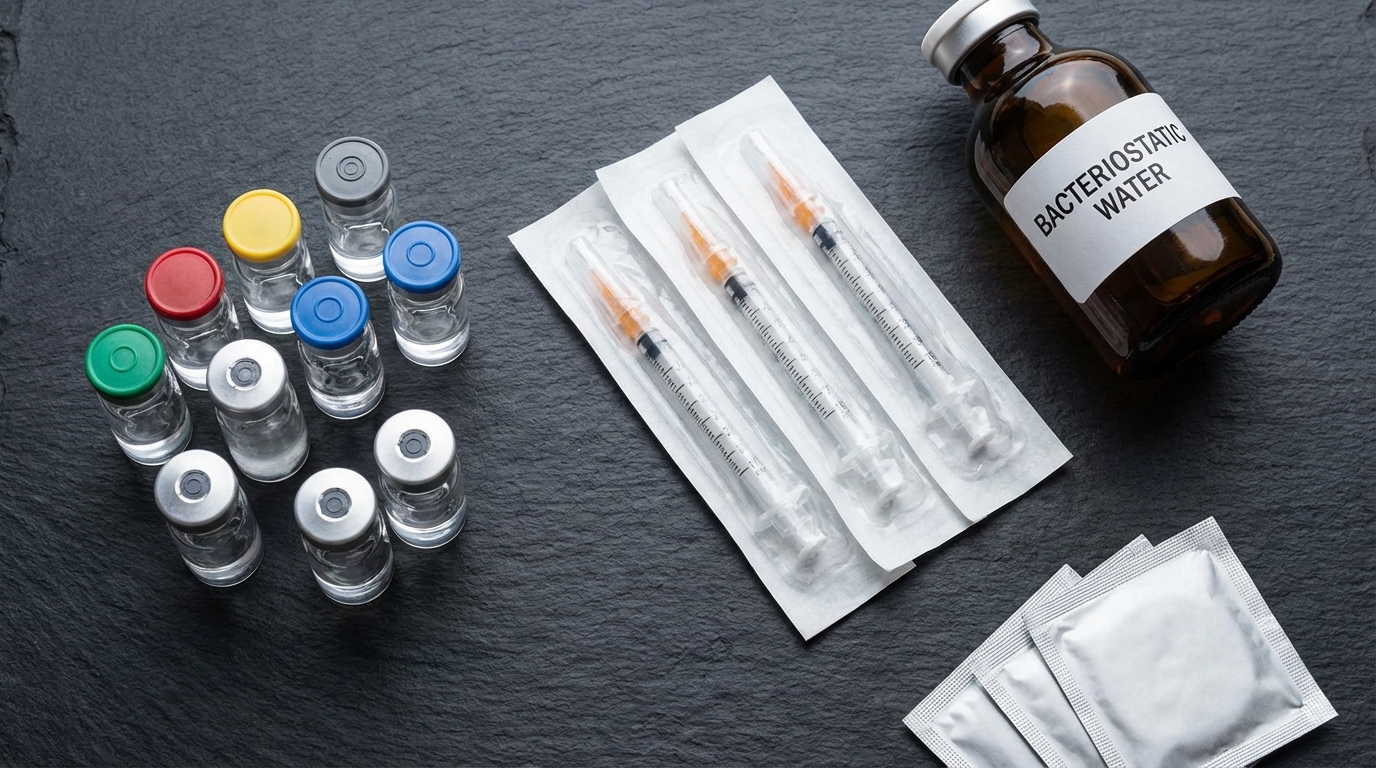
- Gather your materials. You need the peptide vial, a vial of bacteriostatic water, at least two sterile syringes (one for drawing BAC water, one for future doses), and alcohol swabs.
- Swab everything. Wipe the rubber stopper on both the peptide vial and the BAC water vial with a fresh alcohol swab. Let it dry for 30 seconds before inserting any needle.
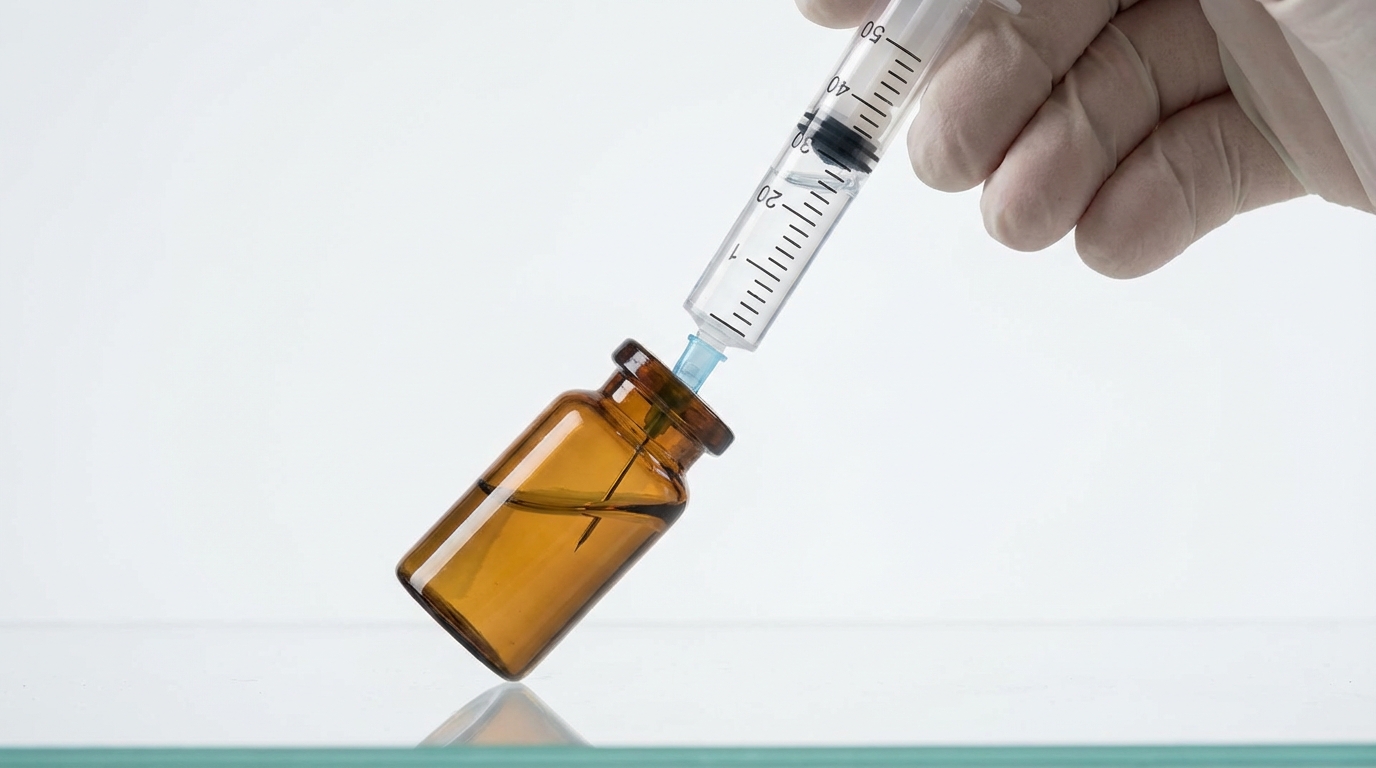
- Draw the BAC water. Pull back the syringe plunger to the volume you want to add (e.g., 2 mL) before inserting into the BAC water vial. This creates a vacuum that makes drawing easier.
- Add water slowly. Insert the needle into the peptide vial at an angle and let the BAC water run down the side of the vial rather than hitting the powder directly. Pressure on the lyophilized cake can degrade the peptide.
- Swirl, don't shake. Gently swirl the vial in a circular motion until the powder is fully dissolved. Shaking creates bubbles and can damage peptide chains through agitation-induced degradation.
- Check the solution. A properly reconstituted peptide in BAC water should be clear and colorless. Any cloudiness may indicate wrong solvent choice, degraded peptide, or contamination. Discard if in doubt.
- Label and store. Write the date of reconstitution on the vial and refrigerate immediately. The 28-day window starts now.
One detail researchers sometimes miss: when you draw from the reconstituted vial repeatedly, inject a small amount of air into the vial first (equal to the volume you're drawing) to maintain pressure equilibrium. This makes drawing consistent doses easier and reduces the chance of introducing contaminants through repeated needle insertions.
For a deeper walkthrough of technique variations by peptide type, see the complete peptide reconstitution guide or the how to mix peptides guide.
Bacteriostatic Water + 99% Pure Research Peptides
Pinnacle Peptide Labs supplies BAC water alongside their full peptide catalog - third-party tested for purity, ready to reconstitute.
Use code Peptidepick15 for 15% off your order
99% pure research peptides - use code Peptidepick15 for 15% off
Storage and Shelf Life Rules
Bacteriostatic water handles storage reasonably well, but reconstituted peptides are more fragile. Once you've mixed a peptide into BAC water, the peptide itself becomes the limiting factor for shelf life - not the water.
Unopened BAC water vials should be stored at room temperature, away from direct sunlight and heat. Most manufacturers guarantee a 2-3 year shelf life from the production date. Check the expiration date on the label before use.
After opening, refrigerate the BAC water vial at 2-8 degrees C (36-46 degrees F). Use within 28 days per USP guidelines. Do not freeze BAC water - benzyl alcohol can separate at very low temperatures, and the vial's rubber stopper can degrade.
Reconstituted peptides follow the same 28-day refrigeration rule in most cases, though individual peptide stability varies:
- BPC-157 in BAC water: stable 4-6 weeks refrigerated (some protocols run 4 weeks, then discard)
- GLP-1 peptides (semaglutide, tirzepatide): 28-30 days refrigerated once reconstituted
- TB-500, CJC-1295, Ipamorelin: 28 days refrigerated standard
- Epithalon: up to 4 weeks refrigerated in BAC water
If you need to store reconstituted peptides longer, the accepted method is freezing at -20 degrees C. Freeze in individual single-dose aliquots using small glass vials to avoid repeated freeze-thaw cycles, which accelerate degradation. Frozen reconstituted peptides can typically maintain stability for several months, though this varies by compound.
Signs a reconstituted solution should be discarded: visible particles or cloudiness that wasn't there before, color change, any unusual smell, or if it's been longer than 28 days since reconstitution at refrigerated temperatures.
For the full picture on peptide storage across all stages - lyophilized powder, reconstituted solution, and frozen aliquots - see the dedicated peptide storage guide. Also worth reading: do peptides expire for shelf life specifics by compound.
Common Reconstitution Mistakes to Avoid
Most errors in peptide reconstitution come down to one of five problems. Here's what goes wrong and how to prevent it.
Using the Wrong Solvent
The most common mistake. Reaching for sterile saline, distilled water, or plain sterile water when BAC water is called for costs you multi-dose usability and contamination protection. Conversely, using BAC water for peptides that require acetic acid water (like GHK-Cu or IGF-1 LR3) results in incomplete dissolution - the solution stays cloudy no matter how long you swirl it.
Check the peptide's solubility profile before you reconstitute. When in doubt, BAC water is the safe default for most standard peptides.
Shaking Instead of Swirling
Aggressive shaking can mechanically degrade peptide chains. The peptide powder in a lyophilized vial is fragile. Swirl gently in slow circles.
If the powder doesn't fully dissolve after a minute of swirling, let the vial sit in the refrigerator for 15-20 minutes and try again. Patience works better than force here.
Injecting BAC Water Directly onto the Powder
Letting water hit the lyophilized cake at full pressure can break up the peptide's structure. Angle the needle so the water runs down the inner wall of the vial. The powder dissolves from the sides rather than taking a direct hit.
Skipping Alcohol Swabs
The rubber stoppers on both vials accumulate environmental bacteria even when stored properly. Skipping the swab step defeats part of what bacteriostatic water is protecting against. Use a fresh swab each time. Let it dry before inserting the needle - wet alcohol can carry surface contamination into the solution.
Losing Track of Reconstitution Dates
A vial that's been in the refrigerator for 5 weeks looks the same as one that was reconstituted yesterday. Label every vial with the reconstitution date immediately after mixing. Masking tape and a marker work fine. Discard anything past 28 days unless it's been properly frozen.
Using Expired BAC Water
BAC water vials have expiration dates. The benzyl alcohol can degrade over time, particularly after the vial has been opened. An expired or degraded BAC water preservative won't adequately protect your reconstituted peptide solution. Check the expiration before every use.
These errors are easy to avoid once you've built consistent habits. See the how to inject peptides guide for technique guidance after reconstitution is complete.
Where to Buy Bacteriostatic Water for Research
Most researchers source BAC water from the same vendors supplying their peptides. That's convenient - one order, one shipment, and you know the BAC water is pharmaceutical grade and appropriate for injectable research use.
A few considerations when sourcing:
- Look for USP-grade bacteriostatic water for injection, not just "bacteriostatic water" from general lab supply companies
- Confirm the benzyl alcohol concentration is 0.9% - the validated antimicrobial concentration
- Check that vials are sterile-filtered, not just labeled sterile
- Verify expiration dates when ordering - stock that's been sitting long has a shorter remaining window
The four vendors PeptidePick works with all carry bacteriostatic water alongside their peptide catalogs. You can find a comparison of their full offerings, quality practices, and pricing at best peptide companies.
For researchers who prefer non-injectable supplementation as a complement to or alternative to injectable protocols, Nootropics Depot carries a wide range of third-party tested oral supplements - no BAC water required.
60+ Third-Party Tested Peptides and Reconstitution Supplies
Ascension Peptides carries bacteriostatic water alongside their full catalog of research peptides - each batch independently verified for purity.
60+ third-party tested research peptides and stacks
Related Articles
- How to Reconstitute Peptides - Full Step-by-Step Guide
- How to Mix Peptides - Solvent Selection and Process
- How to Store Peptides Properly
- Do Peptides Expire? Shelf Life by Compound
- Free Peptide Reconstitution Calculator
- SubQ vs Intramuscular Injection for Peptides
Frequently Asked Questions
Can I use bacteriostatic water for all peptides?
BAC water works for the majority of research peptides, including BPC-157, TB-500, semaglutide, tirzepatide, CJC-1295, Ipamorelin, Epithalon, Semax, Selank, MOTS-C, and most others. A specific subset - including GHK-Cu, IGF-1 LR3, AOD-9604, and GHRP-6 - requires acetic acid water due to poor solubility at near-neutral pH. If your reconstituted solution is cloudy after using BAC water, the peptide likely needs acetic acid water instead.
How long does bacteriostatic water last after opening?
Once opened and refrigerated, the USP recommends using BAC water within 28 days. Unopened vials stored at room temperature carry a 2-3 year shelf life from the manufacturer. Do not freeze BAC water, as the benzyl alcohol preservative can separate and the rubber stopper can degrade at freezing temperatures.
What is the difference between bacteriostatic water and sterile water?
Both are pharmaceutical-grade sterile water, but bacteriostatic water contains 0.9% benzyl alcohol as a preservative. This preservative prevents bacterial growth after the vial is punctured, allowing multi-dose use over up to 28 days. Sterile water has no preservative and is a single-use product - once opened, it has no protection against contamination and should be used immediately.
How much bacteriostatic water do I add to a 5 mg peptide vial?
For a 5 mg vial, the most common approach is to add 2 mL of bacteriostatic water, giving a concentration of 2.5 mg/mL (or 2500 mcg/mL). At this concentration, each 0.10 mL drawn on a U-100 insulin syringe equals 250 mcg. If you're using smaller doses and want to minimize injection volume, 1 mL is also used, doubling the concentration to 5000 mcg/mL. Use a peptide reconstitution calculator to confirm the math for your specific dose.
Does benzyl alcohol in bacteriostatic water degrade peptides?
At 0.9% concentration, benzyl alcohol does not degrade most common research peptides. The concentration is low enough that it inhibits bacterial growth without interfering with peptide stability. Some extremely sensitive peptides may show minor compatibility issues over extended storage, but for the standard research peptides used in most protocols, BAC water is considered safe and stable. The bigger stability risks are temperature, agitation, and time - not the benzyl alcohol itself.
Can I freeze reconstituted peptides made with bacteriostatic water?
Yes. Freezing reconstituted peptides at -20 degrees C is an accepted method for extending storage beyond the 28-day refrigerated window. The key is to freeze in single-dose aliquots to avoid repeated freeze-thaw cycles, which accelerate degradation.
Note that you should freeze the reconstituted peptide solution, not the BAC water vial itself. When ready to use, thaw slowly in the refrigerator or at room temperature - not in a microwave or warm water.
What happens if I use expired bacteriostatic water?
Expired BAC water carries two risks. First, the benzyl alcohol preservative may have degraded, reducing its antimicrobial effectiveness and leaving your reconstituted peptide solution vulnerable to contamination. Second, the water itself may no longer meet USP sterility standards if the vial integrity has been compromised. Always check the expiration date before use and discard any vial that has passed its expiration, shows visible particles, or has been opened longer than 28 days.