

PeptidePick preferred picks
Use the highest-value vendor routes first.
Pinnacle is first for the 15% discount code. Ascension is the broad-catalog default when you want the cleaner research-only route.
Research-only affiliate links. Verify COAs, labels, and shipping terms before checkout.
Matrixyl 3000 vs Argireline Anti-Aging: Which Peptide Is More Effective?
Matrixyl 3000 vs Argireline anti-aging is really a question about wrinkle type. Matrixyl 3000 is usually discussed as a topical signal peptide blend for firmness and texture. Argireline is usually discussed as an expression-line peptide for areas that crease with repeated facial movement.
The short version: Matrixyl 3000 is the better fit for skin that looks thinner, less springy, or more crepey. Argireline is the better fit for forehead lines, crow's feet, and other shallow dynamic lines. Many formulas combine both because they work through different cosmetic pathways.
TLDR: Matrixyl 3000 vs Argireline
- Best for firmness: Matrixyl 3000, because it is built around palmitoyl tripeptide-1 and palmitoyl tetrapeptide-7.
- Best for expression lines: Argireline, also called acetyl hexapeptide-8, because it is designed around a SNAP-25 mimetic concept.
- Best practical choice: use both if the formula is well built, fragrance-light, and tolerated by your skin.
- Evidence quality: promising but uneven. Topical peptide research is smaller and more formula-dependent than retinoid research.
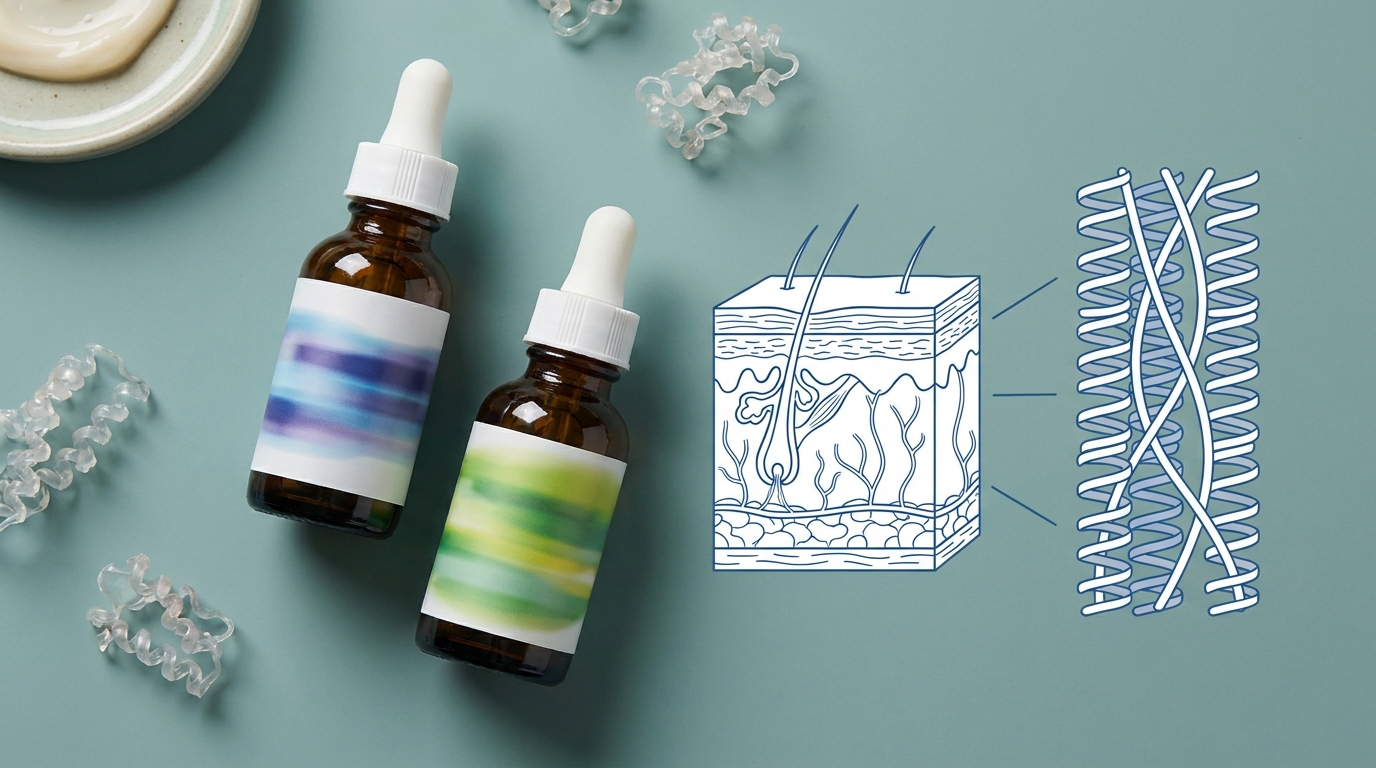
Matrixyl 3000 vs Argireline Anti-Aging: Quick Comparison
Matrixyl 3000 and Argireline both sit in the cosmetic peptide category, but they are not trying to do the same job. That is the main reason the comparison gets messy.
Matrixyl 3000 is a trade name for a blend commonly described as palmitoyl tripeptide-1 plus palmitoyl tetrapeptide-7. In plain English, it is a signal-peptide style ingredient used in topical formulas aimed at firmness, texture, and visible photoaging.
Argireline is the trade name most readers use for acetyl hexapeptide-8. It is often marketed around a "Botox-like" idea, but that phrase needs restraint. It does not freeze a muscle like botulinum toxin. The cosmetic claim is softer: it may help reduce the look of fine expression lines when used topically in a well-made product.
| Feature | Matrixyl 3000 | Argireline |
|---|---|---|
| Peptide type | Signal peptide blend | Expression-line peptide |
| Best target | Firmness, texture, early crepiness | Forehead lines, crow's feet, smile lines |
| Common use area | Face, neck, under-eye formulas | High-movement areas |
| Main limitation | Results depend heavily on formula and consistency | Less relevant for sagging or deep static folds |
| Best pairing | Ceramides, niacinamide, retinoids if tolerated | Matrixyl 3000, hyaluronic acid, sunscreen |
Researching skin-support peptides beyond topical serums?
Ascension Peptides carries GHK-Cu and other skin, recovery, and wellness research peptides with third-party testing.
Start With Ascension Peptides →
60+ third-party tested research peptides and stacks
What Matrixyl 3000 Does for Anti-Aging
Matrixyl 3000 is best understood as a cosmetic support ingredient for skin that is losing bounce. It is not a peel, not a filler, and not an injectable. It belongs in the same mental bucket as other barrier-friendly actives that need time and repeat use.
The ingredient blend is usually tied to two palmitoylated peptides. Palmitoylation matters because adding a fatty acid chain can improve how a peptide behaves in a topical formula. It does not magically solve penetration, but it helps explain why these peptides show up in creams and serums instead of only lab discussions.
What does that mean for a shopper? Matrixyl 3000 makes the most sense if the main concern is overall texture, soft lines that are present at rest, or skin that looks thinner than it used to. It is less exciting if the only issue is one sharp crease caused by repeated movement.
For a broader skin peptide overview, PeptidePick's best anti-aging peptides guide covers GHK-Cu, Epitalon, and related compounds. The copper peptides for skin guide is also worth reading if the goal is skin repair signaling rather than expression-line softening.
Where Matrixyl 3000 seems strongest
- Texture: dull, uneven skin may respond better than deep folds.
- Firmness support: the best use case is gradual improvement in the look of thin or crepey skin.
- Layering: Matrixyl 3000 usually fits into routines that already use sunscreen, moisturizers, and gentle barrier support.
- Under-eye formulas: many eye creams use it because the ingredient is generally positioned as low-irritation.
What Argireline Does for Anti-Aging
Argireline has a different job. It is usually discussed as a topical peptide for expression lines. These are the lines that look worse when you smile, squint, frown, or raise your brows.
The mechanism often cited is acetyl hexapeptide-8 acting as a short peptide related to the SNAP-25 pathway. That is why marketing pages call it "Botox-like." The comparison is catchy, but it can oversell the ingredient. A serum cannot act like a medical injection placed into a specific muscle.
Still, Argireline has a real place. If fine lines are shallow and movement-related, it may be more relevant than a collagen-support peptide on its own. The catch is consistency. Most users should think in weeks, not days.
There is also a formulation problem. A 10% Argireline serum from one brand is not automatically equal to another 10% serum. Delivery system, pH, supporting ingredients, and skin tolerance all matter. That uncertainty is annoying, but it is honest.
Where Argireline seems strongest
- Forehead lines: especially fine lines that deepen with facial movement.
- Crow's feet: mild creasing around the eyes is a common target.
- Smile lines: shallow movement lines may respond better than heavy folds.
- Combination formulas: Argireline often makes more sense beside Matrixyl 3000 than instead of it.

Matrixyl 3000 vs Argireline Anti-Aging Research
The evidence base is useful, but it is not as clean as people want it to be. Much of cosmetic peptide research uses finished formulas, small human studies, ex vivo skin models, or company-linked ingredient data. That does not make it worthless. It does mean the details matter.
For Argireline, PubMed now includes a 2025 review on acetyl hexapeptide-8 skin permeability and efficacy, listed as PMID 40565185. That review is useful because permeability is the boring question that determines whether a topical peptide can do much in real skin.
A 2026 paper in the International Journal of Cosmetic Science, PMID 41668671, evaluated a serum containing acetyl hexapeptide-8, dipeptide diaminobutyroyl benzylamide diacetate, and gluconolactone in ex vivo and clinical settings. Because the formula used multiple actives, it cannot prove Argireline alone did all the work. But it does support the idea that peptide-containing topical formulas can affect visible wrinkle and texture markers.
For Matrixyl-style palmitoyl peptides, one older analytical paper, PMID 19393372, developed an LC-MS/MS method to monitor palmitoyl peptide content in anti-wrinkle cosmetics. That is not an outcome study, but it matters for quality control. If a label says a formula contains palmitoyl peptides, testing methods help verify what is actually in the bottle.
Other topical peptide evidence often comes from related skin peptides. For example, a 2025 BioImpacts review on topical GHK, PMID 39963574, discusses advantages and problems for anti-wrinkle peptide use. PeptidePick covers GHK-Cu separately in the GHK-Cu guide and GHK-Cu before and after article.
The practical research takeaway is simple: Matrixyl 3000 is more about structural skin appearance. Argireline is more about expression-line appearance. Neither should be treated as a medical anti-aging treatment.
Want the widest research peptide catalog?
Create a free Limitless account first to access the hidden catalog and keep affiliate tracking active.
Unlock Limitless VIP Catalog →
Use code PeptidePick for a discount at checkout after creating your free account
118+ research peptides in injectable, spray, and capsule forms - create a free account to access full catalog
How to Choose Matrixyl 3000 or Argireline for Your Routine
Start with the line type. If the line is visible even when your face is relaxed, Matrixyl 3000 deserves the first look. If the line mainly appears during movement, Argireline deserves the first look.
But skin rarely fits one neat box. A 40-year-old forehead can have movement lines and texture changes at the same time. That is why combination serums are common.
Choose Matrixyl 3000 if your main goal is firmness
Matrixyl 3000 fits best in a routine built around long-term skin quality. Pair it with sunscreen in the morning. Pair it with a bland moisturizer at night. If retinoids are already in the routine, introduce the peptide on a separate week so irritation does not get blamed on the wrong product.
For readers using research peptides in a lab context, PeptidePick's free peptide reconstitution calculator and how to reconstitute peptides guide explain mixing math for research materials. Those tools are not for cosmetic serums, but they help prevent confusion between topical skincare products and research compounds.
Choose Argireline if your main goal is expression-line softening
Argireline belongs on areas where the skin folds from movement. Think forehead, between brows, crow's feet, and sometimes around the mouth. Use restraint around the eyes and avoid getting product into the eye itself.
Most formulas are used once or twice daily, but follow the product label. More is not automatically better. If the product stings, pills badly, or dries the skin out, it may not be the right vehicle for you.
Choose both if you want the most logical topical approach
If the formula is gentle, Matrixyl 3000 and Argireline make sense together. One aims at skin support. The other aims at expression-line appearance. That combination is the reason many competitor pages frame them as partners rather than rivals.
One caveat: a combined formula can make it harder to know which ingredient is helping. That may not matter if the product works for your skin. It matters if you are trying to test ingredients one by one.
Safety, Side Effects, and What Not to Expect
Topical Matrixyl 3000 and Argireline are generally positioned as low-irritation cosmetic ingredients, but sensitive skin can react to almost anything. Fragrance, preservatives, low pH acids, and retinoids in the same routine may cause more trouble than the peptide itself.
Patch testing is boring. Do it anyway. Apply a small amount to the jawline or inner arm for several days before using it across the face.
Do not expect either peptide to erase deep folds. Do not expect injectable-like effects. And do not treat cosmetic peptides as substitutes for sunscreen, sleep, nutrition, or medical dermatology.
If you are comparing vendors for research compounds rather than cosmetic serums, use PeptidePick's best peptide companies page as a starting point. It keeps the buying conversation separate from topical skincare claims, which is the safer way to think about this topic.
Where Nootropics Depot Fits
Nootropics Depot does not sell injectable peptides and should not be treated as a peptide source. It is better viewed as an oral supplement alternative for readers who want capsules or powders instead of research compounds.
For anti-aging support, Nootropics Depot carries third-party tested oral supplements such as NMN, NADH, mushroom extracts, and adaptogens. Those are not replacements for Matrixyl 3000 or Argireline, but they may fit a broader skin and longevity routine.
Comparing skin, recovery, and longevity peptides?
Pinnacle Peptide Labs carries research peptides and blends that often overlap with skin and recovery research interests.
Use code Peptidepick15 for 15% off your order
99% pure research peptides - use code Peptidepick15 for 15% off
Related Articles
- Best Peptide Serum for Tightening Loose Skin
- Copper Peptides for Skin
- Can You Use Copper Peptides With Retinol?
- GHK-Cu and Microneedling
- Best Anti-Aging Peptides
- Best Peptide Companies
FAQ: Matrixyl 3000 vs Argireline Anti-Aging
Is Matrixyl 3000 better than Argireline?
Matrixyl 3000 is better for firmness, texture, and skin that looks thin or crepey. Argireline is better for shallow expression lines. The better choice depends on the wrinkle type.
Can you use Matrixyl 3000 and Argireline together?
Yes, many topical formulas combine them. The pairing is logical because Matrixyl 3000 and Argireline target different cosmetic concerns.
Does Argireline work like Botox?
No. Argireline is often marketed with a Botox-like comparison, but it is a topical cosmetic peptide. It should not be expected to match an injectable medical treatment.
How long does Matrixyl 3000 take to work?
Most users should think in weeks, not days. Cosmetic peptide results depend on formula quality, consistent use, sunscreen, and the condition of the skin barrier.
Is Matrixyl 3000 safe for sensitive skin?
It is generally positioned as gentle, but sensitive skin can react to a full formula. Patch test first, especially if the product also contains acids, fragrance, or retinoids.
Which peptide is better for crow's feet?
Argireline is the more direct fit for crow's feet caused by repeated squinting or smiling. Matrixyl 3000 may still help the surrounding skin look smoother over time.
Are Matrixyl 3000 and Argireline research peptides?
In this article, they are discussed as topical cosmetic ingredients. Research peptide vendors sell lab-use materials, which are different from finished cosmetic serums.