
FDA and research-use disclaimer: TB-500 is not approved by the FDA to diagnose, treat, cure, or prevent injury, pain, tendon damage, or any disease. This article is for educational review of research literature only. Peptides sold for research use are not for human consumption, and any medical decision after an injury belongs with a licensed clinician.
TB-500 Dosage for Injury: Research Protocols, Safety, and Recovery Logic
TB-500 dosage for injury is one of the most searched peptide topics because people want a clean protocol for tendon, ligament, muscle, and joint recovery. The problem is that TB-500 is a research peptide, not an approved human injury treatment, so the honest answer has to separate online protocol talk from what thymosin beta-4 research actually supports.
TLDR: TB-500 dosage for injury
- TB-500 is a synthetic fragment related to thymosin beta-4, a naturally occurring peptide studied for wound repair, inflammation control, angiogenesis, and cell migration.
- Most injury dosing protocols online are extrapolated from research-use culture, not large human trials for tendon or ligament injuries.
- The strongest human evidence around thymosin beta-4 is in wound, corneal, and tissue repair contexts, not direct TB-500 use for sports injuries.
- Research buyers should focus on identity testing, sterility documentation, clear labeling, and reconstitution math before comparing vial prices.
- For calculations, use the free peptide reconstitution calculator and review how to reconstitute peptides before interpreting any protocol table.

What TB-500 Is and Why It Gets Linked to Injury Recovery
TB-500 is commonly described as a synthetic fragment of thymosin beta-4, often associated with the amino acid sequence Ac-LKKTETQ. Thymosin beta-4 itself is an endogenous peptide involved in actin regulation, cell migration, and tissue repair signaling.
That distinction matters. Much of the published literature is on thymosin beta-4, not always the exact commercial TB-500 material found in research vials. So a precise article has to say this plainly: TB-500 dosage for injury protocols are mostly research-use extrapolations from thymosin beta-4 biology, preclinical studies, and community protocol patterns.
A 2005 review in Trends in Molecular Medicine described thymosin beta-4 as a major actin-sequestering molecule with repair roles in dermal and corneal wound models. Later reviews noted anti-inflammatory, anti-apoptotic, angiogenic, and anti-fibrotic effects that make the peptide interesting for damaged tissue models.
But interest is not the same as an approved treatment. That gap is where most bad TB-500 content gets sloppy.
For a broader comparison of recovery peptides, read PeptidePick's guide to BPC-157 vs TB-500 and the recovery-focused breakdown of best peptides for muscle recovery.
Researching TB-500 for recovery models?
Ascension Peptides carries TB-500 and recovery-focused research compounds with third-party testing across a wide catalog.
60+ third-party tested research peptides and stacks
TB-500 Dosage for Injury Protocol Logic
There is no FDA-approved TB-500 dosage for injury. There is also no large human clinical trial that establishes a standard TB-500 dose for Achilles tendinopathy, rotator cuff tears, knee ligament sprains, back pain, or post-surgical recovery.
Still, research forums and peptide vendors tend to discuss TB-500 in a loading phase followed by a lower-frequency phase. Those patterns are not prescriptions. They are a way to understand how research-use buyers talk about study design and vial planning.
| Protocol concept | Common research-use pattern | Important caveat |
|---|---|---|
| Loading phase | Higher total weekly exposure for several weeks in animal or non-clinical protocol discussions | Not validated as a human injury dose |
| Maintenance phase | Lower-frequency schedule after the initial study window | No accepted clinical endpoint defines when to stop |
| Local vs systemic logic | TB-500 is usually discussed as systemic, while BPC-157 is often discussed locally | Injection-route claims are not a substitute for medical care |
| Stacking | Often compared with BPC-157 in soft-tissue recovery models | Stacking adds uncertainty, especially around purity and side effects |
The practical takeaway is boring but useful: if a source gives a clean TB-500 injury dosage without explaining uncertainty, it is probably overselling. Research design needs body-weight assumptions, species, route, endpoint, injury model, purity, and observation window. Human self-experimentation posts rarely control any of that.
PeptidePick has a separate guide on stacking BPC-157 and TB-500 for readers comparing single-compound and paired recovery models. For tendon-specific context, see peptides for tendon repair.
What Injury Research Says About Thymosin Beta-4
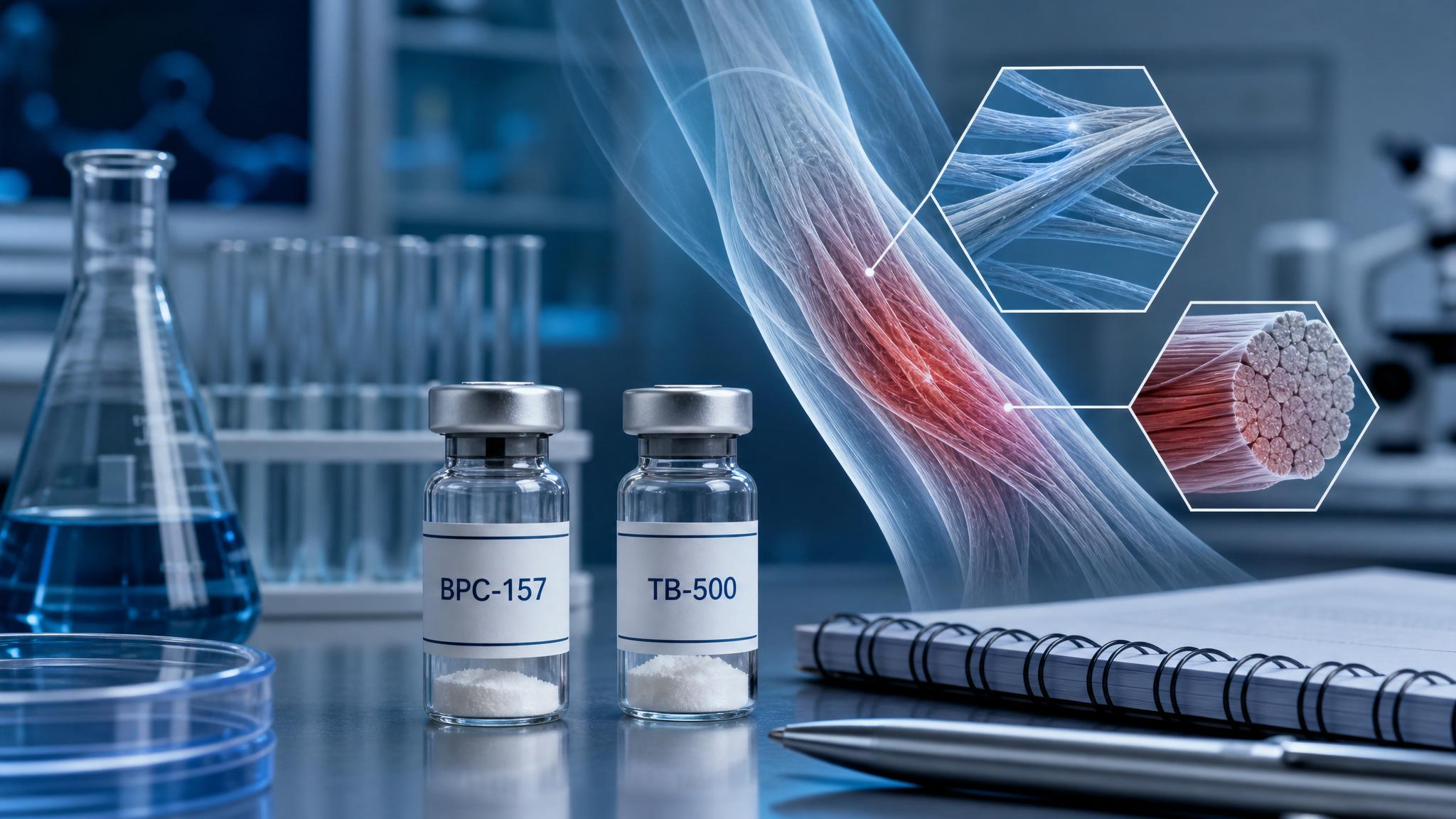
The best evidence base is stronger for thymosin beta-4 biology than for commercial TB-500 injury dosing. Published reviews describe several repair mechanisms that matter in wound and tissue injury models.
- Cell migration: thymosin beta-4 interacts with actin dynamics, which may affect how cells move into damaged tissue.
- Angiogenesis: dermal healing research has reported blood-vessel growth effects that could matter for repair models.
- Inflammation control: corneal and dermal studies discuss anti-inflammatory effects after injury.
- Fibrosis balance: some tissue-repair reviews describe anti-fibrotic activity, but this is not a license to claim scar-free healing.
Goldstein, Hannappel, and Kleinman reviewed thymosin beta-4's role in dermal and corneal wound repair in 2005. A 2012 review in Annals of the New York Academy of Sciences described thymosin beta-4 as a multi-functional regenerative peptide with interest in dermal wounds, corneal injuries, heart tissue, and central nervous system injury models.
Dermal healing literature also reports that thymosin beta-4 is present in platelets and may be released at wound sites. That makes the biology plausible. But plausible is not proof that a specific TB-500 vial, dose, and schedule can repair a specific human injury.
That is the uncomfortable part. The mechanism story is interesting, and the direct human dosing story is thin.
Need more delivery-form options for research planning?
Limitless Biotech offers a large research catalog with injectable, spray, and capsule formats for many compounds. Create a free VIP account first to access the full catalog.
118+ research peptides in injectable, spray, and capsule forms - create a free account to access full catalog
Use code PeptidePick for a discount at checkout after creating your VIP account
TB-500 Reconstitution and Measurement Basics
Most TB-500 dosage mistakes start with math, not biology. A 5 mg vial and a 10 mg vial can produce very different concentration-per-unit measurements depending on how much bacteriostatic water is added.
For example, adding 2 mL of diluent to a 10 mg vial creates a different concentration than adding 1 mL to the same vial. That changes how much peptide is represented by each small measurement on an insulin syringe. PeptidePick's free peptide reconstitution calculator exists for exactly this reason.
Before any research protocol is interpreted, the basic variables should be clear:
- Vial amount in milligrams
- Diluent amount in milliliters
- Target measured amount in micrograms or milligrams
- Syringe unit scale
- Storage conditions after reconstitution
For a full step-by-step primer, use the PeptidePick guide on how to reconstitute peptides. It covers sterile handling concepts, vial pressure, swirling instead of shaking, and why sloppy measurement can wreck even a well-designed research plan.
TB-500 is often discussed alongside BPC-157 because both show up in recovery protocols. The overlap can be useful, but it also causes confusion. BPC-157 content often discusses localized injury models. TB-500 is usually framed as more systemic because thymosin beta-4 biology is tied to broader cell-migration and repair pathways.
That does not mean one is automatically better. It means they are different research questions.
Safety, Sourcing, and Legal Status
TB-500 is not an FDA-approved drug. FDA compounding rules around bulk drug substances are also narrow: sections 503A and 503B limit what compounders can use, and FDA-approved drugs have gone through premarket review for safety, effectiveness, and quality. Research-use peptide vendors are not the same thing as FDA-approved drug manufacturers.
For sports, another layer matters. Thymosin beta-4 related compounds have appeared in anti-doping discussions, and athletes should assume risk until a qualified compliance professional says otherwise. No peptide blog can clear an athlete for competition use.
Quality control is the main buyer-side issue. Before comparing price, look for:
- Recent third-party testing or COA access
- Clear identity and purity information
- Lot-specific documentation rather than generic marketing copy
- Sterile handling transparency for injectable research materials
- Real company name, support channel, and refund policy
PeptidePick's best peptide companies guide compares sourcing standards across vendors. If a vendor hides testing, uses fake medical claims, or pushes TB-500 as a guaranteed injury fix, that is a reason to slow down.
TB-500 Dosage for Injury by Injury Type
Search results often split TB-500 injury protocols by tendon, ligament, muscle strain, shoulder, knee, and post-surgical recovery. That format is easy to read, but it can imply a level of precision the evidence does not support.
A better way to think about injury type is by tissue biology. Tendons and ligaments have lower blood supply than muscle. Muscle strains may involve different inflammatory and remodeling timelines. Bone repair is another category altogether, which is why PeptidePick keeps a separate guide on peptides for bone healing.
So the research question should not be, "What dose fixes this injury?" It should be, "What model, endpoint, and repair mechanism are being studied?" That framing prevents the common mistake of copying a protocol from a forum and treating it like clinical medicine.
For knee-specific peptide research, compare this article with BPC-157 for knee injury. For shoulder injuries, the BPC-157 shoulder injury guide gives more local-tissue context.
Comparing TB-500 with recovery stacks?
Pinnacle Peptide Labs carries TB-500, BPC-157, and recovery-oriented stacks for research buyers who want clear catalog options.
99% pure research peptides - use code Peptidepick15 for 15% off
Use code Peptidepick15 for 15% off your order
Source Notes for This TB-500 Injury Guide
The research basis for this article comes from published thymosin beta-4 literature and FDA compounding information. The most relevant sources include the 2005 Trends in Molecular Medicine review on repair biology, the 2012 regenerative peptide review, dermal healing literature, corneal wound healing literature, and FDA pages on bulk drug substances used in compounding.
One more nuance: many online TB-500 pages cite animal and wound-healing research as if it proves a human soft-tissue protocol. It does not. It gives a reason to study the peptide, not a clean medical dosing standard.
Primary references checked
- Goldstein, Hannappel, and Kleinman, 2005: thymosin beta-4 repair biology in dermal and corneal wound models.
- Regenerative peptide review, 2012: thymosin beta-4 mechanisms and clinical research areas.
- Dermal healing review: angiogenesis, inflammation, and wound-repair discussion.
- Corneal wound healing review: inflammation and re-epithelialization findings.
- FDA bulk drug substances page: 503A and 503B compounding limits.
Readers who want non-injectable supplement options can compare oral products at Nootropics Depot. That is a supplement vendor, not an injectable peptide vendor, so it belongs in a different category than TB-500 research suppliers.
FAQ: TB-500 Dosage for Injury
What is the standard TB-500 dosage for injury?
There is no FDA-approved standard TB-500 dosage for injury. Most protocol tables online are research-use patterns or anecdotal schedules, not validated human treatment guidelines.
Is TB-500 approved for tendon or ligament repair?
No. TB-500 is not FDA-approved for tendon repair, ligament repair, muscle recovery, joint pain, or post-surgical healing. Thymosin beta-4 research supports interest in repair biology, but that does not create an approved clinical use.
Does TB-500 need to be injected near the injury?
TB-500 is often discussed as a systemic research peptide rather than a strictly local one. Route and site decisions are medical issues, and this article does not provide injection instructions for human use.
How is TB-500 different from BPC-157?
TB-500 is linked to thymosin beta-4 repair biology and systemic cell-migration pathways. BPC-157 is usually discussed in local soft-tissue and gut repair models. The PeptidePick BPC-157 vs TB-500 guide compares the two in more detail.
Can TB-500 be stacked with BPC-157?
Research communities often discuss that stack for soft-tissue models. Stacking also adds uncertainty because it becomes harder to separate effects, side effects, and sourcing variables.
What should a research buyer check before buying TB-500?
Check third-party testing, lot-specific documentation, clear labeling, vendor identity, and sterile handling transparency. Price matters less if identity and purity are unclear.
Is TB-500 legal to buy?
Legal status depends on jurisdiction, labeling, intended use, and seller behavior. In the United States, TB-500 is not an FDA-approved drug, and research-use labeling does not make it a medical treatment.
Related Articles
- TB-500 Guide: Benefits, Dosage and Research
- Thymosin Beta 4 Benefits: Beyond TB-500 for Systemic Healing
- BPC-157 vs TB-500: Key Differences, Benefits, and Which to Choose
- Stacking BPC-157 and TB-500: Research Guide, Safety, and Protocol Logic
- Peptides for Tendon Repair: BPC-157, TB-500, and Research Protocols
- Best Peptide Stack for Joint Repair: BPC-157, TB-500, and Beyond
Affiliate disclosure: PeptidePick may earn a commission if you buy through links on this page. This does not change the price you pay and does not affect the research standards used in this article.