
Vendor shortcuts
Compare the right source before you keep reading
Pick the lane that matches your research goal, then verify current COAs, label language, and shipping policy on the vendor page.
Research-only affiliate links. PeptidePick may earn a commission at no extra cost to you.
Peptide Stacks for Beginners: Safe Starter Protocols and Guides
Peptide stacks for beginners usually sound simpler than they are. The safest place to start is not a giant mix of research compounds. It is a basic framework: understand the goal, learn reconstitution, verify sourcing, and stick to the mildest research-backed pairing that matches the category you are studying.
TL;DR
Most beginner peptide stack guides push too hard, too fast. A better starting point is one narrow objective at a time, such as recovery or growth hormone signaling, then a short list of compounds that have at least some preclinical or early human rationale.
- CJC-1295 plus ipamorelin is the most common beginner growth-hormone-secretagogue pairing.
- BPC-157 plus TB-500 is widely discussed for recovery, but human evidence is thin and BPC-157 carries a real FDA safety warning.
- Weight-loss compounds should not be casually stacked by beginners, especially semaglutide, tirzepatide, or retatrutide research products.
- Start with one goal, one protocol, one source, and one review window.
What is a peptide stack?
A peptide stack is just a combination of two or more compounds used within the same protocol. The idea is simple: pair agents that target a similar outcome, or use one compound to cover a gap left by another.
That does not mean more compounds lead to better results. In fact, beginner protocols usually get worse as complexity rises. Side effects become harder to attribute, reconstitution errors become more likely, and it gets easier to buy the wrong product for the wrong reason.
Search results ranking for this keyword tend to push the same few combinations. CJC-1295 with ipamorelin shows up constantly for growth hormone signaling, while BPC-157 with TB-500 dominates recovery content. Those pairings are popular, but popularity is not the same thing as strong human evidence.
Looking for beginner-friendly recovery and cognitive research peptides?
Ascension Peptides has one of the broadest catalogs for newer researchers who want core compounds and branded stacks in one place.
60+ third-party tested research peptides and stacks
Best beginner categories for peptide stacks
Most beginners land in one of four camps: recovery, growth hormone support research, skin and cosmetic interest, or weight-loss curiosity.
The best starting category is the one with the clearest endpoint and the fewest moving parts.
| Category | Typical beginner stack | Main caution |
|---|---|---|
| Recovery | BPC-157 + TB-500 | Mostly animal data, plus FDA safety concerns around BPC-157 |
| GH secretagogue research | CJC-1295 + Ipamorelin | Not FDA-approved, endocrine effects still need respect |
| Skin and cosmetic research | GHK-Cu with topical or injectable support compounds | Form matters, and evidence quality varies a lot |
| Weight loss | Usually no true stack for beginners | Stacking GLP-1 research compounds can raise tolerability and safety concerns |
Recovery and GH-focused stacks get the most beginner attention because the logic is easy to explain. But there is still a big evidence gap. BPC-157 data is heavily tied to preclinical work, much of it associated with the Zagreb research group. Thymosin beta-4 literature is broader than the TB-500 marketing language you see online, but that still does not turn it into a plug-and-play beginner compound.
And beginners looking at weight-loss combinations should slow down. The FDA has raised concerns about unapproved GLP-1 products, including compounded semaglutide products and salt forms such as semaglutide sodium and semaglutide acetate. That alone is enough reason not to treat GLP-1 stacking like a casual starter project.
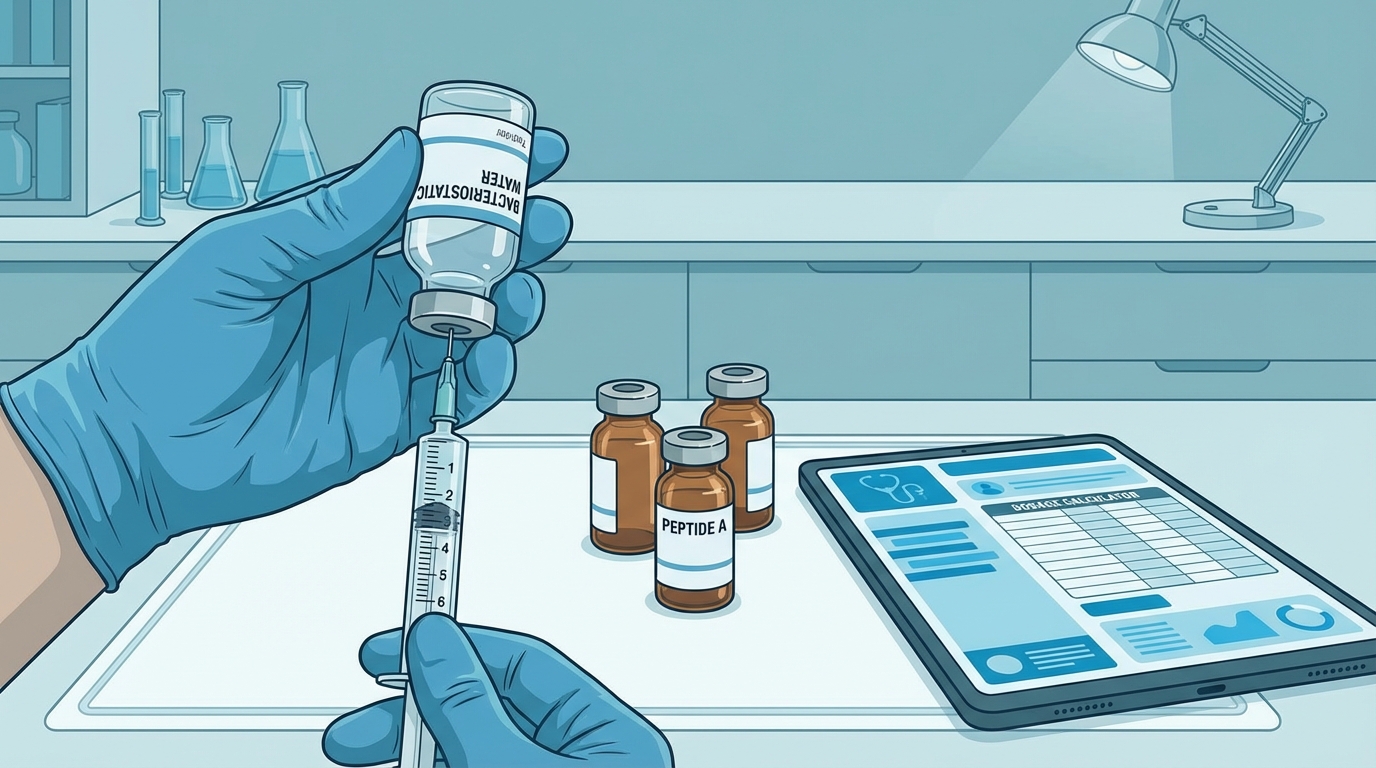
If you are still learning basic prep, read how to reconstitute peptides and use the free peptide reconstitution calculator before you even think about combining compounds.
Common beginner peptide stacks, and what the research actually says
CJC-1295 plus ipamorelin
This is the classic beginner peptide stack for people studying growth hormone signaling. The rationale is straightforward. CJC-1295 is a GHRH analog, while ipamorelin is a ghrelin receptor agonist that stimulates GH release through a different pathway.
Human data does exist around growth hormone release from these classes, though not in the clean, lifestyle-oriented way many blog posts imply. Early human work on CJC-1295 showed sustained increases in growth hormone and IGF-1 after dosing. Ipamorelin has also been studied as a selective GH secretagogue with less spillover into cortisol and prolactin than older compounds, at least in early research settings.
That makes it a cleaner beginner concept than more aggressive multi-drug protocols. But it still alters endocrine signaling, so it deserves real caution. It is not a casual supplement stack.
BPC-157 plus TB-500
This is the recovery stack you see everywhere. BPC-157 is a pentadecapeptide studied in animal models for tendon, ligament, gut, and wound repair. TB-500 is a synthetic fragment associated with thymosin beta-4 signaling, which is often discussed in tissue repair and cell migration contexts.
Preclinical signals are interesting. A 2010 paper indexed on PubMed reported that BPC-157 accelerated healing in transected rat Achilles tendons. Reviews on thymosin beta-4 describe roles in actin regulation, angiogenesis, wound repair, and cell migration. Those are real research threads.
But this is where a lot of beginner content gets sloppy. Human data is sparse.
The FDA has specifically listed BPC-157 among bulk substances that may present significant safety risks in compounding. So yes, this stack is widely discussed. No, that does not make it a low-risk beginner option.
For recovery-focused reading, also see peptides for tendon repair and BPC-157 for gut healing.
Want the widest range of beginner peptide formats?
Limitless stands out for injectable, nasal spray, and capsule options across a huge catalog. Start with the VIP link first so your account and tracking are locked in.
118+ research peptides in injectable, spray, and capsule forms - create a free account to access the full catalog
Create your free account first, then use code PeptidePick for a discount at checkout
GHK-Cu combinations
GHK-Cu sits in a different lane. It is often studied for skin quality, hair, collagen signaling, and wound support. Some beginners try to pair it with recovery peptides or anti-aging protocols, but the smartest use case is much narrower.
Pick the delivery form first. Then decide if the second compound adds anything meaningful. If not, skip the stack and keep the protocol cleaner. That kind of restraint is rare in ranking content, but it is usually the better move.
If your main interest is cosmetic aging support rather than tissue repair, best peptides for anti-aging is the better entry point.
GLP-1 and weight-loss combinations
This is the category where beginners should be most skeptical of stacking advice. Semaglutide, tirzepatide, and retatrutide are often compared side by side, but combining GLP-1 or multi-agonist research compounds is not a beginner move.
There is a difference between comparing agents and stacking them. Public FDA warnings on unapproved GLP-1 drugs focus on dosing errors, adverse event reports, counterfeit risk, and concerns about compounded salt forms. That is plenty of reason to avoid casual stack experimentation here.
For this cluster, start with education, not combinations. Read peptides for weight loss, tirzepatide dosage guide, and retatrutide vs semaglutide.
How to evaluate risk before stacking peptides
A beginner stack should pass five tests before it even gets considered.
- One clear goal: recovery, GH signaling, skin quality, or weight management education.
- Non-overlapping logic: each compound should have a separate reason to be there.
- Known preparation steps: if you cannot reconstitute it cleanly, do not stack it.
- Evidence honesty: animal data should be called animal data, not dressed up as settled human science.
- Vendor consistency: every product should come from approved sources with transparent labeling.
That last point matters more than most people think. A beginner using mixed sources, mixed vial sizes, and mixed instructions is setting up the exact kind of dosing confusion that causes problems later.
And here is the nuance most stack guides skip: even a well-known pairing might be the wrong choice if the buyer has not mastered basics like bacteriostatic water for peptides storage, sterile prep, or cycle planning. The article on peptide cycle length is worth reading before any multi-compound protocol.

How to build a beginner peptide stack plan
Start with a single question: what exactly is the protocol trying to study? If the answer is vague, the stack is not ready.
Then use a sequence like this:
- Choose one category.
- Pick the mildest plausible pair, or stick with one compound first.
- Match vial size, dosing logic, and reconstitution method.
- Set a review window before adding anything else.
- Write down all variables so problems can be traced back.
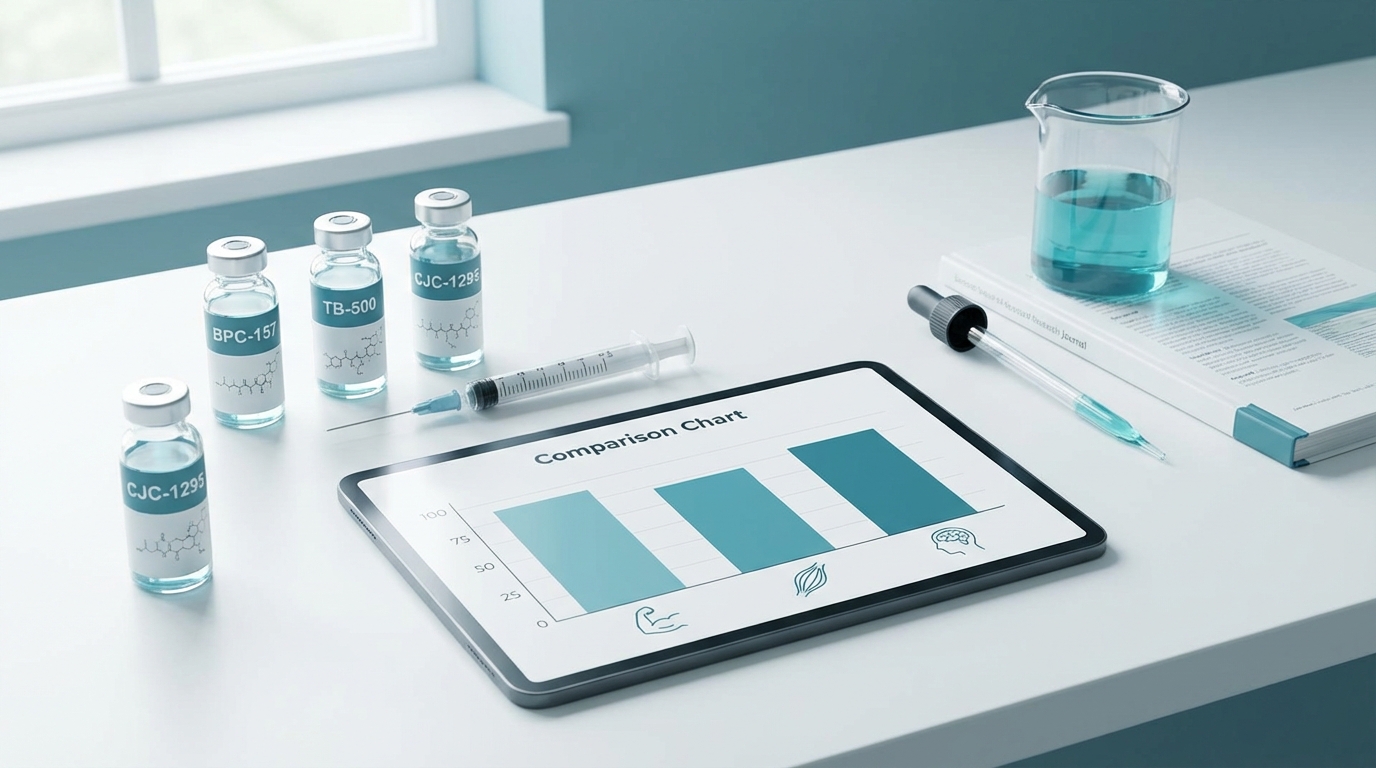
So what is the best peptide stack for beginners? For most people studying GH secretagogue combinations, CJC-1295 plus ipamorelin is the least chaotic starting point. For recovery, BPC-157 plus TB-500 is the most talked-about pair, but it also demands more caution than social posts admit.
Beginners should also avoid obvious category mistakes. MK-677 gets tossed into peptide lists all the time, but it is not a peptide.
That sounds minor. It is not. If a source cannot get the category right, trust the rest of its stack advice a lot less.
Need beginner stacks and premixed recovery options in one catalog?
Pinnacle is especially useful for stack shoppers because it carries classic singles plus blends like Wolverine and Recovery Stack.
99% pure research peptides - use code Peptidepick15 for 15% off
Use code Peptidepick15 for 15% off your order
Where beginners buy research peptides
Vendor choice matters because beginners need clean product naming, reliable stock, and a catalog that matches the intended category. For cognitive, skin, and recovery articles like this one, Ascension is the strongest first stop. Limitless is useful when delivery form matters. Pinnacle is strong for classic singles and stack-oriented shopping.
If you want a broader vendor breakdown, read the full best peptide companies guide. That page gives you the bigger sourcing picture without forcing every vendor into the same bucket.
There is also a practical alternative for readers who like the goal but not the injectable route. Nootropics Depot is not a peptide vendor, but it is a reasonable oral supplement alternative for sleep support, longevity support, or cognitive support when you want a simpler setup. Think NMN, NADH, lion's mane, or adaptogens. No injections required.
Related articles
- CJC-1295 Ipamorelin Benefits: What the Research Actually Shows
- Peptide Cycle Length Guide: How Long to Run Each Compound
- Bacteriostatic Water for Peptides: Complete Usage and Storage Guide
- Peptides for Tendon Repair: BPC-157, TB-500, and Research Protocols
- Best Peptides for Sleep: Research-Backed Compounds for Better Rest
- Thymosin Alpha-1 Benefits: What the Research Shows About This Immune Peptide
Frequently asked questions
What is the best peptide stack for beginners?
The most common starting point is CJC-1295 plus ipamorelin because the mechanism is easier to explain and the stack is less chaotic than larger protocols. That said, it is still a research-only combination, not a low-risk wellness product.
Is BPC-157 plus TB-500 a good beginner stack?
It is a popular beginner recovery stack online, but the evidence is mostly preclinical and BPC-157 carries FDA safety concerns in compounding. That alone should cool down most beginner enthusiasm.
Should beginners stack semaglutide with tirzepatide?
No clear beginner case supports that approach. GLP-1 and related weight-loss compounds already demand careful dosing, and FDA warnings around unapproved products make stacking a bad place to start.
How many peptides should a beginner stack use?
Usually two at most, and in many cases one is better. The more compounds you add, the harder it becomes to troubleshoot side effects, dosing mistakes, or weak results.
Do peptide stacks need bacteriostatic water?
Many lyophilized peptide products do require reconstitution, and bacteriostatic water is commonly used for that process. But the correct prep depends on the exact product format and vendor instructions.
Can beginners use oral alternatives instead of peptide stacks?
Yes, in some cases that is the smarter move. Oral supplements for sleep, cognition, or longevity may be easier to manage than research peptides if the goal does not require injectable compounds.