
Natural Ozempic Alternatives: 5 Research-Backed Options Beyond Semaglutide
Natural Ozempic alternatives get attention because semaglutide changed the weight-loss conversation. The uncomfortable truth is simple: no herb, food, fiber, or workout plan is literally Ozempic.
Ozempic is a prescription GLP-1 receptor agonist for type 2 diabetes. Wegovy uses semaglutide for chronic weight management. Natural approaches can support appetite, glucose control, and adherence, but they do not copy a pharmaceutical GLP-1 drug milligram for milligram.
TLDR
- Natural Ozempic alternatives are better viewed as appetite and metabolic support tools, not semaglutide substitutes.
- Berberine has human meta-analysis data, including an average body-weight change of -2.07 kg across 12 randomized trials in one 2020 review.
- Soluble fiber, higher-protein meals, and resistance training have stronger day-to-day behavior logic than most hype supplements.
- Research GLP-1 peptides belong in a separate category from natural supplements and should be treated as research-use compounds, not casual wellness products.
- For peptide research math, use PeptidePick's free peptide reconstitution calculator and peptide reconstitution guide.

What natural Ozempic alternatives can and cannot mean
The phrase natural Ozempic alternatives usually mixes several ideas into one search. Some readers want a supplement. Some want food strategies that may raise satiety hormones. Others are comparing semaglutide with research GLP-1 peptides such as tirzepatide or retatrutide.
Those are not the same thing. A soluble fiber supplement, a berberine capsule, and a research peptide vial belong in different risk categories. Putting them all under the same label can make weak options look stronger than they are.
Semaglutide activates the GLP-1 receptor and slows gastric emptying, appetite signaling, and glucose handling through a drug pathway. Natural options work indirectly. They may improve satiety, reduce meal size, smooth post-meal glucose, or make a calorie deficit easier to maintain.
That distinction matters for expectations. A supplement that helps someone eat 150 fewer calories per day can still be useful. It is just not a prescription GLP-1 agonist.
Researching GLP-1 peptides beyond the supplement aisle?
Apollo Peptide Sciences carries GLP-1 research peptides including semaglutide, tirzepatide, and retatrutide for laboratory research contexts.
Shop Apollo Peptide Sciences →
Specializing in GLP-1 research peptides and growth factors
The 5 best natural Ozempic alternatives by evidence
The best list is not the flashiest list. It is the list that separates human evidence from internet nickname culture.
Here is the clean comparison.
| Option | Best use case | Evidence signal | Main caution |
|---|---|---|---|
| Berberine | Glucose and modest weight support | Meta-analysis of 12 RCTs | Drug interactions and GI effects |
| Soluble fiber | Satiety and meal control | Mechanistic and diet-trial support | Bloating if increased too fast |
| Higher-protein meals | Appetite control during fat loss | Strong nutrition adherence logic | Needs total calories managed |
| Resistance training | Lean mass retention | Strong body-composition support | Progression must be realistic |
| Sleep and food environment | Reducing hunger friction | Behavioral and appetite support | Easy to underestimate |
1. Berberine: the most cited "natural Ozempic" supplement
Berberine is the supplement most often marketed as a natural Ozempic alternative. The nickname is too aggressive, but the compound does have human data worth discussing.
A 2020 systematic review and meta-analysis in Clinical Nutrition ESPEN evaluated 12 randomized controlled trials. Berberine was associated with reduced body weight by a weighted mean difference of -2.07 kg, BMI by -0.47 kg/m2, waist circumference by -1.08 cm, and C-reactive protein by -0.42 mg/L.
That is not GLP-1 drug-level weight loss. It is a modest signal across trials, and modest can still matter if the rest of the plan is built well.
Another 2020 systematic review in Biomedicine and Pharmacotherapy described possible mechanisms through gut microbiome changes, alpha-glucosidase inhibition, AMPK activity, glucose handling, and lipid metabolism. The mechanistic story is interesting. The exact real-world effect depends on dose, product quality, diet, and baseline metabolic health.
2. Soluble and prebiotic fiber: boring, useful, hard to sell
Fiber is not exciting. That may be why it gets less attention than capsules with louder labels.
Soluble fibers such as psyllium, beta-glucan, glucomannan, and inulin can slow digestion and increase fullness. Prebiotic fibers also feed gut bacteria that produce short-chain fatty acids, which may interact with GLP-1 and PYY signaling. The effect is indirect, but the mechanism fits the appetite-control goal.
The practical issue is tolerance. Jumping from low fiber to high fiber overnight is a good way to create bloating and quit. A gradual increase, water, and consistency matter more than finding the trendiest powder.

3. Higher-protein meals: the simplest appetite anchor
Protein is not a GLP-1 drug, but it is one of the most reliable appetite anchors in nutrition. It tends to increase fullness, protects lean mass during weight loss, and makes meals harder to overeat if the rest of the plate is not built around hyper-palatable foods.
The useful target is not exotic. Many fat-loss plans start working better when each meal has a clear protein source and enough total food volume from vegetables, fruit, beans, or potatoes. That is less glamorous than a supplement stack. It is also harder to fake.
Protein alone will not fix liquid calories, sleep deprivation, or weekend overeating. But if someone is comparing natural Ozempic alternatives, protein belongs near the top because it changes the meal itself.
4. Resistance training: the body-composition insurance policy
Weight loss without muscle retention can create a smaller but weaker version of the same metabolic problem. Resistance training helps protect lean mass while body weight drops.
This is one reason many GLP-1 discussions now include muscle-loss concerns. The same logic applies to natural approaches. If appetite drops and calories fall, training gives the body a reason to keep muscle tissue.
The plan does not need to be complicated. Two to four weekly sessions, progressive effort, and repeatable movements beat a punishing program that lasts ten days.
5. Sleep and appetite environment: not sexy, often decisive
Sleep loss can make appetite feel louder. A kitchen full of snack foods can turn a reasonable deficit into a nightly negotiation.
This is where the natural Ozempic alternatives conversation gets uncomfortable. Some people do not need another capsule first. They need fewer ultra-processed trigger foods at home, a consistent sleep window, and meals planned before hunger is already high.
There is nuance here. Lifestyle changes are often described as if they are easy, which is unfair. They are simple on paper and difficult under stress. That is exactly why the best plan removes decisions instead of demanding more willpower.
Need a wider research catalog with multiple delivery forms?
Limitless Biotech offers a large research catalog with injectable, spray, and capsule formats after free VIP account creation.
Create your free Limitless Biotech account →
118+ research peptides in injectable, spray, and capsule forms - create a free account to access the full catalog
Use code PeptidePick for a discount at checkout after signup
Where GLP-1 research peptides fit among natural Ozempic alternatives
Research GLP-1 peptides should not be grouped with fiber and berberine as if the risks are equal. Semaglutide, tirzepatide, and retatrutide are pharmacology, not pantry hacks.
PeptidePick has separate research guides for semaglutide, tirzepatide vs semaglutide, and retatrutide vs semaglutide. Those comparisons are useful if the real question is peptide research rather than natural supplementation.
For weight-loss peptide context, start with PeptidePick's peptides for weight loss guide. For vendor quality checks, use the research sourcing framework in best peptide companies before trusting any label claim.
The FDA has also warned about unapproved GLP-1 drugs used for weight loss. Its concerns include the fact that compounded drugs are not reviewed by FDA for safety, effectiveness, or quality before marketing, plus issues such as improper cold-chain shipping and fraudulent labels.
That warning is not a minor footnote. GLP-1 compounds are potent, dosing-sensitive, and storage-sensitive. A natural alternative plan may be weaker, but it is also in a different safety lane.
Safety, sourcing, and quality checks before using anything
Safety starts with category. A food change is one category. A supplement is another.
A research peptide is another. Prescription GLP-1 medication belongs under medical supervision.
Berberine can interact with medications, including glucose-lowering drugs, anticoagulants, and drugs processed through certain liver enzymes. It can also cause constipation, nausea, or cramping. Anyone pregnant, nursing, taking medication, or managing diabetes should treat it as a clinician conversation, not a casual add-on.
Fiber has its own issues. Too much too quickly can cause gas, bloating, or constipation if water intake is poor. Fiber can also affect absorption timing for some medications, so spacing doses may matter.
For research peptides, quality verification matters. Look for batch-specific testing, clear labeling, storage guidance, and no medical-use claims. PeptidePick's peptide side effects guide is a good starting point for risk framing.
A practical research-informed stack
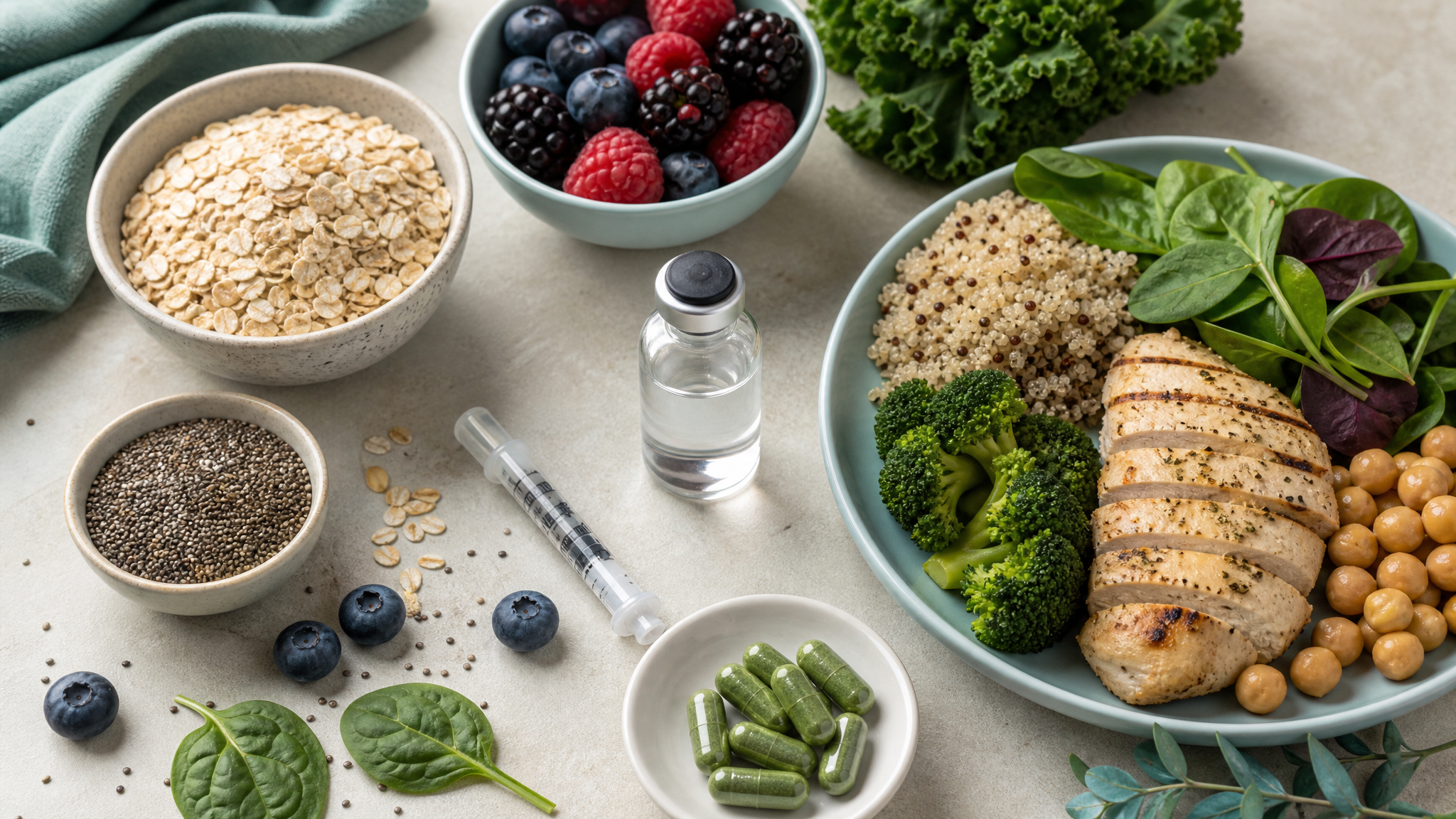
A reasonable natural Ozempic alternatives plan starts with the least fragile pieces. Build meals around protein. Add fiber slowly.
Use resistance training to protect lean mass. Fix the food environment before appetite is already high.
If supplements are used, berberine is the obvious candidate to research first because it has human data. But the expected effect should stay modest. The meta-analysis signal is kilograms, not a dramatic drug-like transformation.
For readers who want oral supplement alternatives rather than injectable peptide research, Nootropics Depot is a third-party tested supplement vendor. Position it correctly: oral supplements only, no injectable peptides.
The best plan is usually less exciting than the sales page. That is a feature. A boring plan that survives busy weeks beats a complicated stack that only works during a perfect Monday.
One more point gets missed in most comparisons: measurement. Track body weight trends, waist measurement, hunger, protein intake, fiber intake, training sessions, and sleep for at least two weeks before changing five variables at once. Without that baseline, it is almost impossible to know whether berberine, fiber, meal structure, or simple consistency caused the result.
That does not sound exciting, but it protects against wasted money. It also makes clinician conversations more useful because the data is concrete instead of a vague memory of feeling hungrier or less hungry.
Comparing GLP-1 research options with clear testing standards?
Pinnacle Peptide Labs carries GLP-1SG, GLP-2TZ, GLP-3RT, and broader research peptides with a PeptidePick reader discount.
Use code Peptidepick15 for 15% off your order
99% pure research peptides - use code Peptidepick15 for 15% off
Related articles
- Peptides for weight loss
- Semaglutide guide
- Tirzepatide vs semaglutide
- Retatrutide vs semaglutide
- Best GLP-1 peptide for minimal side effects
- Compounded semaglutide vs Ozempic
FAQ
What is the closest natural Ozempic alternative?
There is no true natural Ozempic alternative. Berberine has the most direct supplement hype and some human weight data, but it does not replicate semaglutide's GLP-1 receptor activity.
Does berberine work like Ozempic?
No. Berberine may affect glucose metabolism, gut microbiome patterns, AMPK signaling, and lipid handling. Ozempic is semaglutide, a prescription GLP-1 receptor agonist.
Can fiber increase GLP-1 naturally?
Some fibers may support gut fermentation and satiety hormone signaling, including GLP-1 and PYY pathways. The effect is indirect and much smaller than using a GLP-1 drug.
Are research GLP-1 peptides natural?
No. Research GLP-1 peptides are synthetic research compounds. They should not be treated like natural supplements or used outside appropriate research and medical contexts.
What is safer, natural supplements or compounded GLP-1 drugs?
Safety depends on the product, dose, person, and oversight. FDA warns that unapproved compounded GLP-1 drugs are not reviewed for safety, effectiveness, or quality before marketing.
What should a beginner try first?
Start with meals that contain enough protein, a gradual fiber increase, basic resistance training, and a cleaner food environment. Supplements make more sense after those pieces are stable.