
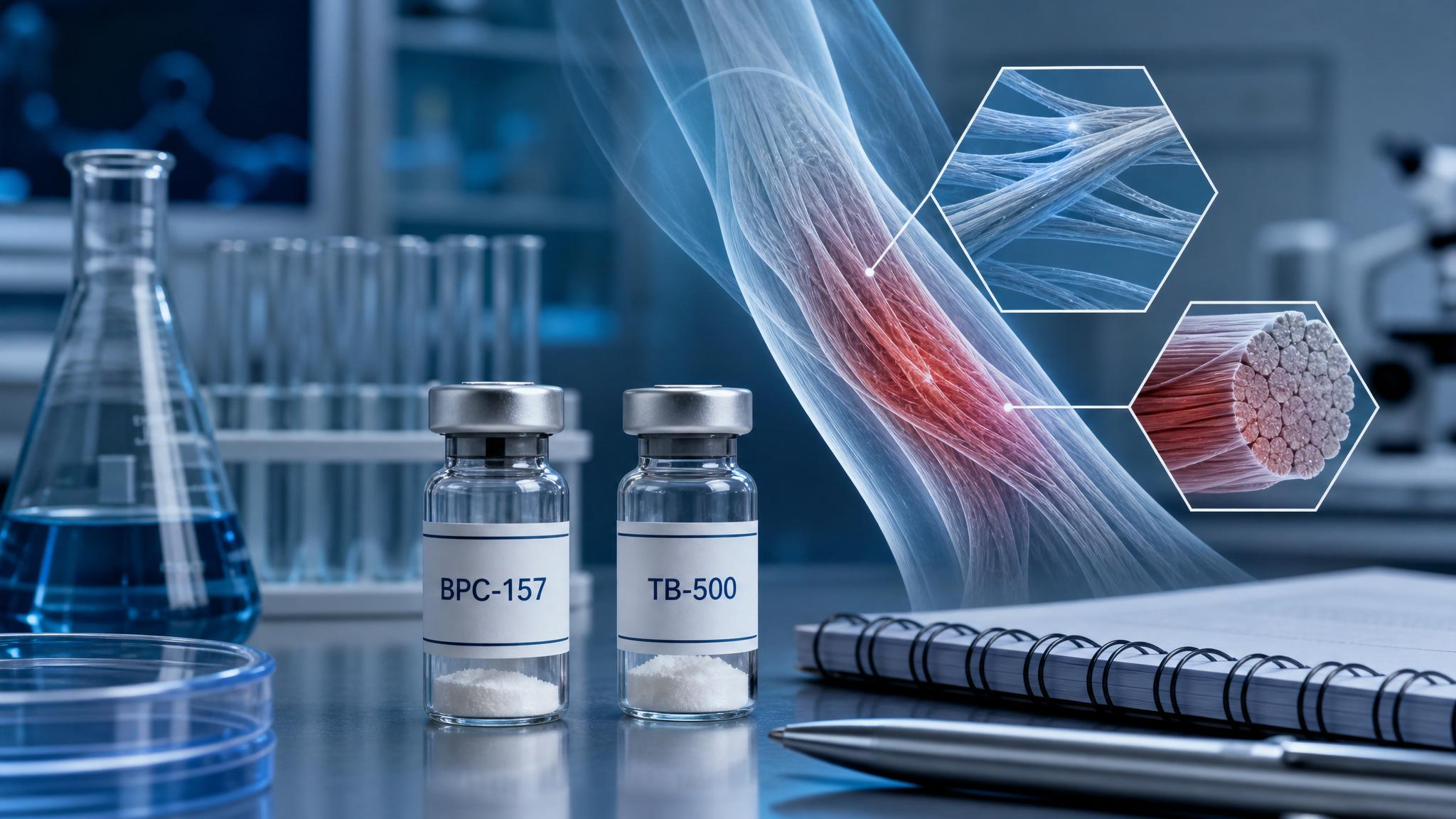
Best Peptides for Muscle Growth: Research Compounds Compared
TLDR: The best peptides for muscle growth are usually discussed in three research lanes: growth hormone secretagogues such as CJC-1295/ipamorelin, IGF-1 pathway compounds such as IGF-1 LR3, and repair-focused peptides such as BPC-157 or TB-500 that may support training continuity rather than direct hypertrophy.
The evidence is uneven. Tesamorelin has human clinical data for body composition in HIV-associated lipodystrophy. CJC-1295 has human pharmacodynamic data showing increased GH and IGF-1. IGF-1 biology is central to muscle growth, but bodybuilding-specific IGF-1 LR3 claims run ahead of clinical evidence.
Best peptides for muscle growth is a messy keyword because people use it to mean different things. Some want direct hypertrophy signaling. Some want better recovery between sessions. Some are really asking about fat loss while keeping lean mass.
Those are not the same target.
This guide separates the compounds by mechanism and evidence quality. It also stays inside research framing because most bodybuilding peptide use sits outside FDA-approved medicine. For practical lab handling basics, start with the free peptide reconstitution calculator and the peptide reconstitution guide before comparing vendors.
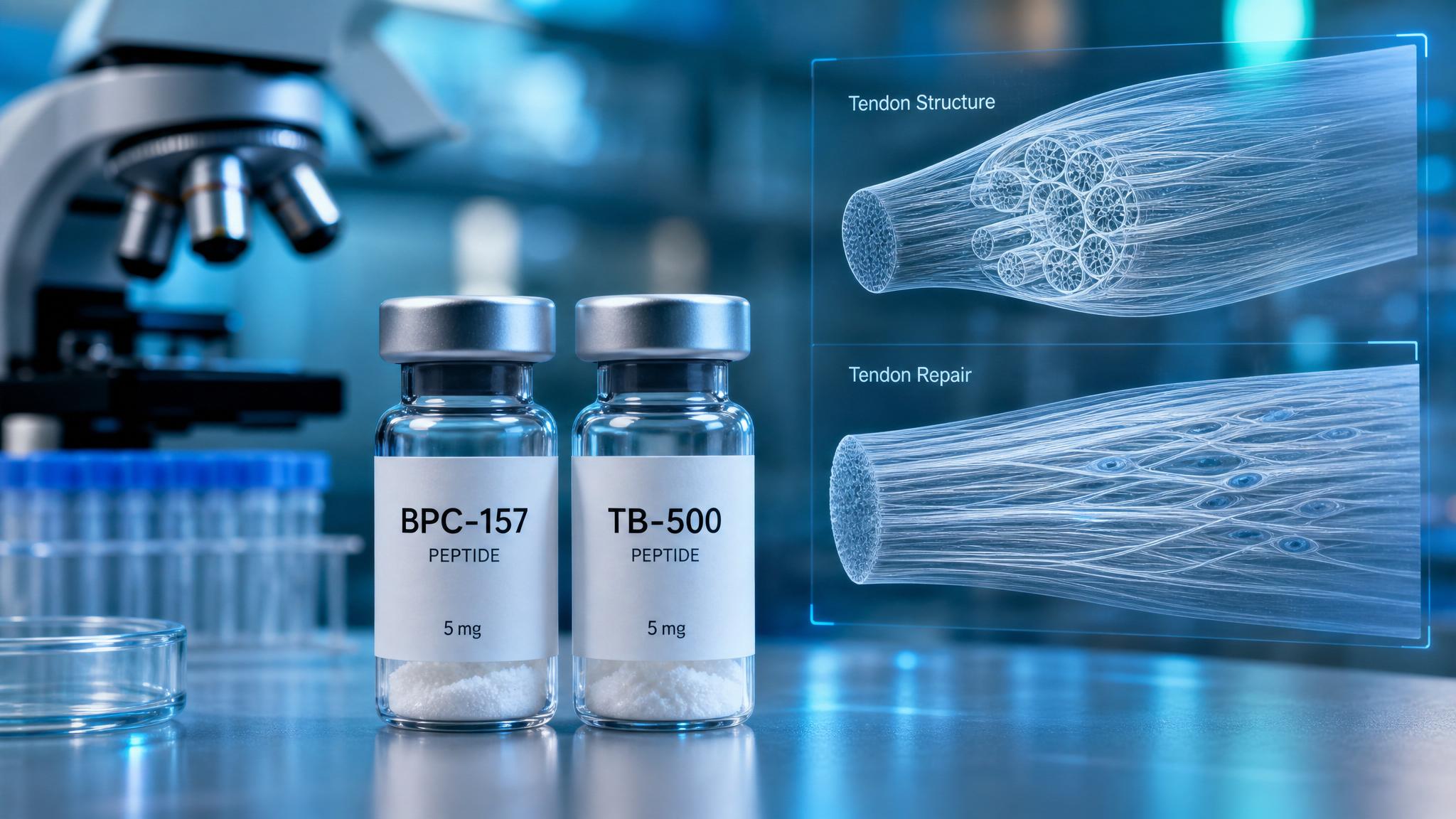
Best Peptides for Muscle Growth: Quick Ranking
For a research-focused shortlist, these are the peptide categories that come up most often:
- CJC-1295/ipamorelin: GH-secretagogue stack used in research discussions about GH pulses, IGF-1, body composition, and recovery markers.
- Tesamorelin: A GHRH analog with human clinical data for reducing visceral adipose tissue in HIV-associated lipodystrophy, with body-composition endpoints.
- IGF-1 LR3: A modified IGF-1 analog discussed for anabolic signaling, though human bodybuilding evidence is thin and risk questions are serious.
- BPC-157: A repair-focused peptide with mostly preclinical data, Zagreb lab origin caveat, and FDA significant safety risk status in compounding context.
- TB-500 / thymosin beta-4 related research: Recovery and tissue-remodeling angle, not a direct muscle-building shortcut.
- Follistatin-related research: Strong theoretical myostatin angle, but practical consumer claims are far ahead of normal human evidence.
The honest answer: no research peptide replaces progressive training, protein, sleep, and time. The more dramatic a muscle-growth claim sounds, the more carefully it needs to be checked.
How Muscle-Growth Peptides Are Usually Grouped
Most muscle-growth peptide articles mix mechanisms together. That makes the topic sound simpler than it is.
A cleaner way to read the research is to separate the compounds into three lanes.
1. GH and IGF-1 signaling peptides
Growth hormone secretagogues try to increase endogenous GH release. CJC-1295 is a long-acting GHRH analog. Ipamorelin is a selective ghrelin-receptor agonist described in the pharmacology literature as a GH secretagogue.
CJC-1295 human research found prolonged increases in GH and IGF-1 after administration. That matters because GH and IGF-1 sit close to body-composition biology. But increased signaling is not the same as proven muscle gain in trained lifters.
Comparing Muscle Growth Research Peptides?
Pinnacle Peptide Labs carries recovery, GH-axis, and body-composition research peptides commonly compared by advanced researchers.
Use code Peptidepick15 for 15% off your order
99% pure research peptides - use code Peptidepick15 for 15% off
2. Repair and training-continuity peptides
BPC-157 and TB-500 usually enter the muscle-growth conversation through recovery. The argument is indirect: if a compound supports tissue-repair pathways in research models, it might help a subject maintain training output after strain or overload.
That leap needs caution. BPC-157 research traces heavily to work from the Zagreb group, and independent human data remain limited. FDA has also identified BPC-157 as raising significant safety risks for compounding review, so it should not be treated as a casual wellness supplement.
For deeper recovery-specific reading, compare the site guides on best peptides for muscle recovery, BPC-157 vs TB-500, and stacking BPC-157 and TB-500.
3. Myostatin and hypertrophy pathway compounds
Follistatin and myostatin-inhibition research gets attention because myostatin limits muscle growth. Animal and mechanistic work can look dramatic.
But that is also where hype gets loud. A pathway can be real while the gray-market product claims are weak, mislabeled, or unsafe. So this category belongs in the “interesting but high caution” bucket.
Best Peptides for Muscle Growth by Evidence Type
The ranking below is not a dosing recommendation. It is a research-strength comparison for readers deciding what to study further.
CJC-1295 plus ipamorelin
CJC-1295 has human pharmacology data. In a clinical study of healthy adults, researchers reported sustained GH and IGF-1 increases after CJC-1295 exposure. Ipamorelin is described as a selective GH secretagogue in early pharmacology research.
That combination explains why the pair is common in muscle-growth discussions. It targets a familiar axis: GH release, IGF-1 response, and potential body-composition change.
But the evidence gap matters. There is a big difference between hormone-marker movement and verified hypertrophy in resistance-trained people. The better wording is “GH-axis research peptide stack,” not “proven muscle builder.”
Read more in the CJC-1295/ipamorelin benefits guide and ipamorelin side effects guide.
Tesamorelin
Tesamorelin is more clinically grounded than most peptides in this category. It is FDA-approved for reducing excess abdominal fat in adults with HIV-associated lipodystrophy, not for bodybuilding.
Clinical research has measured visceral fat, body composition, IGF-1, and related metabolic outcomes. A 2019 study in people with HIV and NAFLD also examined skeletal muscle area and density after tesamorelin exposure.
That makes tesamorelin relevant for body-composition research. But its strongest approved lane is not “bulk up.” It is a regulated drug for a specific medical condition.

IGF-1 LR3
IGF-1 is deeply involved in skeletal muscle biology. Reviews describe its role in anabolic signaling, regeneration, protein balance, and age-related muscle loss.
IGF-1 LR3 is a modified analog discussed in bodybuilding circles because it is designed for longer activity than native IGF-1. That does not make it low risk. IGF-1 signaling touches glucose metabolism and cell-growth pathways, which is exactly why casual use claims deserve skepticism.
Here is the nuance: IGF-1 biology is real. The consumer market around IGF-1 LR3 is much less settled.
BPC-157
BPC-157 is not a direct hypertrophy peptide. It is discussed for tendon, ligament, gut, and tissue-repair models.
The Zagreb lab origin caveat belongs in every serious BPC-157 article because much of the early research concentration came from that group. FDA has also described BPC-157 under significant safety risk concerns in the bulk-drug compounding context.
If BPC-157 appears in a muscle-growth stack, it is usually there for recovery logic, not muscle protein synthesis. See the BPC-157 guide, BPC-157 dosage guide, and BPC-157 knee injury research guide for a fuller safety discussion.
TB-500 and thymosin beta-4 related research
TB-500 is commonly marketed alongside BPC-157. The research conversation usually points toward actin regulation, cell migration, angiogenesis models, and tissue repair.
Again, that is not the same as direct muscle growth. The stronger case is recovery research. The weaker case is “add this and gain muscle.”
For recovery context, read the TB-500 guide and TB-500 dosage for injury research guide.
Need More Delivery-Form Options?
Limitless Life Nootropics has one of the broadest research catalogs, including injectable, spray, and capsule formats for many compounds after free VIP account registration.
Shop Limitless Life Nootropics →
118+ research peptides in injectable, spray, and capsule forms - create a free account to access the full catalog. Use code PeptidePick for a discount at checkout.
Best Peptides for Muscle Growth Comparison Table
| Compound | Main research angle | Evidence snapshot | Main caution |
|---|---|---|---|
| CJC-1295/ipamorelin | GH pulse and IGF-1 signaling | CJC-1295 human GH/IGF-1 pharmacology data; ipamorelin GH-secretagogue pharmacology | Marker changes do not prove trained-lifter hypertrophy |
| Tesamorelin | Body composition and visceral fat | Human trials in HIV-associated lipodystrophy and related metabolic studies | Approved use is specific, not bodybuilding |
| IGF-1 LR3 | Anabolic signaling | Strong IGF-1 biology, weaker LR3 human outcome data | Glucose and cell-growth pathway concerns |
| BPC-157 | Tissue repair models | Mostly animal and preclinical data, with Zagreb lab concentration caveat | FDA significant safety risk concerns in compounding context |
| TB-500 | Recovery and tissue remodeling | Mechanistic and preclinical repair interest | Often overmarketed as a direct muscle-growth compound |
Safety, Legality, and Quality Checks
Muscle-growth peptide content gets risky fast because the incentives are bad. Vendors want exciting copy. Forums reward extreme claims. Readers want a shortcut.
So use a harder filter.
- FDA approval status: Many peptides discussed for muscle growth are not FDA-approved for that purpose.
- Compounding risk: FDA Category 2 language for certain bulk substances means the agency has identified significant safety risks while it evaluates them.
- Sport rules: Competitive athletes need to check WADA, league, and federation rules before touching any peptide research topic.
- Product identity: A vial label is not proof. Look for batch-specific third-party testing and clear COAs.
- Route risk: Injectable research compounds add sterility, contamination, and handling concerns.
Also, MK-677 is not a peptide. It is often grouped with GH secretagogues in bodybuilding content, but it should not be listed as a peptide.
Buying Research Peptides Without Falling for Hype
For readers comparing peptide vendors, start with documented testing, clear labeling, and a catalog that matches the compound category. PeptidePick keeps a broader vendor breakdown in the best peptide companies guide.
Roundup topics should use more than one vendor because catalog strengths differ. Pinnacle is strong for pre-made stacks and discount-driven peptide sourcing. Limitless has the broadest delivery-form variety. Ascension has a large third-party-tested catalog across common recovery and cognitive compounds.

Research Recovery and Stack Options
Ascension Peptides carries a large third-party-tested catalog for recovery-focused peptide research, including BPC-157, TB-500, SS-31, GHK-Cu, and stack options.
60+ third-party tested research peptides and stacks
Research Notes Behind This Ranking
The strongest references behind this article come from human GH-axis pharmacology, tesamorelin body-composition studies, and IGF-1 skeletal-muscle reviews.
- CJC-1295: A human study reported prolonged GH and IGF-1 increases after a long-acting GHRH analog.
- Ipamorelin: Early pharmacology described it as a selective GH secretagogue.
- Tesamorelin: Clinical literature supports visceral-fat reduction in HIV-associated lipodystrophy, with body-composition endpoints.
- IGF-1: Reviews connect IGF-1 signaling to muscle mass regulation, regeneration, and anabolic pathways.
- BPC-157: Safety and efficacy claims remain limited by sparse human data, concentrated early research, and FDA compounding concerns.
If you want a non-injectable supplement lane instead of peptide research, Nootropics Depot is an oral supplement alternative with third-party-tested products such as creatine-adjacent support, amino acids, adaptogens, and longevity compounds. It is not an injectable peptide vendor.
Related Articles
- Best Peptides for Muscle Recovery
- CJC-1295 Ipamorelin Benefits
- Tesamorelin Peptide Guide
- BPC-157 vs TB-500
- TB-500 Guide
- Best Peptide Companies
FAQ
What are the best peptides for muscle growth?
The best peptides for muscle growth research usually include CJC-1295/ipamorelin, tesamorelin, IGF-1 LR3, BPC-157, and TB-500. They do not all work the same way. Some target GH or IGF-1 signaling, while others are more recovery-focused.
Is CJC-1295 with ipamorelin proven to build muscle?
No. CJC-1295 has human data showing GH and IGF-1 increases, and ipamorelin is a GH secretagogue, but that does not prove muscle gain in trained lifters. Treat it as GH-axis research, not a guaranteed hypertrophy tool.
Is BPC-157 a muscle-growth peptide?
BPC-157 is better described as a repair-focused research peptide. It is often discussed around tendon, ligament, gut, and tissue models, not direct muscle hypertrophy. FDA has identified significant safety risks for BPC-157 in the compounding review context.
Is TB-500 useful for muscle growth?
TB-500 is usually discussed for recovery and tissue-remodeling research. Any muscle-growth argument is indirect because consistent training drives adaptation. Direct hypertrophy claims are weaker than recovery-related claims.
Is tesamorelin a bodybuilding peptide?
Tesamorelin is not approved as a bodybuilding drug. It is FDA-approved for reducing excess abdominal fat in adults with HIV-associated lipodystrophy. Its body-composition data make it relevant to research comparisons, but the approved indication is specific.
Is MK-677 a peptide?
No. MK-677, also called ibutamoren, is not a peptide. It is an oral growth hormone secretagogue and should not be listed as a peptide in a muscle-growth peptide ranking.
Where should researchers compare peptide vendors?
Researchers should compare batch testing, COAs, catalog fit, clear labeling, and compliant research-use positioning. PeptidePick's best peptide companies guide is the main internal starting point for vendor comparisons.