
FDA disclaimer: Tirzepatide is an FDA-approved prescription drug when sold as approved products such as Zepbound or Mounjaro. Research chemicals and compounded GLP-1 products are different categories. This article is for educational research only and is not intended to diagnose, treat, cure, or prevent any disease.
Microdosing Tirzepatide: Research Context, Risks, and Dosing Questions
Microdosing tirzepatide has become a popular search because people want the appetite effects of a GLP-1/GIP drug with fewer side effects and lower cost. The hard truth is simple: standard tirzepatide has strong clinical trial data, while microdosing does not yet have a clear clinical definition or long-term outcomes data.
TLDR
FDA-approved tirzepatide starts at 2.5 mg once weekly for initiation, then moves upward in 2.5 mg steps as directed by a clinician. Microdosing usually means using less than labeled starting doses or staying at initiation doses longer, but there is no accepted research standard for that term.
The best evidence comes from SURMOUNT and related trials that tested 5 mg, 10 mg, and 15 mg maintenance doses. Smaller off-label amounts may be discussed by clinicians for tolerability, but they should not be presented as proven protocols.
What Microdosing Tirzepatide Usually Means
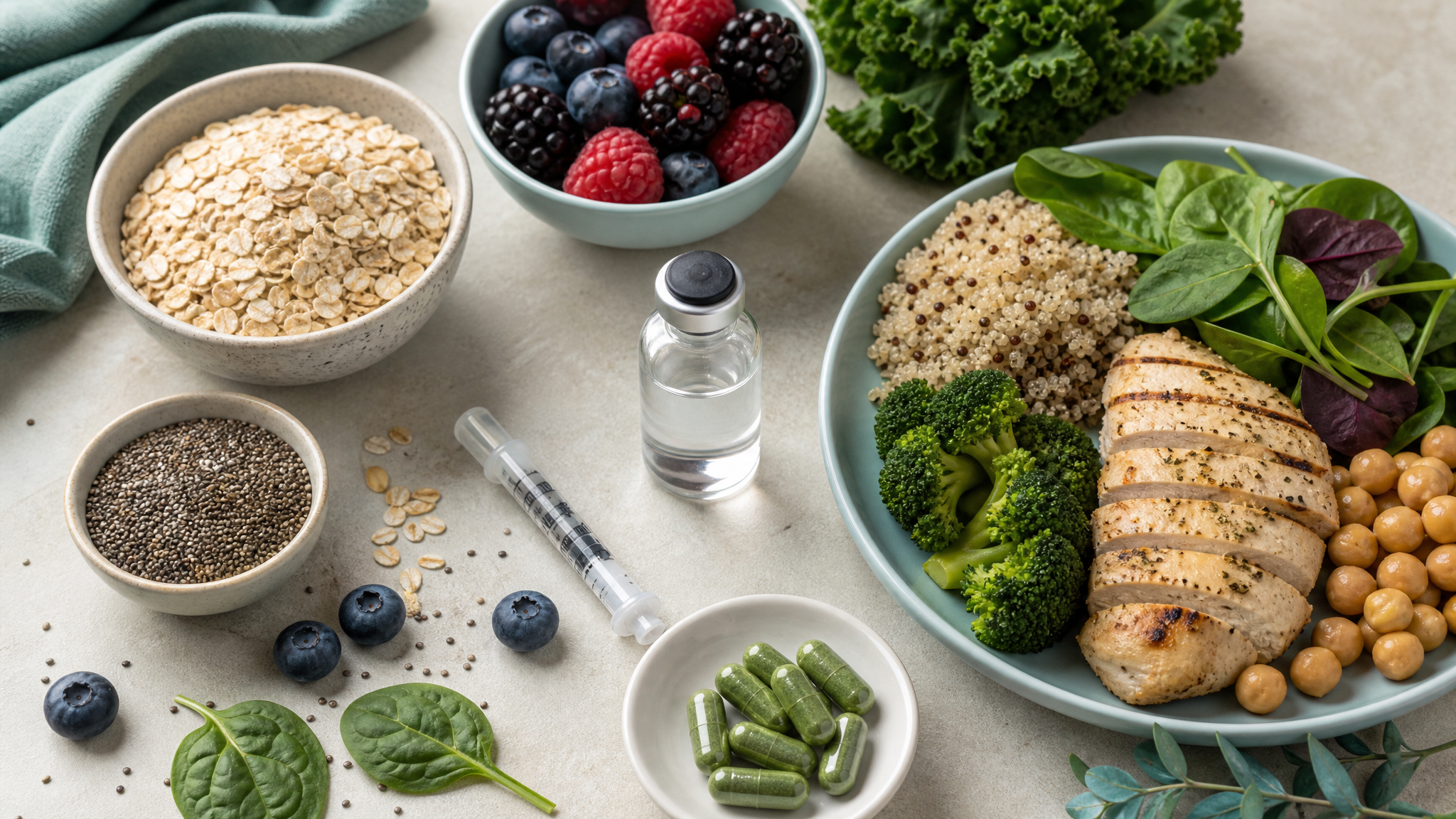
There is no single accepted definition for microdosing tirzepatide. In online clinics and forums, the phrase can mean a fraction of the 2.5 mg initiation dose, a slower titration schedule, or staying at 2.5 mg longer than the label describes.
That matters because those are not the same idea. A slower medical titration still starts from the FDA-approved dosing framework. A research vial split into very small amounts is a different risk category.
The official tirzepatide dosing pattern is more conservative than many people realize. The 2.5 mg weekly dose is used for treatment initiation, not as a long-term efficacy target. After four weeks, labeled dosing usually moves to 5 mg, with later 2.5 mg increases if appropriate.
So the honest framing is this: microdosing tirzepatide is an off-label concept, not a validated protocol. It may be appealing. It may also underdose the compound, blur safety tracking, and create false confidence around unapproved products.
Readers comparing GLP-1 options should also review our tirzepatide dosage guide and the broader peptides for weight loss guide before looking at smaller-dose claims.
Researching GLP-1 peptides from a weight-loss angle?
Apollo Peptide Sciences is the strongest fit for GLP-1 research peptide sourcing on this topic, including tirzepatide-adjacent catalog coverage.
Shop Apollo Peptide Sciences →
Specializing in GLP-1 research peptides and growth factors
Microdosing Tirzepatide Evidence vs Standard Dosing
The strongest tirzepatide evidence does not study microdosing. It studies once-weekly tirzepatide at labeled-style escalation and maintenance doses.
In SURMOUNT-1, published in the New England Journal of Medicine and indexed on PubMed, adults with obesity or overweight received 5 mg, 10 mg, or 15 mg once weekly for 72 weeks. Mean weight reductions were substantial across all active-dose arms, with larger reductions at the higher doses.
That gives researchers a useful reference point. The evidence base supports a dose-response story across tested maintenance doses, but it does not prove that tiny doses produce durable appetite control, body composition changes, or metabolic outcomes.
SURMOUNT-4 adds another caution. Participants who continued tirzepatide after an open-label lead-in maintained and extended weight loss, while those switched to placebo regained a meaningful amount. That points toward ongoing pharmacologic pressure, not a quick reset.
But here is the nuance: lower exposure could plausibly reduce nausea or appetite suppression intensity in some users. Plausible is not the same as proven. Without controlled data, nobody can honestly say where a microdose sits on the curve for benefit, risk, or rebound.
| Approach | Evidence quality | Main issue |
|---|---|---|
| FDA-approved initiation at 2.5 mg weekly | Label-supported initiation step | Not intended as the main efficacy dose |
| 5 mg to 15 mg weekly maintenance | Supported by major trials | Side effects and medical screening still matter |
| Microdosing below labeled initiation | Limited direct evidence | No accepted protocol or outcome data |
| Research chemical self-measurement | Not a clinical care model | Purity, sterility, dose accuracy, and legality |
For comparison across incretin drugs, see tirzepatide vs semaglutide, retatrutide vs tirzepatide, and our newer microdosing semaglutide review.
Microdosing Tirzepatide Risks and Legal Status
The biggest risk is not that a small amount is automatically dangerous. The bigger problem is uncertainty. If a person uses an unlabeled or compounded product, the exact concentration, sterility controls, and dispensing rules matter as much as the number on the syringe.
FDA has warned about unapproved GLP-1 drugs used for weight loss, including fraudulent compounded semaglutide and tirzepatide products with false label information. FDA also determined that the tirzepatide injection shortage was resolved, which changed the compounding picture after the shortage period.
That does not mean every compounding question has one simple answer. There are narrow regulatory exceptions. Still, broad consumer marketing of copycat GLP-1 products is under pressure, and buyers should be skeptical of sites that imply FDA review where none exists.
Known tirzepatide adverse effects include gastrointestinal effects such as nausea, vomiting, diarrhea, constipation, and abdominal discomfort. Labeled warnings also discuss more serious concerns, including pancreatitis, gallbladder disease, hypoglycemia risk when used with insulin or insulin secretagogues, and thyroid C-cell tumor warnings based on rodent findings.
Microdosing does not erase those categories. It may change exposure, but it can also create sloppy habits: casual dose changes, shared protocols, weak tracking, and no medical lab context.

Common Questions Behind Microdosing Tirzepatide Searches
Most searches around this topic are practical. People want to know whether a small dose can reduce food noise, whether side effects drop, and whether lower dosing saves money.
Those questions are understandable. But the answers are not as clean as social posts make them sound.
- Side effects: lower exposure may reduce intensity for some people, but that has not been mapped in controlled microdosing trials.
- Cost: smaller amounts may look cheaper, yet unauthorized sourcing can add quality and legal risk.
- Weight loss: the best published weight-loss results come from tested maintenance doses, not tiny informal doses.
- Maintenance: stopping or reducing incretin therapy can be followed by weight regain in trial settings.
- Safety: medical screening still matters because GLP-1/GIP drugs affect digestion, glucose regulation, and appetite signaling.
Anyone handling research peptides also needs basic mixing context. Start with the free peptide reconstitution calculator and how to reconstitute peptides guide before interpreting vial math.
Want the broadest delivery-form catalog for research comparison?
Limitless Biotech offers a large catalog across injectable, spray, capsule, and blend formats. Create the free VIP account first so the catalog and tracking cookie are active.
Create your free Limitless account, then use code PeptidePick for a discount at checkout
118+ research peptides in injectable, spray, and capsule forms - create a free account to view the full catalog
There is another reason the term needs caution: it can hide the difference between a clinician adjusting a prescription and a buyer guessing from a vial. Those may sound similar in casual conversation, but the risk controls are different. One has a prescriber, medical history, contraindication review, and adverse-event plan. The other often depends on forum math and a vendor certificate that may or may not match the vial in hand.
For research writing, that distinction should stay visible. The article can discuss dose concepts without giving personal medical instructions or pretending that informal protocols have the same support as published trials.
Research Setup Checks Before Any GLP-1 Experiment
For research-only contexts, dose math is only one part of the work. A serious review also checks documentation, storage, sterility assumptions, and whether the source fits the compound being discussed.
Ask for third-party testing. Match the lot number to the certificate. Check whether the vendor explains purity methods, microbial testing, and endotoxin controls. If those documents are absent or generic, the price is not the bargain it seems to be.
Storage matters too. Peptides can degrade with poor temperature control, repeated handling, or unclear reconstitution timing. A tiny dose from a compromised vial is still a bad input.
Microdosing also makes measurement error more important. The smaller the target amount, the more a small syringe or concentration mistake can matter. This is why vague instructions like “take a few units” are not good enough for research documentation.
Our peptide dosage calculator explains the difference between milligrams, milliliters, and insulin syringe units. It is dry math, but dry math is better than guessing.
Where Peptide Buyers Should Be Careful
Search results for microdosing tirzepatide mix clinical terms, telehealth marketing, and research chemical language. That mix is exactly where readers can get misled.
A prescription drug article should not quietly become a shopping page for gray-market medicine. And a research peptide page should not pretend to be medical care.
For sourcing comparisons, use our best peptide companies guide as a starting point, then verify the exact product category and legal context yourself. PeptidePick reviews vendors for research-use sourcing signals, not personal treatment plans.
Nootropics Depot can also fit a different kind of reader: someone who wants third-party tested oral supplement alternatives rather than injectable peptide research. That means oral supplements such as NMN, NADH, amino acids, or adaptogens, not injectable peptides. See Nootropics Depot as a supplement-only option.
Comparing GLP-1 research peptide vendors?
Pinnacle Peptide Labs carries GLP-1SG, GLP-2TZ, GLP-3RT, and related research compounds for side-by-side catalog review.
Use code Peptidepick15 for 15% off your order
99% pure research peptides - use code Peptidepick15 for 15% off
Bottom Line on Microdosing Tirzepatide
Microdosing tirzepatide is popular because it promises a softer, cheaper version of a powerful drug. The promise is easy to understand. The evidence is not there yet.
Standard tirzepatide dosing has clinical trial support. Microdosing has anecdotes, marketing claims, and reasonable questions that still need better data.
So the research-based answer is cautious. Treat microdosing claims as unproven, separate prescription medicine from research chemicals, and never confuse lower dose with lower responsibility.
Related Articles
- Microdosing Semaglutide: What the Evidence Actually Says
- Tirzepatide Dosage Guide
- Tirzepatide vs Semaglutide
- Retatrutide vs Tirzepatide
- Peptides for Weight Loss
- Free Peptide Reconstitution Calculator
Sources
- Jastreboff AM et al. Tirzepatide once weekly for the treatment of obesity. New England Journal of Medicine, 2022. PubMed: https://pubmed.ncbi.nlm.nih.gov/35658024/
- Aronne LJ et al. Continued treatment with tirzepatide for maintenance of weight reduction in adults with obesity. JAMA, 2024. PubMed: https://pubmed.ncbi.nlm.nih.gov/38078870/
- FDA. FDA's concerns with unapproved GLP-1 drugs used for weight loss. Updated June 2026.
- FDA. Resolution of tirzepatide injection product shortage and supply status, December 2024.
- NCBI Bookshelf StatPearls. Tirzepatide dosing and pharmacology overview.
FAQ
Is microdosing tirzepatide FDA-approved?
No. FDA-approved tirzepatide products have labeled dosing schedules. Microdosing tirzepatide is an off-label phrase and does not have a standard FDA-approved protocol.
What is the normal starting dose for tirzepatide?
The labeled initiation dose is 2.5 mg once weekly for four weeks, followed by 5 mg once weekly. Later increases are usually made in 2.5 mg steps as directed by a clinician.
Does microdosing tirzepatide reduce side effects?
It might reduce exposure-related side effects for some people, but that has not been proven in controlled tirzepatide microdosing trials. Lower dose does not remove the need for medical screening.
Can microdosing tirzepatide still cause weight loss?
There is no strong published evidence showing durable weight loss from very-low-dose tirzepatide protocols. The best clinical data comes from tested maintenance doses of 5 mg, 10 mg, and 15 mg weekly.
Is compounded tirzepatide the same as Zepbound or Mounjaro?
No. FDA-approved drugs go through FDA review for quality, safety, and effectiveness. Compounded products are not FDA-approved, and FDA has warned about unapproved and fraudulent GLP-1 products.
What should research buyers check before sourcing tirzepatide-related peptides?
Check lot-specific third-party testing, sterility documentation, storage requirements, vendor reputation, and whether the product category is legal for the intended research use.
Affiliate disclosure: PeptidePick may earn a commission when readers buy through approved links in this article. This does not change the price you pay, and it does not affect our research framing.