

Vendor shortcuts
Compare the right source before you keep reading
Pick the lane that matches your research goal, then verify current COAs, label language, and shipping policy on the vendor page.
Research-only affiliate links. PeptidePick may earn a commission at no extra cost to you.
TB-500 Side Effects: Safety Profile, Risks, and Research Notes
TB-500 side effects are hard to summarize cleanly because most human safety data comes from thymosin beta-4 research, not the retail TB-500 fragment sold online. That distinction matters. Thymosin beta-4 has been studied in controlled settings, while TB-500 is usually discussed as a synthetic fragment used in research markets.
TLDR: Published thymosin beta-4 studies report mostly mild to moderate adverse events, with no serious adverse events or dose-limiting toxicities in small phase I studies. But TB-500 itself has a thinner human evidence base, is not FDA-approved, and appears on the WADA Prohibited List as a banned growth factor modulator.
- Main practical risks: injection site irritation, sterility issues, dosing uncertainty, immune reactions, and product-quality problems.
- Regulatory risk: the FDA lists thymosin beta-4 fragment, also known as TB-500, among bulk substances with potential safety risks for compounding.
- Research gap: TB-500 marketing claims run ahead of human outcome data, especially for injury recovery.
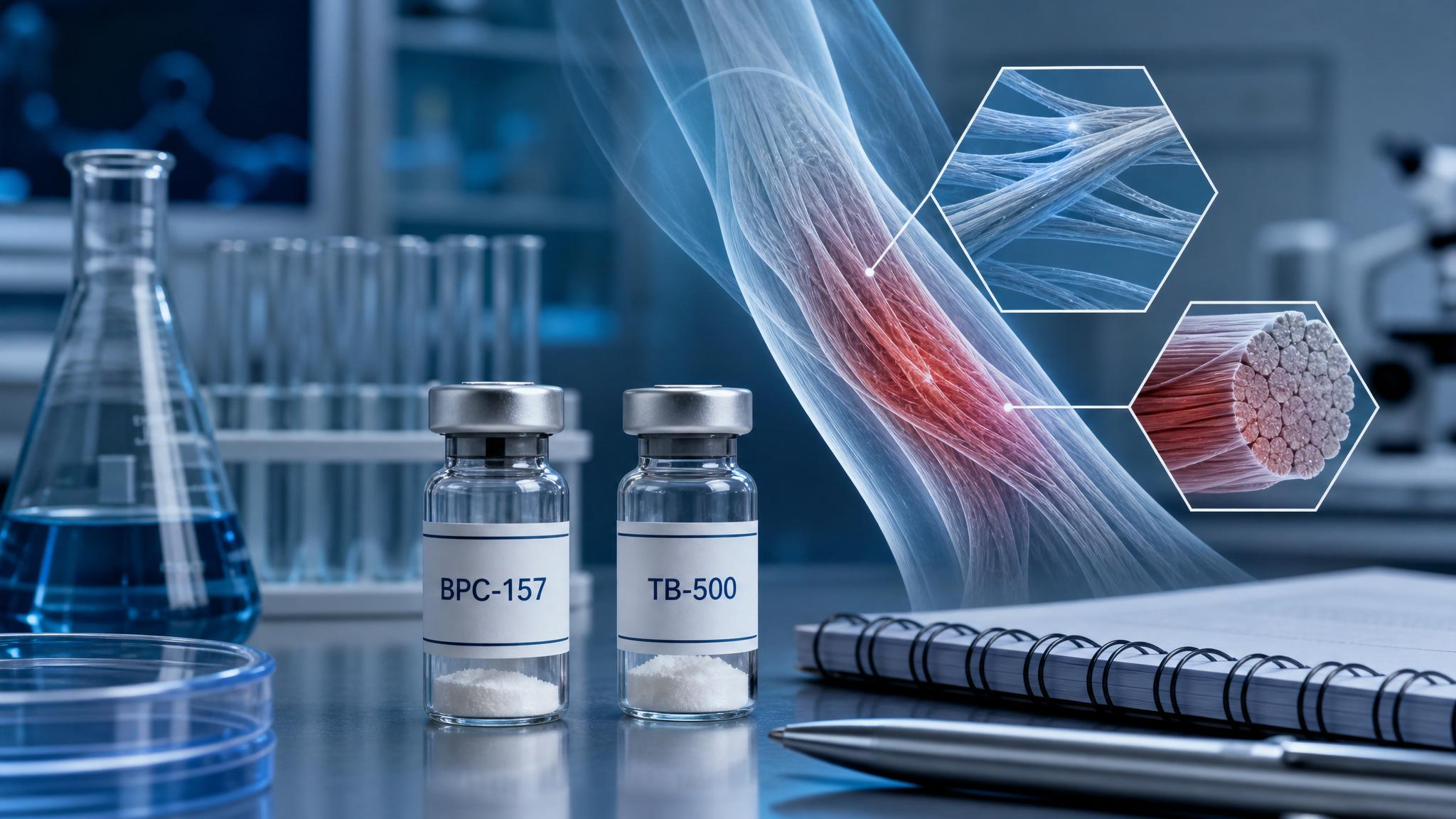
For context around related recovery research, compare this with our TB-500 guide, BPC-157 vs TB-500 comparison, and stacking BPC-157 and TB-500 research guide. The joint repair peptide stack guide gives a broader cluster view.
What TB-500 Is
TB-500 is commonly described as a synthetic fragment related to thymosin beta-4. Thymosin beta-4 is a naturally occurring peptide involved in actin binding, cell migration, tissue repair signaling, and inflammatory response research.
The retail term "TB-500" usually refers to the LKKTETQ fragment, not necessarily full-length thymosin beta-4. That is where the safety conversation gets messy. A study on full thymosin beta-4 does not automatically prove that a research vial labeled TB-500 has the same purity, behavior, or risk profile.
Existing PeptidePick readers often compare TB-500 with recovery compounds covered in our best peptides for muscle recovery guide and our stacking BPC-157 and TB-500 research guide. Those pages focus on recovery logic. This one focuses on risk.

TB-500 Side Effects Researchers Track
The most defensible answer is also the least satisfying: there is no large, long-term human safety database for TB-500 as sold in research markets. So the side-effect list has to combine clinical thymosin beta-4 signals with known peptide handling risks.
Researchers and clinicians usually watch for these categories:
- Injection site reactions: redness, swelling, tenderness, itching, bruising, or warmth near the injection site.
- Systemic symptoms: headache, fatigue, lightheadedness, nausea, or flu-like feelings after exposure.
- Immune response risk: the FDA specifically flags immunogenicity concerns for some compounded peptide substances, including thymosin beta-4 fragment.
- Product-quality risk: wrong concentration, contamination, degradation, endotoxin exposure, or peptide-related impurities.
- Research uncertainty: wound-healing and angiogenesis signals may not be risk-free in every biological context.
That last point is the nuance people skip. Thymosin beta-4 is studied partly because it affects repair signaling and angiogenesis. Those mechanisms are interesting. They also raise fair questions about off-target effects, dose, duration, and who should not be exposed.
Researching Recovery Peptides Like TB-500?
Ascension Peptides carries TB-500, BPC-157, Wolverine Stack, KLOW Stack, and related recovery research compounds.
60+ third-party tested research peptides and stacks
TB-500 Side Effects in Human Research: What the Data Actually Says
Two phase I thymosin beta-4 studies are useful starting points. They are not a blank check for TB-500 use, but they help anchor the conversation in real data.
A randomized placebo-controlled study published in Annals of the New York Academy of Sciences evaluated single and multiple doses of thymosin beta-4 in healthy volunteers. The authors reported that adverse events were infrequent and mild or moderate, with no dose-limiting toxicities or serious adverse events. The PubMed record is PMID 20536472.
A later phase I study of recombinant human thymosin beta-4 also reported mild to moderate adverse events, with no dose-limiting toxicities or serious adverse events. That record is PMID 34346165.
Those findings sound reassuring, but they come with limits. Phase I studies are small. They are designed to catch obvious short-term safety problems, not rare events or long-term outcomes. They also involve defined pharmaceutical material, not random online products.
| Evidence Type | What It Suggests | Main Limit |
|---|---|---|
| Phase I thymosin beta-4 studies | Short-term dosing was generally tolerated in small human studies. | Not the same as proving TB-500 safety in broad use. |
| Animal wound-healing research | Thymosin beta-4 may affect tissue repair pathways. | Animal outcomes do not translate directly to people. |
| FDA compounding review | The agency flags immunogenicity and impurity concerns for TB-500 fragment. | It is a regulatory safety signal, not a clinical trial result. |
| WADA status | TB-500 is prohibited for tested athletes. | Sport rules do not measure medical safety, but they create real eligibility risk. |
TB-500 Side Effects, FDA Status, and WADA Rules
TB-500 is not an FDA-approved drug. That means there is no approved U.S. prescribing label, no FDA-approved dosage, and no official medical indication for injury recovery, muscle repair, or anti-aging.
The FDA's compounding safety page lists "Thymosin beta-4, fragment (LKKTETQ), also known as TB-500" among nominated substances withdrawn from category 2 review. The agency states that compounded drugs containing this fragment may pose immunogenicity risks due to aggregation and peptide-related impurities. It also says the FDA has not identified human exposure data for drug products containing the fragment.
For athletes, the rule is simpler. WADA lists thymosin beta-4 and its derivatives, including TB-500, on the Prohibited List. Tested athletes should treat that as a hard stop unless a qualified anti-doping professional says otherwise.
For readers comparing research vendors, PeptidePick keeps a separate best peptide companies guide with sourcing criteria, testing standards, and research-only compliance notes.
The legal point is worth slowing down for. "Research use only" does not turn an unapproved compound into an approved drug, and it does not remove anti-doping risk. It only describes the seller's intended market. A lab still has to treat the compound as unapproved, document chain of custody, and keep human-use claims out of the protocol.
There is also a naming problem. Some sellers use TB-500, thymosin beta-4, and thymosin beta-4 fragment as if they mean the same thing. They may not. A careful review checks the sequence, the batch test, and the actual label before comparing one product to a published study.

Research Safety Checklist Before Studying TB-500
Research-only peptides should be handled like sensitive lab materials. The vial is only one part of the risk profile. Storage, dilution, sterile technique, documentation, and disposal all matter.
For basic handling context, start with PeptidePick's free peptide reconstitution calculator and the step-by-step guide on how to reconstitute peptides. Those resources explain concentration math and mixing logic, not medical dosing advice.
Also review bacteriostatic water for injection, where to inject peptides, and peptide injection site rotation if your research protocol includes injectable compounds.
A practical safety checklist should include:
- Certificate of analysis: check identity, purity, batch number, and testing date.
- Third-party testing: prefer independent HPLC or mass-spec data over in-house claims only.
- Sterility assumptions: research peptides are not automatically sterile drug products.
- Storage: protect from heat, light, repeated freeze-thaw cycles, and long room-temperature exposure.
- Labeling: document concentration, date mixed, solvent used, and discard date.
There is no clever way around poor source quality. If the vial is mislabeled or contaminated, the best protocol math in the world cannot rescue it.
Need More Delivery Form Options?
Limitless Biotech offers a wide research catalog with injectable, nasal spray, and capsule formats for many compounds. Create a free account first to access the full catalog.
118+ research peptides in injectable, spray, and capsule forms - create a free account to access full catalog
Use code PeptidePick for a discount at checkout after creating your free account
How TB-500 Side Effects Compare With Similar Recovery Peptides
TB-500 is often grouped with BPC-157 because both are discussed in injury-recovery research. The comparison is convenient, but it can blur important differences.
BPC-157 has its own safety controversy. The FDA has described BPC-157 as presenting significant safety risks in the compounding context, and PeptidePick covers that separately in our BPC-157 side effects guide. TB-500's FDA language focuses on the thymosin beta-4 fragment and concerns around immunogenicity, aggregation, and peptide impurities.
Growth hormone secretagogues like ipamorelin and CJC-1295 sit in a different bucket. They act through growth hormone signaling pathways, so their side-effect concerns can include fluid retention, glucose changes, appetite shifts, and hormone-axis questions. Our ipamorelin side effects guide covers that lane.
So the cleanest takeaway is this: TB-500's risk profile is not just "mild injection irritation." The bigger concern is uncertainty. The human TB-500 evidence base is thin, the regulatory status is not favorable, and the product-quality spread online is wide.
That uncertainty should shape how the topic is researched. A serious protocol does not start with a social-media dose screenshot. It starts with identity testing, a written hypothesis, exclusion criteria, storage controls, and adverse-event tracking. Dry documentation sounds boring, but it is the difference between research and guessing.
Researchers should also separate short-term tolerance from safety. A compound can feel uneventful after one exposure and still have unresolved questions around repeat exposure, immune response, or biological context. That is especially true for peptides tied to repair pathways.
Reader Questions About TB-500 Side Effects
Search behavior around this topic is very practical. People want to know whether TB-500 causes fatigue, whether it is safe with BPC-157, whether it can affect cancer risk, and whether athletes can use it.
The evidence does not support confident yes-or-no answers for every scenario. But it does support a conservative research stance: treat TB-500 as an unapproved compound with limited direct human safety data, not as a casual wellness product.
For non-injectable support, some readers also look at oral supplement alternatives. Nootropics Depot sells third-party tested oral supplements such as amino acids, mushroom extracts, and longevity compounds. It is not a peptide vendor and does not sell injectable peptides.
Compare TB-500 With Recovery Research Stacks
Pinnacle Peptide Labs carries TB-500, BPC-157, Wolverine Blend, Recovery Stack, and related compounds for research buyers comparing recovery protocols.
Use code Peptidepick15 for 15% off your order
99% pure research peptides - use code Peptidepick15 for 15% off
Related Articles
- TB-500 Dosage for Injury: Research Protocols, Safety, and Recovery Logic
- Stacking BPC-157 and TB-500: Research Guide, Safety, and Protocol Logic
- BPC-157 Side Effects: Safety, Risks, and What Researchers Track
- Best Peptides for Inflammation: Top Research Compounds Ranked
- Best Peptide Stack for Joint Repair: BPC-157, TB-500, and Beyond
- Best Peptides for Muscle Recovery
FAQ: TB-500 Side Effects
What are the most common TB-500 side effects?
The most commonly discussed TB-500 side effects include injection site irritation, redness, tenderness, bruising, headache, fatigue, nausea, and flu-like symptoms. Direct human TB-500 data is limited, so this list combines thymosin beta-4 research signals with general injectable peptide risks.
Is TB-500 FDA-approved?
No. TB-500 is not FDA-approved for injury recovery, muscle repair, anti-aging, or any other medical use. The FDA has also listed thymosin beta-4 fragment, also known as TB-500, in compounding safety materials that flag immunogenicity and impurity concerns.
Did human thymosin beta-4 studies find serious adverse events?
Small phase I thymosin beta-4 studies reported mild to moderate adverse events and did not report dose-limiting toxicities or serious adverse events. Those studies do not prove that retail TB-500 products are safe.
Can athletes use TB-500?
Tested athletes should treat TB-500 as prohibited. WADA lists thymosin beta-4 and its derivatives, including TB-500, on the Prohibited List.
Is TB-500 safer than BPC-157?
There is not enough direct human evidence to say TB-500 is safer than BPC-157. Both compounds have research interest, regulatory concerns, and product-quality risks. They should be evaluated separately.
What is the biggest hidden risk with TB-500?
The biggest hidden risk is not one single side effect. It is uncertainty: limited direct human data, no FDA-approved product label, anti-doping bans, and uneven quality across research sellers.