
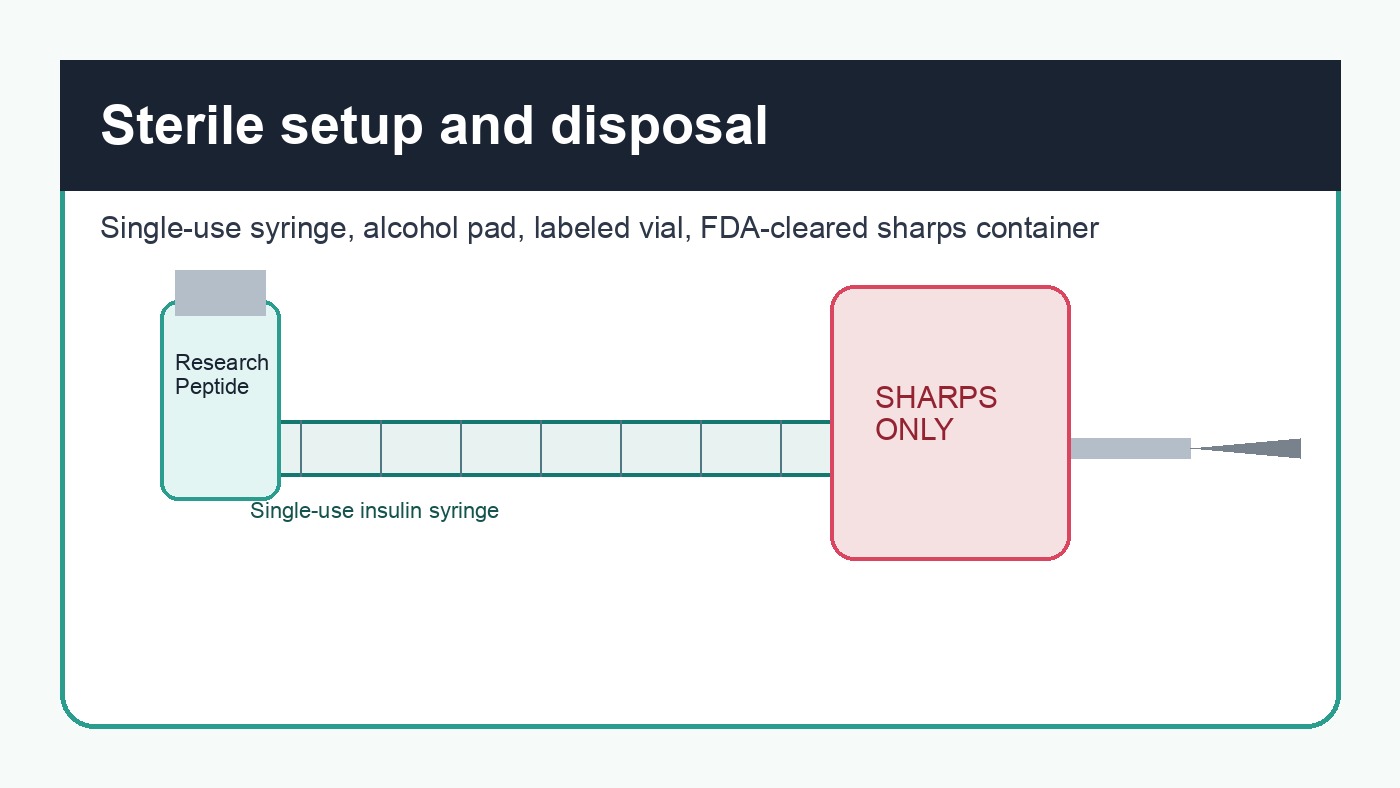
Research use and safety note: This guide is educational. Bacteriostatic water for injection is a sterile diluent, not a peptide and not a treatment. Injectable products should be handled only under appropriate medical, pharmacy, or laboratory direction. PeptidePick does not provide medical advice, dosing instructions, or personal injection guidance.
Bacteriostatic Water for Injection: Peptide Mixing Safety Guide
Bacteriostatic water for injection is sterile water with benzyl alcohol added as a preservative. In peptide research, it is usually discussed as a diluent for reconstituting lyophilized compounds before measurement and storage.
The important part is simple: bacteriostatic water is not safer because the word sounds medical. It is safer only when the vial is legitimate, the label matches the intended use, and each withdrawal uses sterile technique.
TLDR: Bacteriostatic Water for Injection
- Bacteriostatic Water for Injection, USP usually contains 0.9% benzyl alcohol, listed by DailyMed as 9 mg/mL.
- It is supplied as a multiple-dose container for diluting or dissolving drugs intended for injection.
- The preservative helps inhibit bacterial growth, but it does not make poor technique safe.
- CDC vial guidance still matters: use aseptic technique, clean access, and a new sterile needle and syringe every time.
- Preserved diluents with benzyl alcohol are not appropriate for neonates. FDA labeling warns about toxicity risk in that group.
- For peptide research math, use a reconstitution calculator and record the vial strength, diluent volume, concentration, date, and storage conditions.
What Bacteriostatic Water for Injection Is
Bacteriostatic Water for Injection, USP is a sterile, nonpyrogenic preparation of water for injection. DailyMed labeling describes it as water containing benzyl alcohol added as a bacteriostatic preservative.
The common concentration is 0.9% benzyl alcohol, or 9 mg/mL. Some labeled products use 1.1% benzyl alcohol, so the vial label matters more than a generic product name.
DailyMed also describes these products as multiple-dose containers. That is the practical reason peptide researchers talk about bacteriostatic water so often: one vial can be accessed more than once when handled correctly.
But that phrase has limits. Multiple-dose does not mean unlimited use, casual storage, or shared access across people. It means the product contains a preservative and was packaged for repeated withdrawals under sterile conditions.
For readers comparing peptide research supplies, PeptidePick keeps a broader sourcing page at best peptide companies. This article is narrower. It focuses on the diluent, the vial rules, and the mistakes that create contamination risk.
Need a Broad Peptide Research Catalog?
Limitless is useful when researchers want one account for peptides, sprays, capsules, and related research supplies.
118+ research peptides in injectable, spray, and capsule forms - create a free account to access the full catalog
Use code PeptidePick for a discount at checkout after creating your account.
Bacteriostatic Water for Injection vs Sterile Water
The difference is the preservative. Bacteriostatic water contains benzyl alcohol. Sterile water for injection does not contain a preservative unless the label says otherwise.
That one detail changes how the vial should be treated. CDC injection safety materials warn that single-dose vials typically lack antimicrobial preservatives and should not be saved for later use. Multi-dose vials require clean access and careful handling each time.
| Feature | Bacteriostatic water | Sterile water |
|---|---|---|
| Preservative | Usually benzyl alcohol, often 0.9% | No preservative in standard single-use products |
| Container use | Labeled for multiple withdrawals when handled aseptically | Often intended for one-time use after opening |
| Research peptide context | Commonly discussed for reconstituting lyophilized peptides | May be required when preservative-free diluent is specified |
| Important warning | Benzyl alcohol has neonatal toxicity warnings | Leftover vial contents should not be reused unless labeled for that use |
The nuance: bacteriostatic water is not automatically the correct diluent for every compound. Some drug labels specify the exact diluent, and those instructions beat generic peptide forum habits every time.
For peptide-specific storage questions after mixing, read how to store peptides and do peptides expire. Those details matter because reconstitution starts a different clock than a sealed dry vial.
Bacteriostatic Water for Injection and Peptide Mixing Math
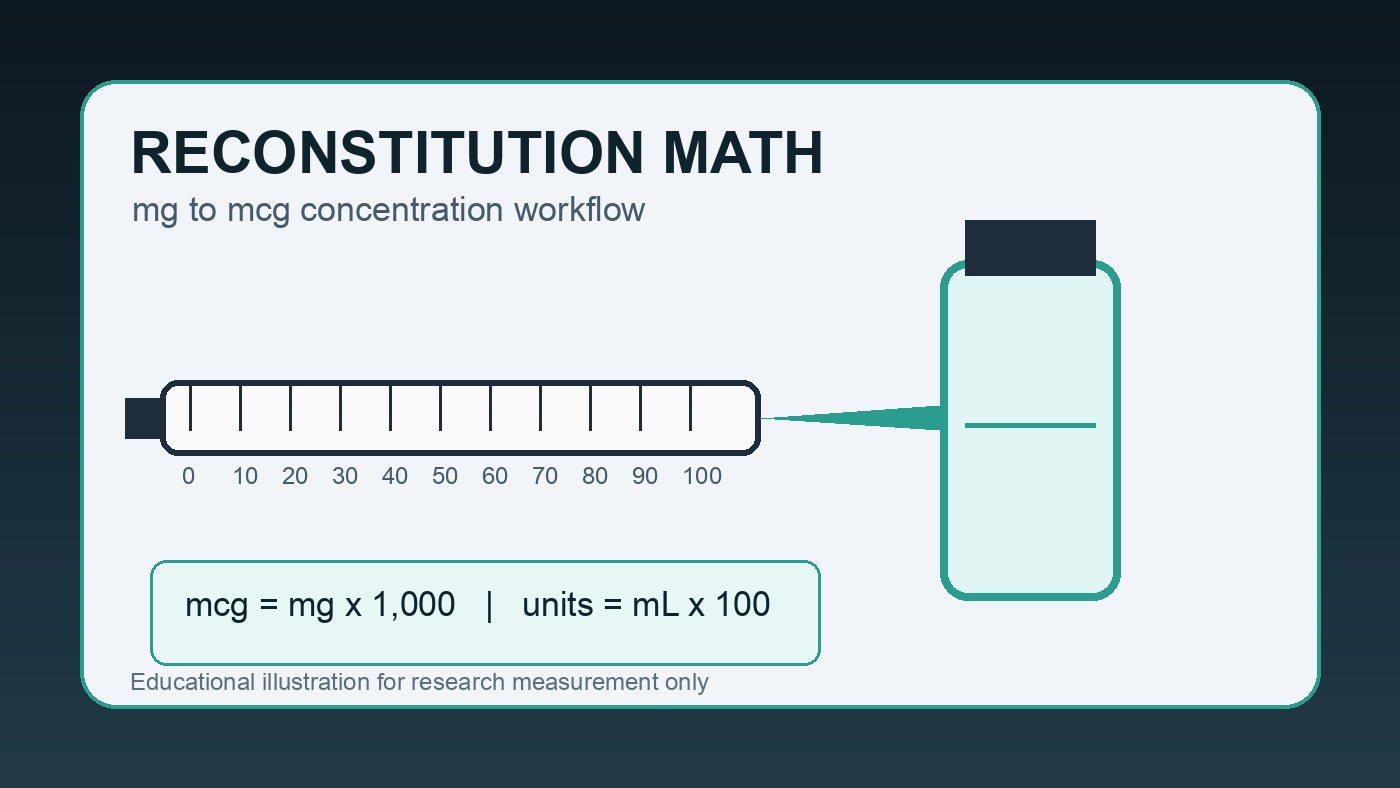
Reconstitution math is just concentration math. The peptide amount in the vial is divided by the diluent volume added. From there, a syringe unit or mL amount can be converted into a microgram or milligram amount.
PeptidePick has two tools that help with that step: the free peptide reconstitution calculator and the peptide dosage calculator. Use them to check arithmetic before any research protocol is logged.
A common example: a 5 mg research vial mixed with 2 mL of bacteriostatic water creates a concentration of 2.5 mg/mL. On a U-100 insulin syringe, 10 units equals 0.1 mL, so that draw would contain 0.25 mg, or 250 mcg.
That is not a recommendation. It is the math structure. The actual research amount depends on the compound, the protocol, the assay design, and whether the material is even appropriate for the planned model.
Small arithmetic mistakes can become large concentration errors after reconstitution. A misplaced decimal, a confused mg-to-mcg conversion, or a syringe unit assumption can change the recorded amount by 10x.
That is why the diluent volume should be chosen before the vial is opened, not guessed after the fact. The goal is a concentration that can be measured cleanly with the available syringe while leaving enough margin to avoid tiny, hard-to-read draws.
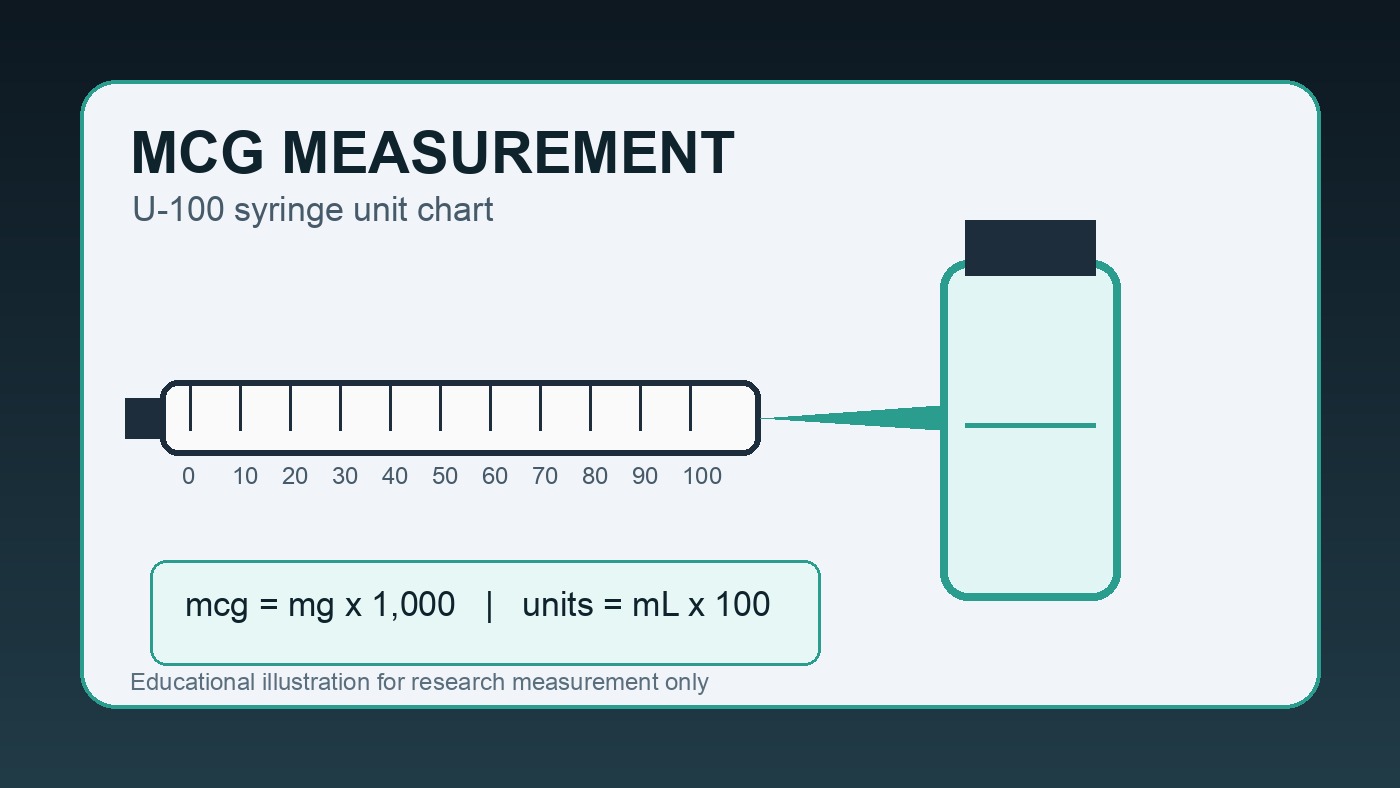
For a more detailed walk-through, the site guide on how to reconstitute peptides covers vial prep, diluent addition, and common handling errors. The related how to mix peptides guide gives a step-by-step view of the same workflow.
What to record after mixing
Good records prevent repeat math errors. At minimum, a research log should list:
- Compound name and lot number
- Amount in the vial before reconstitution
- Exact diluent used and volume added
- Final concentration in mg/mL or mcg per unit
- Date mixed and storage condition
- Any visual change, particulate matter, or failed seal check
Visual inspection is not a sterility test. A vial can look clear and still be contaminated. But cloudiness, particles, cracked glass, a compromised stopper, or a missing seal are obvious rejection signals.
Compare Research Supplies and Popular Peptide Categories
Pinnacle carries common research peptides, stacks, and related categories used in reconstitution planning.
99% pure research peptides - use code Peptidepick15 for 15% off
Use code Peptidepick15 for 15% off your order
Bacteriostatic Water for Injection Safety and Storage
The safety issue is usually not the water alone. It is the whole chain: source, shipping, vial integrity, diluent match, technique, storage, and how many times the stopper is entered.
DailyMed labeling notes that bacteriostatic water is not intended for direct intravenous injection without a solute. Pfizer labeling also warns that benzyl alcohol has been associated with toxicity in neonates and that preservative-free sterile water should be used when water is needed for neonatal medication preparation.
That does not mean adult research vials are risk-free. It means the risk profile depends on the use case. Benzyl alcohol sensitivity, route, concentration, and the product being dissolved all matter.
CDC-style vial handling principles
CDC injection safety guidance is written for healthcare settings, but the core logic applies to research handling too:
- Access a vial only in a clean preparation area.
- Disinfect the stopper and let it dry before entry.
- Use a new sterile needle and syringe for each withdrawal.
- Do not leave needles in the stopper between uses.
- Keep multi-dose vials assigned to one subject or one controlled workflow whenever possible.
- Discard a vial if sterility, label identity, or storage history is uncertain.
So the honest answer is a little unsatisfying: bacteriostatic water lowers one kind of risk, but it cannot rescue sloppy handling. Preservative is not a force field.
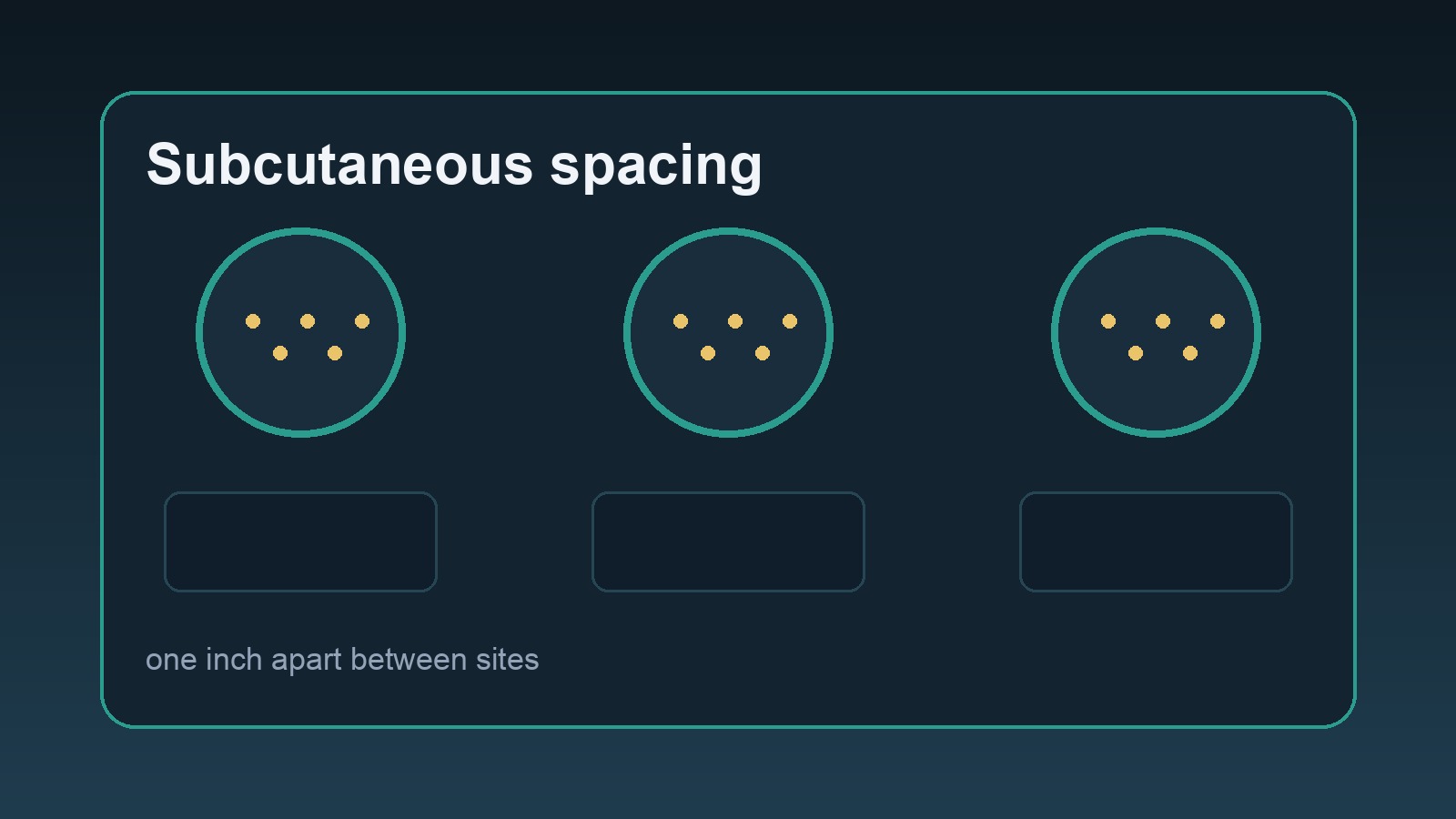
For administration-related research context, see best gauge needle for peptide injections, peptide injection site rotation, and SubQ vs intramuscular injection for peptides. Those pages are educational and do not replace licensed medical direction.
Where Researchers Compare Bacteriostatic Water for Injection Options
For utility items like bacteriostatic water, the vendor checklist should be stricter than the sales copy. Look for clear product identity, visible lot information, intact packaging, support for certificates of analysis where relevant, and shipping that does not compromise the product.
Apollo lists bacteriostatic water alongside GLP-1 research peptides and growth factors. Ascension lists bacteriostatic water with a larger research peptide catalog. Pinnacle and Limitless are worth comparing when the article topic expands from diluent into full peptide sourcing.
Ascension is another approved vendor to check for common research utilities and peptide categories: Ascension Peptides. The main thing is to compare actual product pages, not just broad catalog claims.
Do not buy from a page that hides the seller, blurs the label, or uses vague claims instead of product details. And do not treat a cheap diluent as harmless just because it is not the expensive part of a protocol.
Research Peptides and Growth Factor Categories
Apollo is a fit when researchers are comparing GLP-1 research peptides, growth factors, and basic mixing supplies.
Shop Apollo Peptide Sciences →
Specializing in GLP-1 research peptides and growth factors
Research Notes and Source Checks
The best evidence for bacteriostatic water is labeling and injection safety guidance, not influencer protocols. The strongest source points are straightforward:
- DailyMed labeling: Bacteriostatic Water for Injection, USP is sterile, nonpyrogenic water with benzyl alcohol added as a bacteriostatic preservative.
- Concentration: DailyMed labels commonly list 0.9% benzyl alcohol, equal to 9 mg/mL. Some labels list 1.1%.
- Container type: Labeling describes multiple-dose containers intended for repeated withdrawals to dilute or dissolve drugs for injection.
- CDC injection safety: Single-dose vials usually lack antimicrobial preservatives and should not be saved for reuse.
- Neonatal warning: FDA-related labeling warns that benzyl alcohol has been associated with toxicity in neonates.
- Recall history: FDA posted a Hospira recall in 2019 for one lot of Bacteriostatic Water for Injection due to lack of confirmation of sterilization for some vials.
The recall point is a reminder, not a scare tactic. Sterile products depend on manufacturing controls. If those controls are not verified, the product does not belong in a research workflow.
Related Articles
- Free Peptide Reconstitution Calculator
- How to Mix Peptides
- Bacteriostatic Water for Peptides
- Peptide Dosage Calculator
- Best Gauge Needle for Peptide Injections
- Peptide Injection Site Rotation
FAQ: Bacteriostatic Water for Injection
What is bacteriostatic water for injection?
Bacteriostatic water for injection is sterile water with a preservative, usually benzyl alcohol, added to inhibit bacterial growth after repeated vial access. It is used as a diluent for injectable drugs when the product label allows that diluent.
Is bacteriostatic water the same as sterile water?
No. Sterile water for injection usually has no preservative and is often treated as single-use after opening. Bacteriostatic water contains a preservative and is packaged for multiple withdrawals when handled correctly.
How much benzyl alcohol is in bacteriostatic water?
Many DailyMed-listed bacteriostatic water products contain 0.9% benzyl alcohol, equal to 9 mg/mL. Some labels list 1.1%, so always check the actual vial label.
Can bacteriostatic water be injected by itself?
No. Labeling warns that bacteriostatic water is not intended for intravenous administration without a solute. It is a diluent, not a standalone therapeutic product.
How long is bacteriostatic water good after opening?
Many clinical policies use 28 days for multi-dose vials after first puncture unless the manufacturer says otherwise. The safer answer is to follow the product label, institutional policy, and storage record. Discard it earlier if sterility is uncertain.
Is bacteriostatic water safe for newborns?
FDA-related labeling warns that benzyl alcohol has been associated with toxicity in neonates. Where water is required for neonatal medication preparation, preservative-free sterile water is used instead.
What is the biggest mistake with bacteriostatic water for peptides?
The biggest mistake is treating the preservative as permission for loose technique. Each withdrawal still needs a clean prep area, stopper disinfection, and a new sterile needle and syringe.
Affiliate disclosure: PeptidePick may earn a commission when readers use approved vendor links on this page. That does not change our research framing, safety cautions, or vendor standards.